
Beautiful Plants For Your Interior
Beautiful Plants For Your Interior
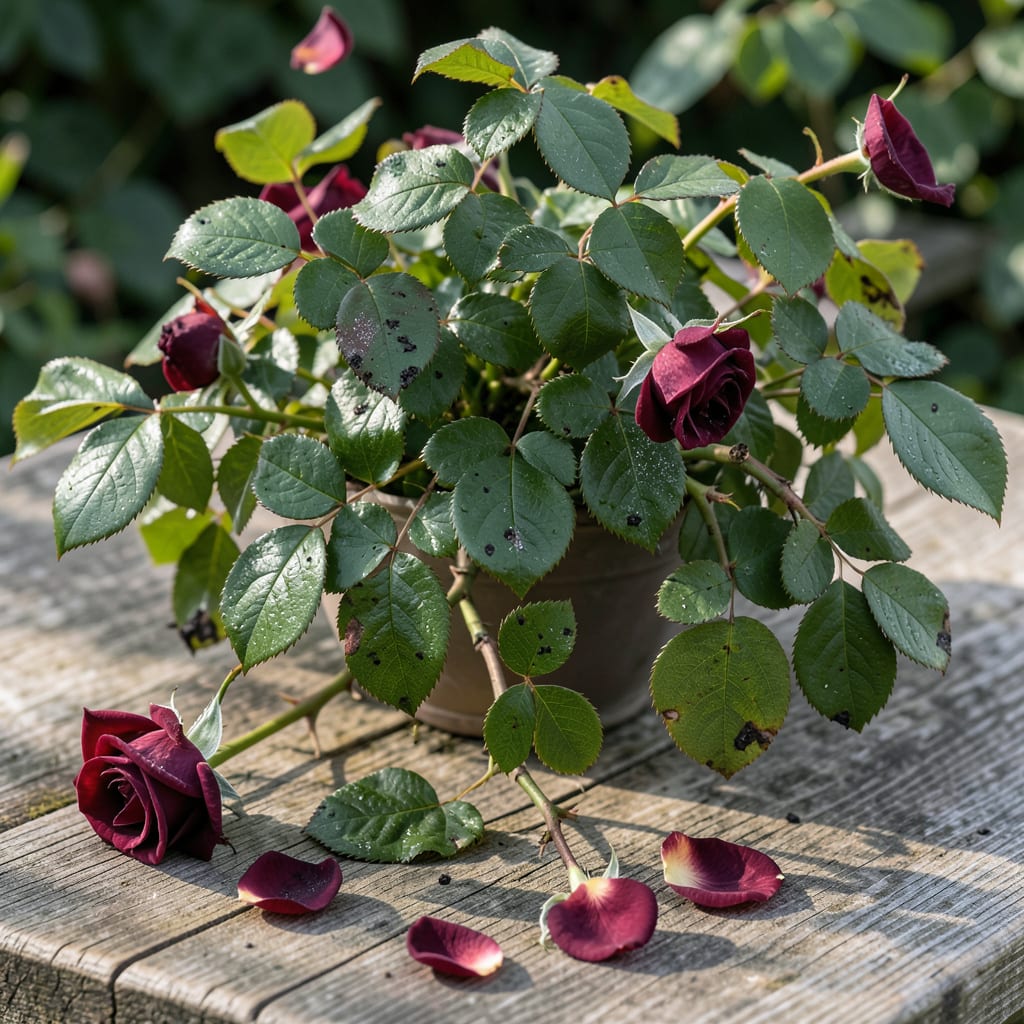
Watching your rose leaves drop feels like a gut punch. I’ve been there, staring at bare stems wondering what went wrong. Black spot, powdery mildew, and spider mites are usually the culprits.
Here’s the thing—most leaf loss fixes start with better airflow and consistent watering. You’ll see new growth within 2-3 weeks once you address the root cause. Let’s get those bushes thriving again.
📚 In This Guide
Here’s my systematic approach to diagnosing and reviving roses with falling leaves.
Start by inspecting the entire plant, not just the dropping leaves. Look for black spots, yellow halos, or powdery white residue on remaining foliage—these signal fungal infections like black spot or powdery mildew. Check the stems for cankers or cracked bark, which often indicate bacterial issues or physical damage.
I always flip leaves over to spot early signs of pests like spider mites or aphids. Their presence leaves behind stippling, webbing, or sticky residue. Note the pattern: if leaves are falling uniformly across the plant, it’s likely environmental. If it’s localized, pests or disease are probably to blame.
Roses drop leaves when stressed by improper conditions. Check soil moisture first—stick your finger 2 inches deep. If it’s bone dry, underwatering is the culprit. If it’s soggy, root rot from overwatering may be setting in. Roses thrive in consistently moist but well-draining soil.
Next, evaluate light exposure. Roses need 6+ hours of direct sunlight daily. Leggy growth with sparse foliage means insufficient light. Conversely, scorched leaf edges often point to too much intense afternoon sun, especially in hot climates.
Use a soil pH test kit—roses prefer a range of 6.0 to 6.5. If the pH is off, nutrients like iron or magnesium become unavailable, leading to chlorosis (yellowing between leaf veins) and defoliation. A sudden flush of new growth with purple stems often signals phosphorus deficiency.
I also check for nutrient burn, which appears as brown leaf margins. This happens when too much fertilizer is applied too quickly. Always follow label rates and water deeply after feeding to distribute nutrients evenly through the root zone.
For fungal issues, remove all affected leaves and dispose of them in the trash (not compost). Then, spray the plant thoroughly with a neem oil solution or baking soda mixture (1 tablespoon baking soda, 1 teaspoon mild soap, 1 gallon water) every 7-10 days until symptoms subside.
If pests are present, a strong blast of water in the morning can dislodge aphids and mites. For persistent infestations, apply insecticidal soap or horticultural oil at dusk to avoid burning leaves. Always treat the undersides of leaves where pests hide.
For environmental stress, adjust watering to maintain 1 inch of moisture per week (including rainfall), and mulch with 2-3 inches of organic material to retain soil moisture and regulate temperature.
These practical insights will help you accurately diagnose and address the root causes of leaf drop.
Diagnosis Precision: In Step 1, don’t just look at the fallen leaves—examine the entire plant for patterns. Uniform leaf drop typically signals environmental stress, while localized loss often points to pests or disease. I’ve found that early morning inspections reveal the most active pest activity.
Moisture Mastery: Step 2’s 2-inch finger test is your most reliable tool. Roses in containers may need daily checks, as they dry out faster than in-ground plants. If the soil is soggy, withhold water until the top inch dries out to prevent root rot.
Treatment Timing: For the organic solutions in Step 4, timing matters as much as the treatment itself. Spray neem oil or baking soda mixtures in the evening to prevent leaf burn, and always reapply after rain. The 7-10 day interval is crucial—stopping too soon allows problems to return.
Prevention Strategy: Once you’ve revived your roses, maintain that 1 inch of weekly moisture and 2-3 inches of mulch. This simple routine prevents most environmental stress. I’ve saved more roses with consistent watering than with any fancy treatment.
Sudden leaf drop in roses is often caused by environmental stress like extreme heat, cold, or improper watering. Pests or fungal diseases (e.g., black spot) can also trigger it. Check for yellowing or spots on leaves to identify the issue.
Yes! Overwatering leads to root rot, which prevents nutrient absorption. Roses need well-draining soil and consistent moisture—water deeply 1-2 times a week, depending on your climate.
Ensure proper watering, good air circulation, and regular pruning. Use organic fungicides for diseases and inspect leaves for pests. Mulching helps retain moisture and regulate soil temperature.
Neem oil is a great organic fix for pests and fungi. Also, remove affected leaves, improve soil health with compost, and avoid overhead watering to reduce disease spread.
