
Beautiful Plants For Your Interior
Beautiful Plants For Your Interior
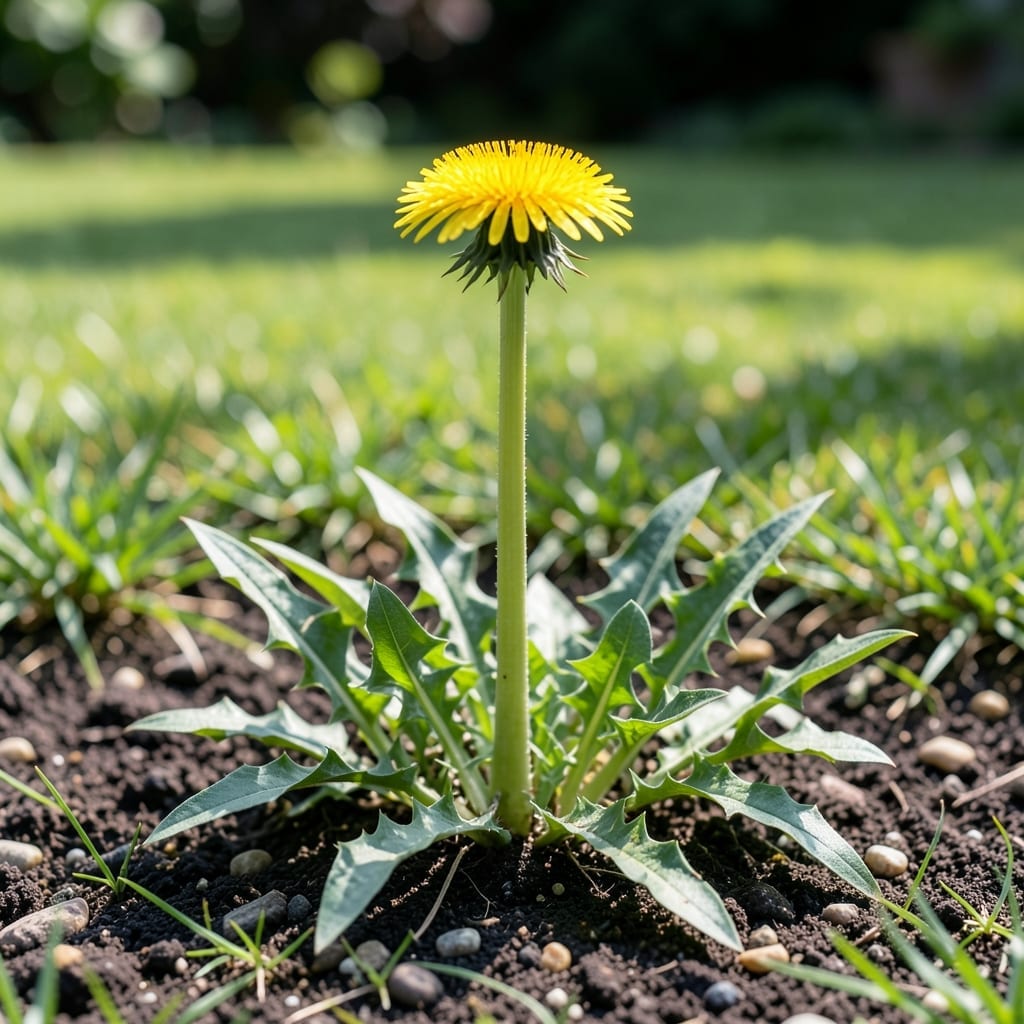
That little yellow bloomer popping up everywhere isn’t just a nuisance—it’s a sign your garden’s trying to tell you something. I used to pull them by the handful until I realized each type needs a different approach.
Once you know what you’re dealing with, removal becomes simple. Some pull easy, others need digging, but all respond to consistent effort. The key is catching them before they seed and spread like wildfire.
📚 In This Guide
Here’s the method I use to quickly and accurately spot these common invaders in my own garden.
Start by looking at the leaves before the flowers even appear. Most small yellow-flowered weeds have distinctive leaf patterns that give them away early. Check if the leaves are lobed, toothed, or smooth-edged, and note their arrangement along the stem.
I always look for opposite leaf pairs or a basal rosette pattern at the plant’s base. Many yellow-flowered weeds like purslane or wood sorrel have succulent leaves, while others like dandelions grow from a single taproot with deeply lobed leaves. The leaf texture can be just as telling as the shape.
Focus on the flower’s composition rather than just its color. Count the petals—many yellow weeds have four or five, but some like buttercups have multiple delicate petals. Note the flower’s size: some are barely 1/4 inch across while others reach 1 inch in diameter.
The center of the flower often holds clues too. Some have prominent dark centers, while others are solid yellow. I pay special attention to how the flowers are arranged on the stem—whether they’re solitary, in clusters, or growing from leaf axils. This helps distinguish between lookalike species.
Run your fingers along the stem to feel its texture. Some yellow weeds have hairy stems, others are smooth. The color can vary from green to reddish, and the stem might be upright, trailing, or prostrate. Note if the stem is hollow or solid when snapped.
Observe the overall growth pattern. Is it forming a mat close to the ground? Growing upright in a clump? Spreading aggressively with runners? I’ve found that growth habit alone can often narrow down the possibilities significantly before even looking at the flowers.
Where you find the weed often tells you as much as what it looks like. Some yellow-flowered varieties thrive in compacted soil, while others prefer disturbed areas. Note if it’s growing in full sun, partial shade, or deep shade.
Check the soil moisture too. Many yellow weeds like dandelions and plantains prefer drier conditions, while others like yellow woodsorrel thrive in moist areas. I keep a small notebook to record where I find each type—this helps me predict where they’ll appear next season.
Note when the plant first appears and how long it flowers. Some yellow weeds are early spring ephemerals that disappear by summer, while others bloom all season long. The timing of seed production varies too—some set seed quickly, others maintain flowers for weeks.
I’ve learned to watch for these patterns throughout the growing season. Early bloomers often have different identification features than late summer varieties. The time of year can help confirm your identification when combined with the other characteristics you’ve observed.
These observations will help you identify plants with confidence in any garden setting.
Flower Examination Tip: In Step 1, use a hand lens to distinguish between composite flowers and single blooms. What appears as one yellow flower might actually be dozens of tiny florets, which is a hallmark of species like dandelions. This simple tool can prevent misidentifying look-alikes.
Leaf Arrangement Insight: For Step 2, remember that alternate leaf patterns (one leaf per node) often indicate different families than opposite pairs. I always run my fingers along the stem to feel the spacing—this tactile check confirms what my eyes see, especially when leaves are small or crowded.
Stem Characteristic Clue: Step 3 mentions checking for square versus round stems. Here’s what nobody tells you—reddish stems often signal certain species in the asteraceae family, while green stems might point to others. Also, if the stem breaks and releases milky sap, that’s a dead giveaway for specific yellow weeds.
Habitat Observation: In Step 4, pay special attention to where the plant thrives. Yellow weeds in full sun are often different from those in shade. I’ve found that plants growing in pavement cracks usually have different root structures than those in garden beds, which helps narrow down possibilities quickly.
How can I identify a small yellow flowered weed in my garden?
Look for tiny yellow blooms, low-growing stems, and often lobed or toothed leaves. Common types include dandelions, creeping buttercup, or black medic. Use a plant ID app for quick confirmation.
Early spring or fall is ideal, as weeds are young and roots are shallow. Pull them before they seed to prevent spread. Warm, dry days make removal easier.
Yes! Hand-pulling, mulching, or vinegar-based sprays work well. Boiling water can also kill weeds without chemicals. Consistency is key for long-term results.
They often regrow from deep roots or seeds left in the soil. Regular weeding, thick mulch, and healthy lawn care reduce recurrence. Check for bare soil spots where they thrive.