
Beautiful Plants For Your Interior
Beautiful Plants For Your Interior
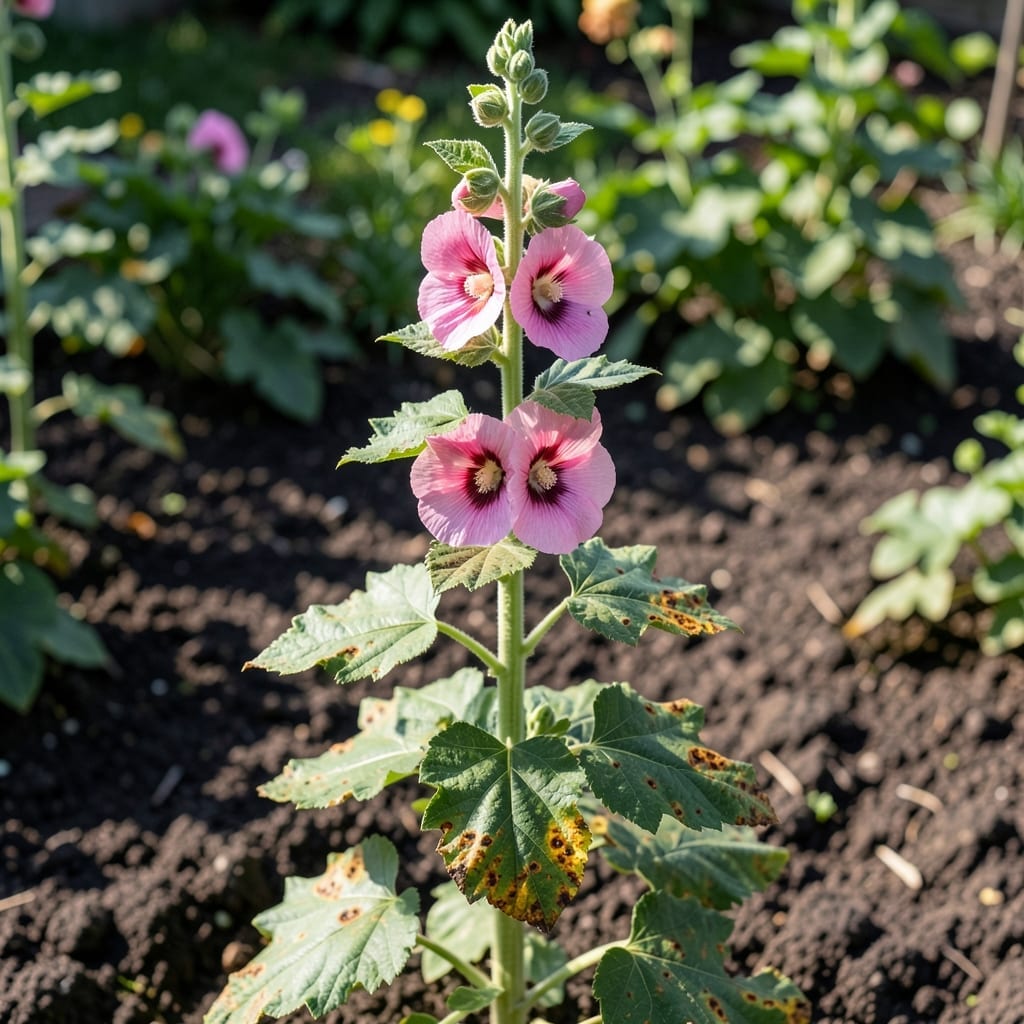
Those orange spots on your hollyhocks aren’t just ugly—they’re stealing your blooms. I lost half my plants to rust before learning these natural fixes.
Rust thrives in damp, crowded conditions, so the solution starts with better airflow and morning watering. 3 feet between plants makes a shocking difference.
Neem oil and baking soda sprays work wonders, but prevention beats treatment every time. Clean up fallen leaves religiously—they harbor spores ready for next season.
You’ll see new healthy growth within 2-3 weeks of consistent care. The blooms return bigger and brighter than ever.
Hollyhocks are a garden favorite, but their lush foliage can fall victim to rust, a fungal disease caused by Puccinia malvacearum. Here’s why it happens:
Rust thrives in damp conditions. Overwatering, poor drainage, or frequent rain creates the perfect breeding ground for fungal spores. When hollyhock leaves stay wet for extended periods, spores germinate and infect the plant. Action: Water at the base of the plant in the morning to allow foliage to dry quickly.
Crowded plantings or dense foliage restrict airflow, trapping moisture around leaves. This stagnant environment accelerates rust development. Action: Space hollyhocks 18–24 inches apart and prune lower leaves to improve ventilation.
The fungus overwinters in fallen leaves and plant debris. If old foliage isn’t removed, spores can reinfect hollyhocks the following season. Action: Clear garden debris in fall and avoid composting infected material.
Some hollyhock cultivars lack genetic resistance to rust. Older or heirloom varieties are often more vulnerable. Action: Opt for rust-resistant strains like ‘Queeny Purple’ or ‘Indian Spring’ when planting.
Rust on hollyhocks can be frustrating, but these practical solutions will help restore your plants to their vibrant best. Address each cause with targeted fixes and follow prevention tips to keep rust at bay.
Start by pruning and disposing of all infected leaves and stems. Do not compost them, as the fungus can survive and reinfect your garden. Use sterilized pruning shears to avoid spreading spores to healthy plants.
Rust thrives in damp, crowded conditions. Thin out dense plantings to allow better airflow. Space hollyhocks at least 2–3 feet apart, and avoid overhead watering. Water at the base of the plant in the morning so foliage dries quickly.
Spray affected plants with a baking soda solution (1 tablespoon baking soda, 1 teaspoon dish soap, 1 gallon of water) every 7–10 days. Alternatively, use neem oil or copper-based fungicides for a stronger approach. Always apply in the evening to prevent leaf burn.
If hollyhocks are a recurring problem in your garden, practice crop rotation. Avoid planting them in the same spot yearly. In fall, clear all plant debris from the garden bed to eliminate overwintering spores.
💡 Prevention Tips: Choose rust-resistant hollyhock varieties, keep the garden weed-free, and mulch with straw to reduce soil splash, which can spread spores to leaves.
Look for orange-yellow spots on the undersides of leaves, often with a rusty appearance. These spots may turn brown or black as the disease progresses. Leaves may also yellow and drop prematurely.
Yes! Remove and destroy infected leaves immediately. Apply a baking soda solution or neem oil spray every 7-10 days. Improve airflow by spacing plants 2-3 feet apart for best results.
It can spread to nearby hollyhocks and other mallows. Isolate infected plants and avoid overhead watering. Always sterilize pruning tools between cuts to prevent contamination.
Clean up all plant debris in fall, rotate planting locations, and choose rust-resistant varieties. Morning watering and good spacing are your best defenses.