
Beautiful Plants For Your Interior
Beautiful Plants For Your Interior
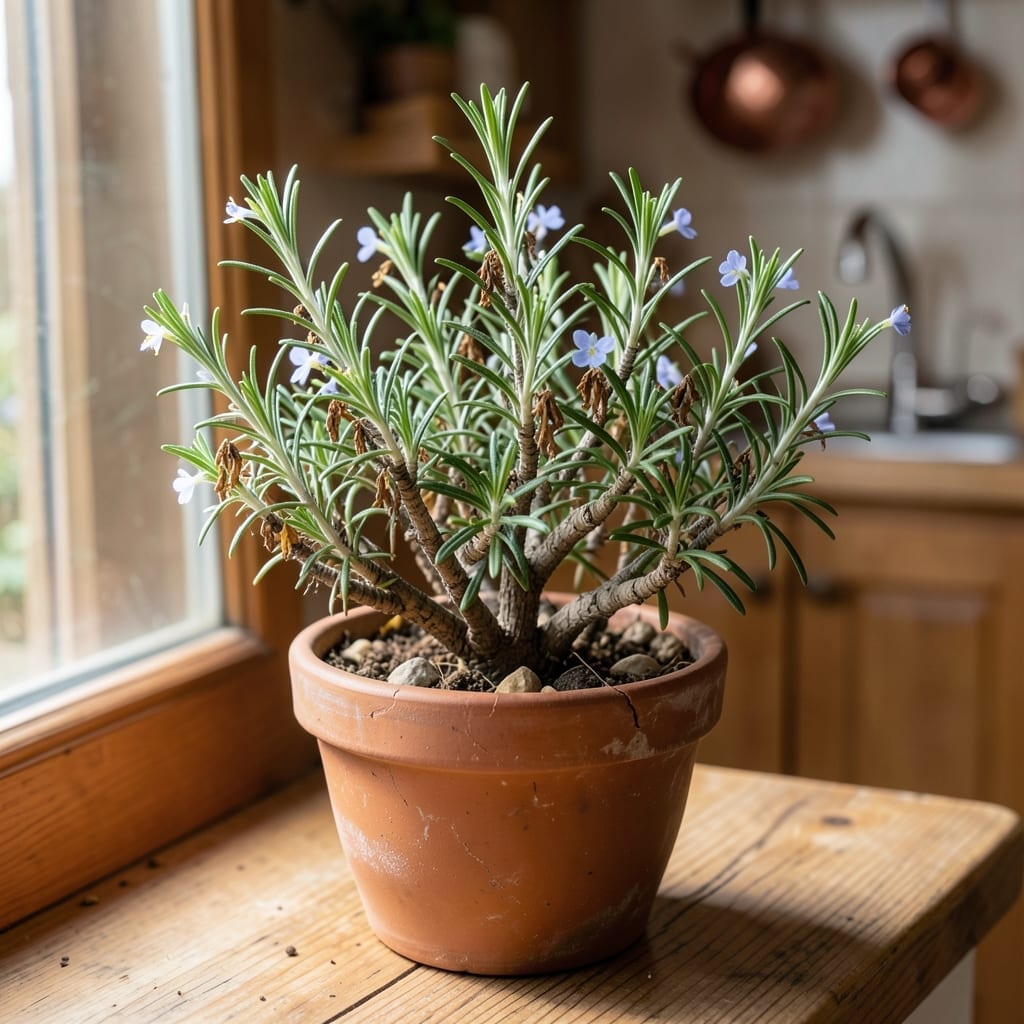
I watched my rosemary turn from vibrant green to crispy brown in 48 hours. Environmental shock hits this herb hard, but the good news is it often bounces back with the right care.
Overwatering drowns the roots, while underwatering leaves it parched. Both show up as brown needles first. I’ve killed three rosemary plants learning this the hard way—now I check soil moisture 2 inches down before watering.
Pests and disease rarely cause browning, but poor drainage or sudden temperature swings will. Move potted plants indoors before frost, and ensure containers have drainage holes to prevent root rot.
With proper light, consistent moisture, and well-draining soil, your rosemary can recover and grow even fuller than before. Here’s how to nurse it back to health.
Understanding why your Rosemary officinalis turns brown starts with recognizing the environmental and care-related stressors that disrupt its natural hardiness. This woody perennial thrives in Mediterranean-like conditions, so deviations from its ideal habitat can lead to discoloration and decline.
Rosemary is sensitive to cold snaps below 30°F (-1°C) and heatwaves above 90°F (32°C). Frost damages cell walls, causing leaves to blacken or brown, while excessive heat increases transpiration, leading to dehydration. In cold climates, winter dieback is common if the plant isn’t protected with mulch or moved indoors.
Overwatering and underwatering both trigger browning. Rosemary prefers dry to moderately moist soil—soggy roots suffocate and rot, while drought stress causes leaves to crisp and yellow-brown. Check soil moisture 2 inches deep; water only when dry.
Heavy, clay-rich, or water-retentive soils asphyxiate roots, limiting oxygen uptake. Rosemary demands well-draining, sandy loam with a pH of 6.0–7.0. Compacted or nutrient-poor soil also restricts growth, leading to weak, discolored foliage.
While rosemary loves full sun (6–8 hours daily), intense afternoon rays in arid regions can scorch leaves, especially in containers. Sunburn appears as bleached or brown patches on exposed foliage. Provide dappled shade during peak heat if browning occurs.
If your rosemary plant has turned brown, don’t panic—it can often be revived with the right care. Below are targeted solutions for common causes, along with prevention tips to keep your plant thriving.
Fix: Check the soil—if it’s bone-dry, give it a deep watering until water drains from the bottom. If it’s soggy, let it dry out completely before watering again. Rosemary prefers well-draining soil and can tolerate drought better than waterlogging.
Prevention: Water only when the top 1-2 inches of soil are dry. Use a pot with drainage holes to avoid root rot.
Fix: Move the plant to a spot with partial shade during peak afternoon hours. If it’s potted, shift it to a cooler area. Trim back severely browned stems to encourage new growth.
Prevention: Acclimate rosemary gradually to full sun, and mulch around the base to retain moisture.
Fix: Prune dense foliage to improve airflow. If indoors, place it near an open window or use a small fan. For high humidity, ensure it’s in a well-ventilated area.
Prevention: Space plants at least 2-3 feet apart outdoors. Indoors, avoid crowded groupings.
Fix: Feed with a balanced, slow-release fertilizer (10-10-10) or a diluted liquid fertilizer every 4-6 weeks during growing season. Yellowing leaves may indicate a lack of nitrogen.
Prevention: Refresh potting soil annually and avoid over-fertilizing, which can burn roots.
💡 Pro Tip: Rosemary is hardy—once you address the issue, new green growth should appear in 2-4 weeks. Be patient and consistent!
Water deeply only when the top 2 inches of soil are dry. In hot weather, this may mean watering every 5-7 days. Always let excess water drain completely.
Yes! Trim dead brown stems back to green growth. New shoots often appear within 2-4 weeks with proper care. Avoid cutting into woody sections.
Repot if roots are circling or soil stays soggy. Use a well-draining mix with perlite. Wait 1 week before watering after repotting to reduce shock.