
Beautiful Plants For Your Interior
Beautiful Plants For Your Interior
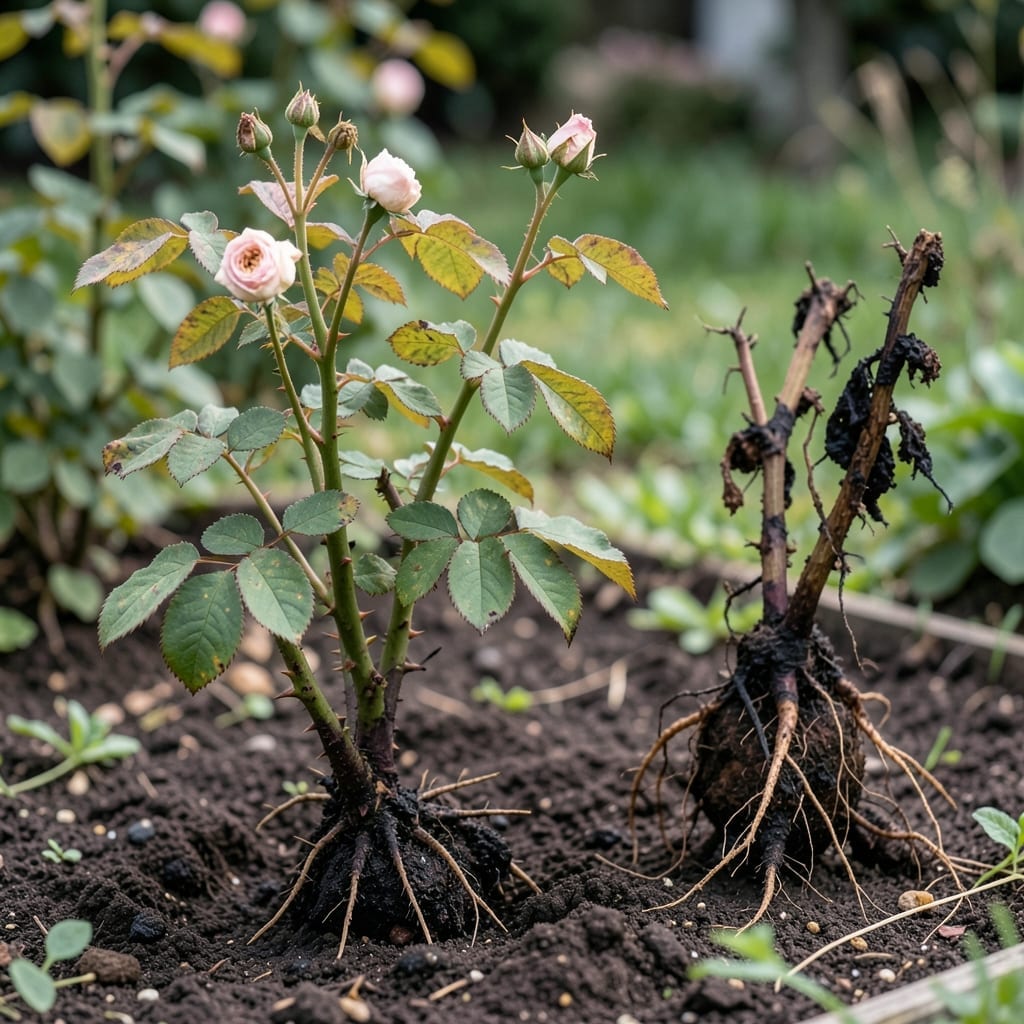
Yellowing leaves and wilting stems on your roses aren’t always from drought. Root rot creeps in silently, turning healthy plants into sad, drooping shadows before you even notice the problem.
I spotted it first in my hybrid teas—blackened roots and a foul smell when I dug up a struggling bush. Overwatering and poor drainage were the culprits, but the fix was simpler than I expected. Proper soil and a few natural treatments brought them back.
Catch it early and you can save your plants. The key is acting fast when you see the first soft, brown roots or stunted growth. Most roses bounce back with the right care.
Works for all rose types, from climbers to shrubs. Here’s how to spot it and stop it.
Understanding why rose root rot occurs is the first step in prevention. This destructive condition typically stems from environmental and cultural factors that create ideal conditions for fungal and water mold pathogens. Below are the primary causes, explained scientifically for clarity and actionability.
Excessive moisture is the leading cause of root rot in roses. When soil remains waterlogged, oxygen is displaced, suffocating the roots and creating an anaerobic environment. This stress weakens the plant, allowing pathogens like Phytophthora and Pythium to thrive. Solution: Ensure pots have drainage holes, and amend garden soil with organic matter to improve permeability.
Fungal spores can persist in soil or on gardening tools for years. If infected soil or unsterilized pruners come into contact with healthy rose roots, the pathogens can quickly take hold. Solution: Use pasteurized potting mix and disinfect tools with a 10% bleach solution between uses.
Pathogens responsible for root rot proliferate in temperatures between 60–85°F (15–29°C) with high humidity. These conditions accelerate spore germination and fungal growth. Solution: Space roses for airflow, water at the base in the morning, and mulch to moderate soil temperature.
Clay or compacted soils retain water and restrict root respiration, making roses more susceptible to rot. Solution: Loosen soil before planting and incorporate compost or sand to improve structure and drainage.
Root rot in roses can often be reversed if caught early. Below are targeted solutions based on the most common causes, along with prevention tips to keep your roses thriving.
Fix: Stop watering immediately and let the soil dry out. If the pot lacks drainage holes, repot the rose in a container with proper drainage. For in-ground roses, improve soil structure by mixing in compost or sand to enhance drainage.
Prevent: Water only when the top 1-2 inches of soil are dry. Use a well-draining potting mix and ensure containers have drainage holes. 💡 Pro Tip: Elevate pots to prevent waterlogging.
Fix: Remove affected roots with sterilized pruners and treat the remaining roots with a fungicide (like copper-based sprays) or a natural solution such as hydrogen peroxide (1 part 3% H₂O₂ to 4 parts water). Discard heavily infected soil.
Prevent: Avoid overhead watering to keep foliage dry. Apply a layer of mulch to prevent soil splashing onto leaves. ✨ Pro Tip: Use cinnamon powder on cuts—it has natural antifungal properties!
Fix: Loosen the soil around the roots gently with a fork to improve aeration. Amend heavy clay soil with organic matter like peat moss or compost to break it up.
Prevent: Regularly aerate the soil and avoid walking near the rose’s base to prevent compaction. 🎯 Pro Tip: Plant roses in raised beds if your garden has naturally dense soil.
Fix: Sterilize pruners, pots, and gardening tools with rubbing alcohol or a bleach solution (1 part bleach to 9 parts water) before and after use.
Prevent: Always clean tools after each use and avoid reusing soil from infected plants. 🌡️ Pro Tip: Soak tools in hot, soapy water weekly for extra protection.
Look for yellowing leaves, wilting, and stunted growth. Dig up a small section to check for soft, brown, or blackened roots with a foul odor.
Stop watering, remove the plant, and trim away mushy roots. Repot in fresh, well-draining soil and a clean container with drainage holes.
No, discard infected soil to prevent reinfection. Sterilize pots with a 10% bleach solution before reusing.
Water only when the top 1-2 inches of soil are dry. Morning watering helps prevent fungal growth.