
Beautiful Plants For Your Interior
Beautiful Plants For Your Interior
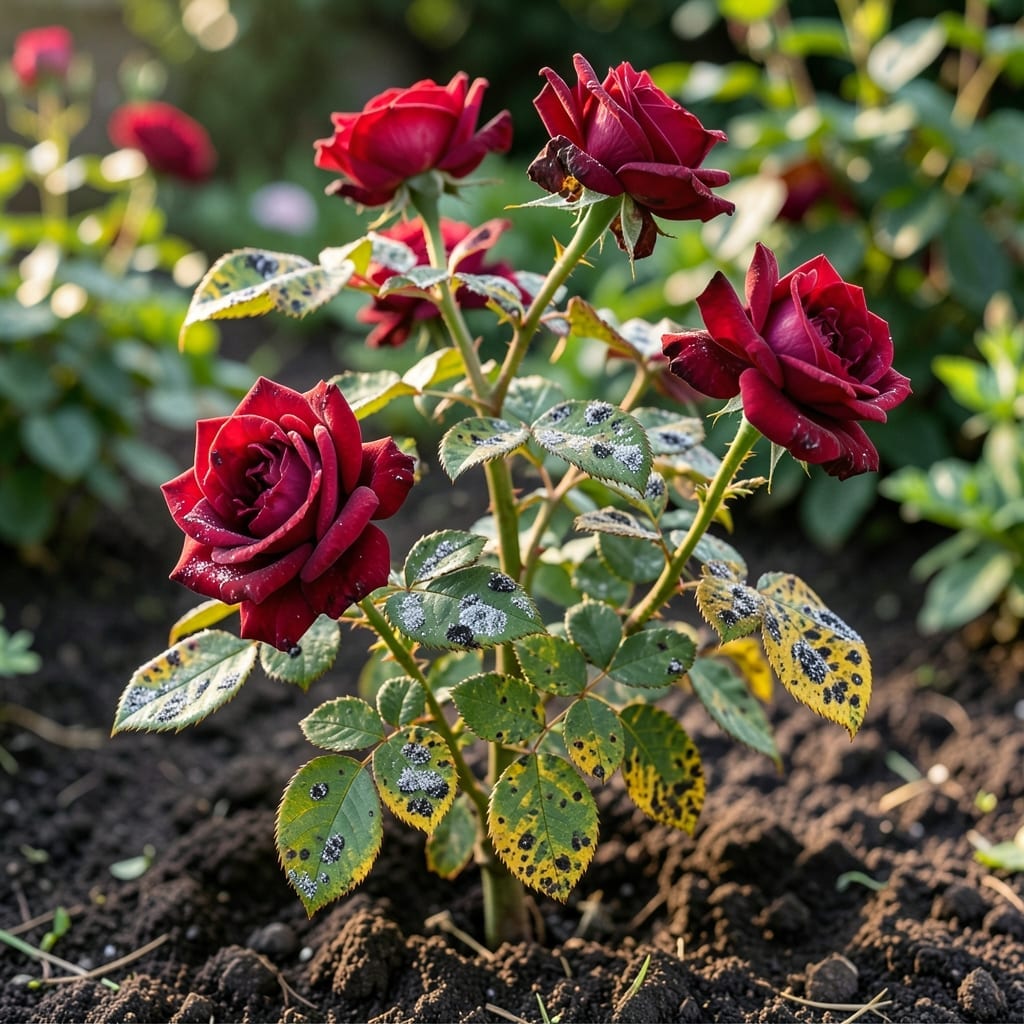
Spotted leaves on your roses mean trouble brewing. 🌿 I’ve lost entire bushes to black spot and powdery mildew before learning the early warning signs—dark patches, white powder, or curled edges appearing overnight.
The good news? These fungal invaders follow predictable patterns. They thrive in wet foliage and poor air circulation, spreading fastest during cool, humid mornings. Catching them early makes treatment 10x easier than nursing back a severely infected plant.
You’ll see visible improvement within 7-10 days of proper treatment. Organic options like baking soda sprays work for mild cases, while copper fungicides tackle severe outbreaks. Prevention is simpler than cure.
Works for hybrid teas, climbers, and shrub roses alike. Here’s how to spot, stop, and prevent the most common rose diseases before they take hold.
Fungal infections in roses thrive under specific environmental and cultural conditions. Understanding these triggers helps prevent outbreaks before they start.
Fungi like black spot and powdery mildew spread rapidly in damp environments. Overhead watering, poor drainage, or high humidity creates ideal breeding grounds. Roses with wet foliage for 6+ hours are especially vulnerable, as spores germinate in this window.
Cool nights (50–60°F) paired with warm days (70–80°F) accelerate fungal growth. These conditions weaken rose defenses while encouraging spore production. Shade-prone gardens or crowded plantings exacerbate the issue by trapping moisture and restricting airflow.
Dense canopies or overcrowded beds limit airflow, allowing humidity to linger. Fungi like rust and anthracnose exploit stagnant air to colonize leaves and stems. Pruning for an open center and spacing plants 3–4 feet apart disrupts this cycle.
Over-fertilizing with nitrogen promotes lush, soft growth—tender tissue that fungi easily penetrate. Conversely, potassium-deficient roses lack cellular strength to resist infection. A balanced feed (e.g., 10-10-10) and regular soil tests maintain resilience.
Fungal issues on your roses can be frustrating, but these targeted fixes will help you restore health and prevent future outbreaks.
Fix: Spray affected leaves with a mix of 1 tablespoon baking soda, 1 quart water, and a few drops of dish soap. Remove heavily infected leaves and discard them (not in compost). Apply neem oil weekly for severe cases.
Prevent: Improve air circulation by pruning dense foliage. Water at the base in the morning so leaves dry quickly. Pro tip: Plant resistant varieties like ‘Knock Out’ roses.
Fix: Remove infected leaves immediately and apply a copper-based fungicide or sulfur spray. Repeat every 7–10 days until the issue clears.
Prevent: Avoid overhead watering and keep foliage dry. Clean up fallen leaves and debris around the bush regularly. Pro tip: Mulch with straw to reduce soil-borne spores.
Fix: Prune and destroy infected leaves or canes. Treat with fungicidal soap or horticultural oil, ensuring full coverage of undersides of leaves.
Prevent: Space plants widely for airflow. Water early in the day and avoid crowding with other plants. Pro tip: Disinfect pruning tools with rubbing alcohol between cuts.
Fix: Stop watering immediately and let the soil dry out. If the plant is severely affected, remove it to prevent spread. For mild cases, treat with a biological fungicide containing Trichoderma.
Prevent: Ensure well-draining soil and avoid overwatering. Plant in raised beds if your garden has heavy clay soil. Pro tip: Use drip irrigation to keep roots moist but not soggy.
Check for black spots with yellow halos, white powdery coating, or orange pustules on leaves. Curling or dropping leaves are also early warnings. Act fast—fungi spread within 48-72 hours in wet conditions.
Yes! A mix of 1 tablespoon baking soda and 1 quart water with dish soap works for mild powdery mildew. For black spot, remove infected leaves and apply weekly. Always test on a small area first.
Fungi linger in soil and debris. Clean up fallen leaves, improve airflow, and avoid overhead watering. Rotate treatments—fungi can build resistance to single methods over time.
No. Fungal spores survive composting and can reinfect your garden. Seal and discard infected plant material in the trash instead. This prevents future outbreaks.