
Beautiful Plants For Your Interior
Beautiful Plants For Your Interior
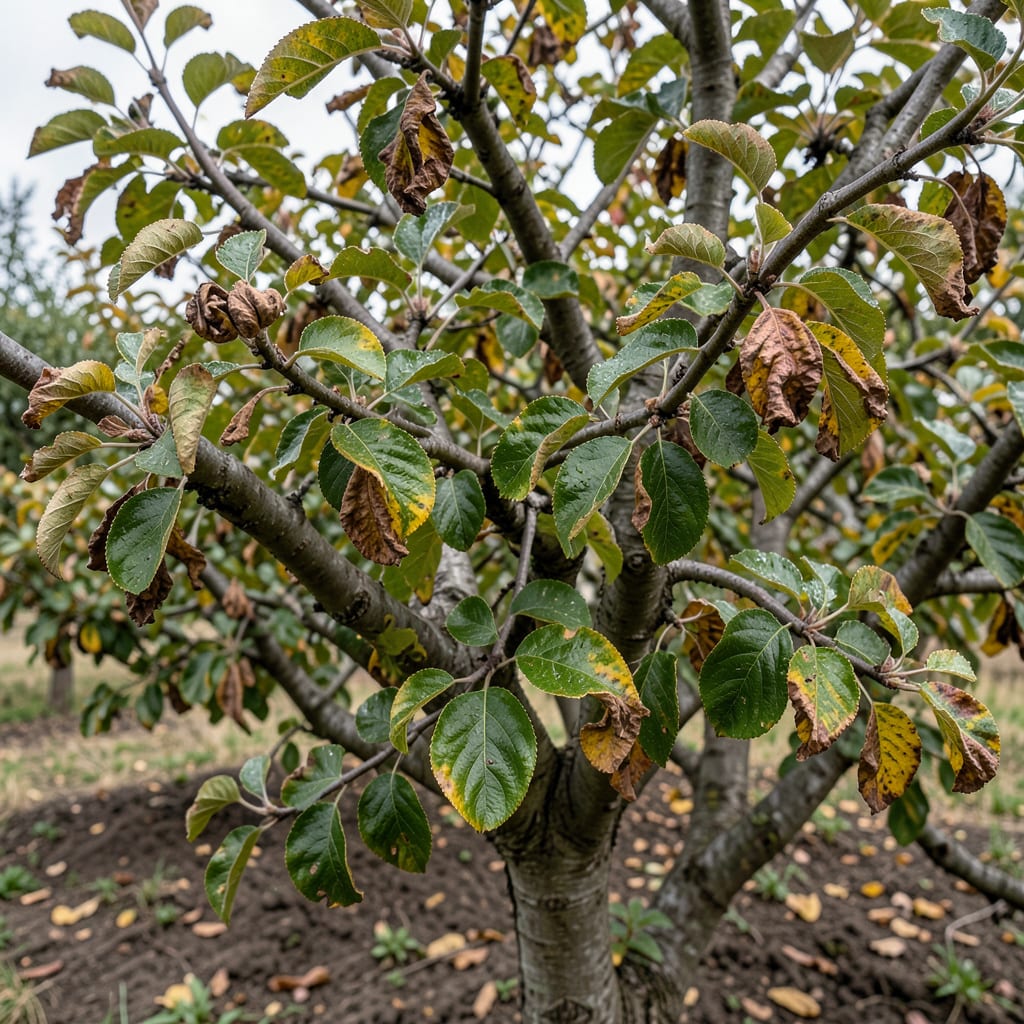
Those curled leaves on your apple tree aren’t just ugly—they’re a distress signal. I’ve seen entire orchards go downhill fast when this gets ignored.
Early diagnosis saves trees, and the right pictures make it 10x easier to spot the culprit. We’ll match your symptoms to solutions before the damage spreads.
📚 In This Guide
Here’s my reliable method for spotting and diagnosing common issues before they spread.
Start by observing whether the curling is upward or downward, as this is a key diagnostic clue. Upward curling often signals apple scab or powdery mildew, while downward curling can indicate aphid infestation or fire blight. Look closely at the undersides of the leaves—this is where pests and early fungal signs often appear first.
I always check multiple branches, not just the most affected ones. If the curling is isolated to new growth, it might be environmental stress like uneven watering. If it’s widespread, you’re likely dealing with a disease that needs immediate attention.
Curling is rarely the only symptom. With apple scab, you’ll see dark, olive-green spots on the leaves that turn velvety brown. Powdery mildew leaves a white, powdery coating, often on the upper leaf surface. Aphids leave behind a sticky residue called honeydew, which can attract sooty mold.
Fire blight causes leaves to curl and blacken, as if scorched, and the disease often spreads to the twigs, causing them to bend like a shepherd’s crook. I’ve found that catching these secondary signs early makes treatment far more effective.
Timing and weather play a huge role in leaf curling. Wet, cool springs are perfect for apple scab and fire blight to take hold. If this season has been unusually rainy, fungal diseases are more likely. On the other hand, hot, dry conditions can stress the tree, leading to curling as a survival response.
I also check the tree’s overall health. A tree that’s already weakened by poor soil, drought, or root damage is more susceptible to disease. Sometimes, improving growing conditions is the first step in solving the problem.
Use a trusted guide or app to compare your findings with known disease images. Look for matches in leaf color, curling direction, and additional symptoms like spots, lesions, or cankers. I keep a digital folder of verified disease photos to reference when I’m unsure.
Don’t rely on just one source—cross-check with at least two to confirm your diagnosis. Misidentifying the issue can lead to the wrong treatment, which wastes time and may harm the tree further. When in doubt, consult a local extension office for expert insight.
Once you’ve identified the cause, act quickly. For fungal diseases like scab or mildew, remove and destroy affected leaves and apply a fungicide labeled for apple trees. For aphids, a strong blast of water or insecticidal soap can dislodge them. Fire blight requires pruning 8-12 inches below the infected area with sterilized tools.
I’ve learned that early intervention is critical. The longer you wait, the harder it is to control the problem. Always disinfect your pruners between cuts to prevent spreading the disease to healthy parts of the tree.
These practical insights will help you accurately identify issues before they spread.
The Pattern Check: In Step 1, don’t just look at the most damaged leaves—examine multiple branches. I learned the hard way that isolated curling on new growth often signals environmental stress, while widespread curling across the tree usually means a serious disease that needs immediate action.
Symptom Pairing: Step 2 reveals that curling rarely happens alone. If you see upward curling, check for the dark olive-green spots of apple scab or white powder of mildew. Downward curling with sticky residue? That’s likely aphids. I always look for these secondary signs to confirm my diagnosis.
Environmental Clues: Step 3 reminds us that weather matters. After several misdiagnoses, I realized wet springs point to fungal issues, while hot, dry conditions often cause stress-related curling. Always consider what the season has been like when assessing your tree’s health.
Visual Verification: For Step 4, I can’t emphasize enough how important it is to cross-check with at least two reliable sources. I keep a digital folder of verified disease photos, and comparing my findings against multiple references has saved me from misidentifying problems more times than I can count.
Curling leaves are often caused by fungal diseases like apple scab or powdery mildew, pest infestations (e.g., aphids), or environmental stress such as drought or nutrient deficiencies. Identifying the exact cause early helps in effective treatment.
Start by removing affected leaves and applying fungicides or horticultural oils for fungal or pest issues. Improve air circulation, water consistently, and ensure proper nutrition. Neem oil is a natural alternative for mild cases.
Early spring, before buds swell, is ideal for preventive treatments. For active infections, apply treatments at the first sign of curling. Regular monitoring and seasonal care (spring/fall) help maintain tree health.
Yes, if caused by contagious diseases or pests like apple scab or mites. Isolate affected trees, practice good sanitation (remove fallen leaves), and avoid overhead watering to prevent spreading.
Yes! Disease-resistant varieties like Liberty, Freedom, or Enterprise are bred to withstand common issues like apple scab and mildew. Planting these can reduce the need for chemical treatments.
