
Beautiful Plants For Your Interior
Beautiful Plants For Your Interior
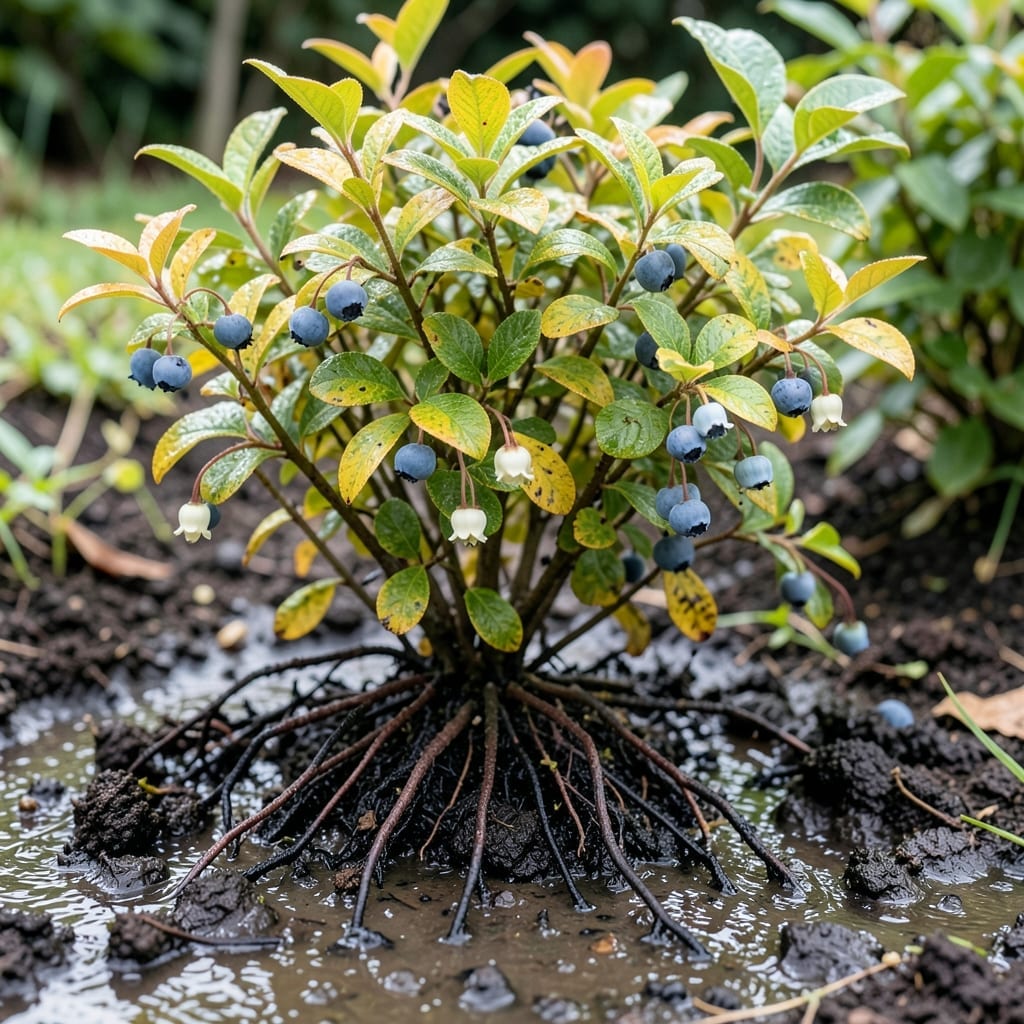
That sinking feeling when your blueberry bush starts wilting. I’ve been there—watching healthy plants turn yellow overnight because of too much love (and water).
Root rot sneaks in fast with overwatering, but it’s not a death sentence. The key is catching it early before the roots turn to mush and the plant gives up entirely.
With the right steps, you can revive even the saddest-looking bushes. I saved mine by adjusting watering, improving drainage, and giving the roots room to breathe again.
Better yet, these fixes prevent it from happening again next season. Here’s how to turn things around before it’s too late.
Root rot in blueberry bushes is a common issue that often stems from overwatering, but the underlying causes are more nuanced. Below are the primary reasons why this happens, explained with actionable insights.
Blueberries thrive in well-draining, acidic soil (pH 4.0–5.5). When soil stays soggy—due to heavy clay, poor drainage, or frequent watering—Phytophthora and Pythium fungi proliferate. These pathogens attack roots, blocking water and nutrient uptake. Fix: Amend soil with pine bark or sand to improve drainage.
Potted blueberries are especially vulnerable. Containers without drainage holes trap water, while compacted roots suffocate. Solution: Use fabric pots or elevate containers to ensure excess water escapes.
Fungi thrive in warm (70–80°F), waterlogged conditions. Overwatering in heatwaves or humid climates accelerates root rot. Action: Water only when the top 1–2 inches of soil are dry, and mulch with pine needles to regulate moisture.
Excess nitrogen or synthetic fertilizers can burn roots, weakening the plant’s defenses. Blueberries prefer organic, low-N options like cottonseed meal. Tip: Test soil before fertilizing—overwatering often masks nutrient imbalances.
Root rot in an overwatered blueberry bush is fixable if you act quickly. Start by diagnosing the issue: yellowing leaves, mushy roots, or a foul odor are red flags. Below are targeted solutions for each cause, along with prevention tips to keep your bush thriving.
Blueberries love moisture but hate soggy roots. Stop watering immediately and let the soil dry out. Stick your finger 2 inches into the soil—if it’s damp, wait. Water only when the top inch feels dry. Use a moisture meter for precision.
Prevention: Water deeply but less frequently (1–2 times per week, depending on rainfall). Ensure your soil drains well.
If your blueberry sits in heavy clay or compacted soil, roots suffocate. Amend the soil with organic matter like pine bark fines, compost, or perlite to boost drainage. For potted bushes, ensure the container has drainage holes.
Prevention: Plant blueberries in raised beds or containers if your native soil is problematic.
Fungus thrives in wet conditions. Remove the bush from the soil and trim away black, mushy roots with sterilized shears. Soak the remaining roots in a hydrogen peroxide solution (1 part 3% H₂O₂ to 4 parts water) for 10 minutes to kill fungus. Repot in fresh, sterile soil.
Prevention: Apply a fungal drench like Trichoderma or neem oil to the soil monthly during wet seasons.
Too many roots in a small space compete for oxygen. Prune dead or diseased roots and thin out dense growth. If planted too closely, transplant bushes at least 4–6 feet apart.
Prevention: Give blueberries room to grow from the start, and prune annually to maintain airflow.
💡 Pro Tip: Mulch with pine needles or wood chips to retain moisture without waterlogging, and always water at the base—not the leaves—to prevent fungal spread.
Look for yellowing leaves, wilting despite wet soil, or a foul odor from the roots. Gently dig near the base—black, mushy roots confirm the issue.
Yes, if you act fast. Trim all affected roots, treat with hydrogen peroxide solution, and repot in fresh, acidic soil. Recovery takes 4-6 weeks with proper care.
Use a blend of 50% pine bark fines and 50% peat moss for ideal drainage and acidity. Add perlite for extra aeration in containers.
Water only when the top 1-2 inches of soil are dry. In most climates, this means 1-2 times per week. Always check soil moisture first.