
Beautiful Plants For Your Interior
Beautiful Plants For Your Interior
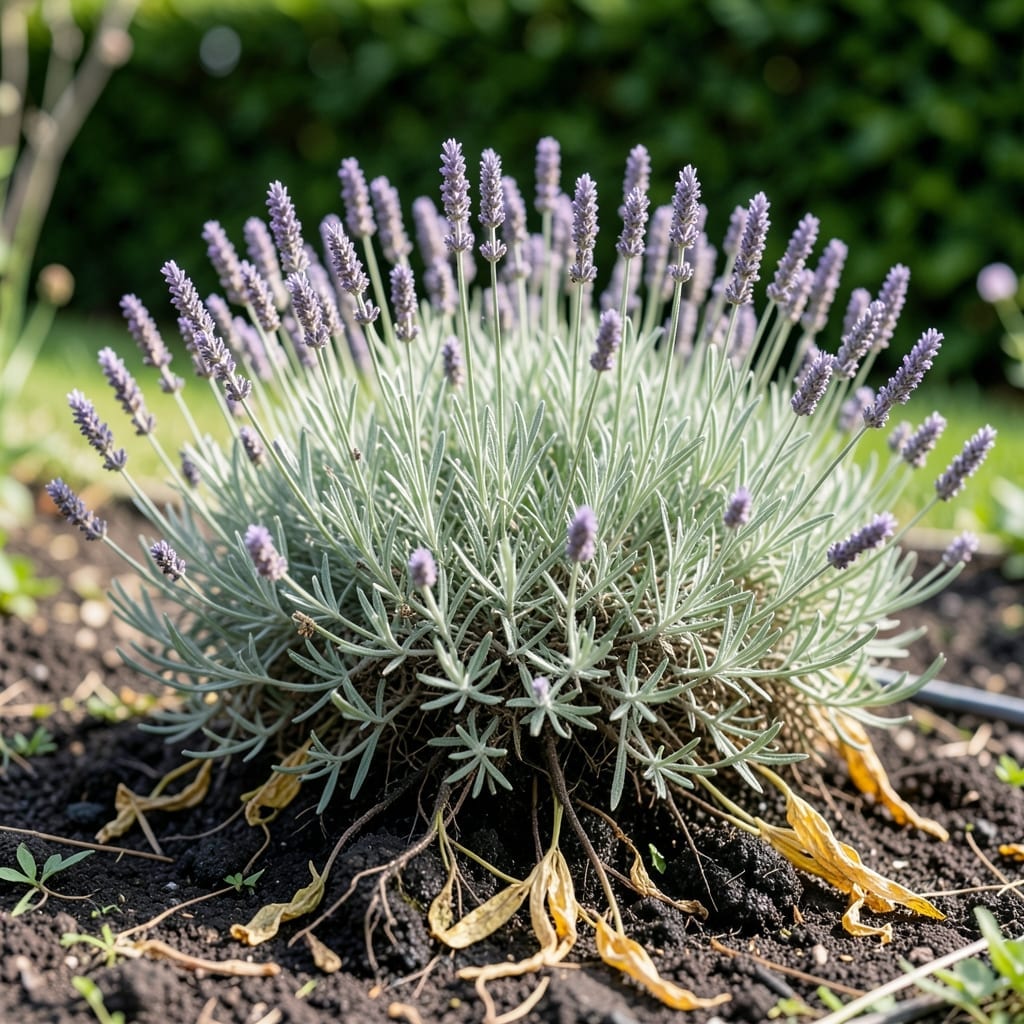
I lost my first lavender to root rot before I understood the warning signs. The leaves yellowed, the stems softened, and within days it was beyond saving. It’s a silent killer that thrives in soggy soil.
Prevention is simpler than you think. Well-draining soil and careful watering are your best defenses. With the right approach, your lavender will reward you with fragrant blooms and healthy roots for years.
📚 In This Guide
Here’s the method I use to keep lavender thriving with healthy roots and no rot.
Lavender demands full sun for at least 6-8 hours daily—any less and the plant weakens, making it susceptible to root rot. I always pick a spot with excellent air circulation, as stagnant, humid conditions are the perfect breeding ground for fungal issues.
Soil must drain extremely well. If your garden has heavy clay, amend the planting area with coarse sand or gravel to improve drainage. I’ve learned the hard way that lavender planted in dense, moisture-retentive soil almost always develops root rot within a season.
Lavender is drought-tolerant once established, so resist the urge to water frequently. I water deeply but only when the top 1-2 inches of soil feels completely dry to the touch. Overwatering is the most common cause of root rot in lavender.
Always water at the base of the plant, never from above. Wet foliage can lead to fungal diseases that spread to the roots. Early morning watering allows excess moisture to evaporate during the day, reducing the risk of rot.
Space lavender plants 2-3 feet apart to ensure good airflow between them. Crowded plants trap humidity, which encourages fungal growth. I plant each lavender at the same depth it was growing in its container—burying the stem too deep can suffocate the roots.
If planting in containers, choose pots with multiple drainage holes and use a well-draining potting mix. Elevate the pots on feet or bricks to prevent water from pooling at the base. I’ve found that lavender in raised beds or containers rarely suffers from root rot when given proper drainage.
Prune lavender in early spring to remove dead or woody growth, which improves airflow to the center of the plant. I cut back about one-third of the previous year’s growth, making sure not to prune into old, bare wood, as lavender may not regrow from there.
Regularly remove any fallen leaves or debris around the base of the plant. This prevents organic matter from trapping moisture against the stems and roots. A clean, tidy growing area is one of the simplest ways to avoid root rot.
Check your lavender plants weekly for signs of stress, such as yellowing leaves, wilting, or stunted growth. If you suspect root rot, dig carefully around the base to inspect the roots. Healthy roots are firm and white, while rotten roots are dark, mushy, and may have a foul odor.
If you find rot, act immediately. Trim away any affected roots with clean, sharp shears and repot or replant the lavender in fresh, dry soil. I’ve saved many plants by catching root rot early and giving them a fresh start in a better-draining location.
Small adjustments make the difference between struggling plants and thriving lavender.
The Sun Factor: That 6-8 hours of daily full sun isn’t just a suggestion—it’s critical for strong plants that resist rot. If your garden gets partial shade, consider container planting so you can move pots to follow the sun. I once lost an entire row by planting in a spot that only got 5 hours of sun.
Drainage Non-Negotiable: When I say amend heavy clay with coarse sand or gravel, I mean it. Lavender roots can’t tolerate wet feet. If you’re unsure about your soil, dig a test hole, fill it with water, and see how long it takes to drain. Anything over an hour means you need to improve drainage before planting.
Watering Discipline: The “top 1-2 inches completely dry” rule is your best defense against overwatering. I use the finger test—stick your finger in the soil up to the second knuckle. If it feels damp, wait. And always water at the base, never the leaves. Morning watering is ideal; evening watering leaves moisture sitting all night.
Planting Depth: Planting too deep is a common mistake that leads to stem rot. The crown (where stems meet roots) should sit just above soil level. I mark the depth on the pot with a piece of tape before planting to ensure I don’t bury it too deep in my enthusiasm to get it in the ground.
Look for yellowing leaves, wilting, or black, mushy roots. A foul smell from the soil is another red flag. Early detection is key to saving your plant!
Yes! Trim affected roots, repot in fresh, well-draining soil, and reduce watering. Ensure the new pot has drainage holes to prevent recurrence.
Water deeply but only when the top 1-2 inches of soil are dry. Lavender thrives on neglect—overwatering is its biggest enemy!
Use a sandy, gritty mix (like cactus soil) with perlite or pumice. This ensures excellent drainage, keeping roots dry and healthy.
While no variety is immune, Lavandula angustifolia (English lavender) and Lavandula x intermedia (Grosso) handle moisture better than others.