
Beautiful Plants For Your Interior
Beautiful Plants For Your Interior
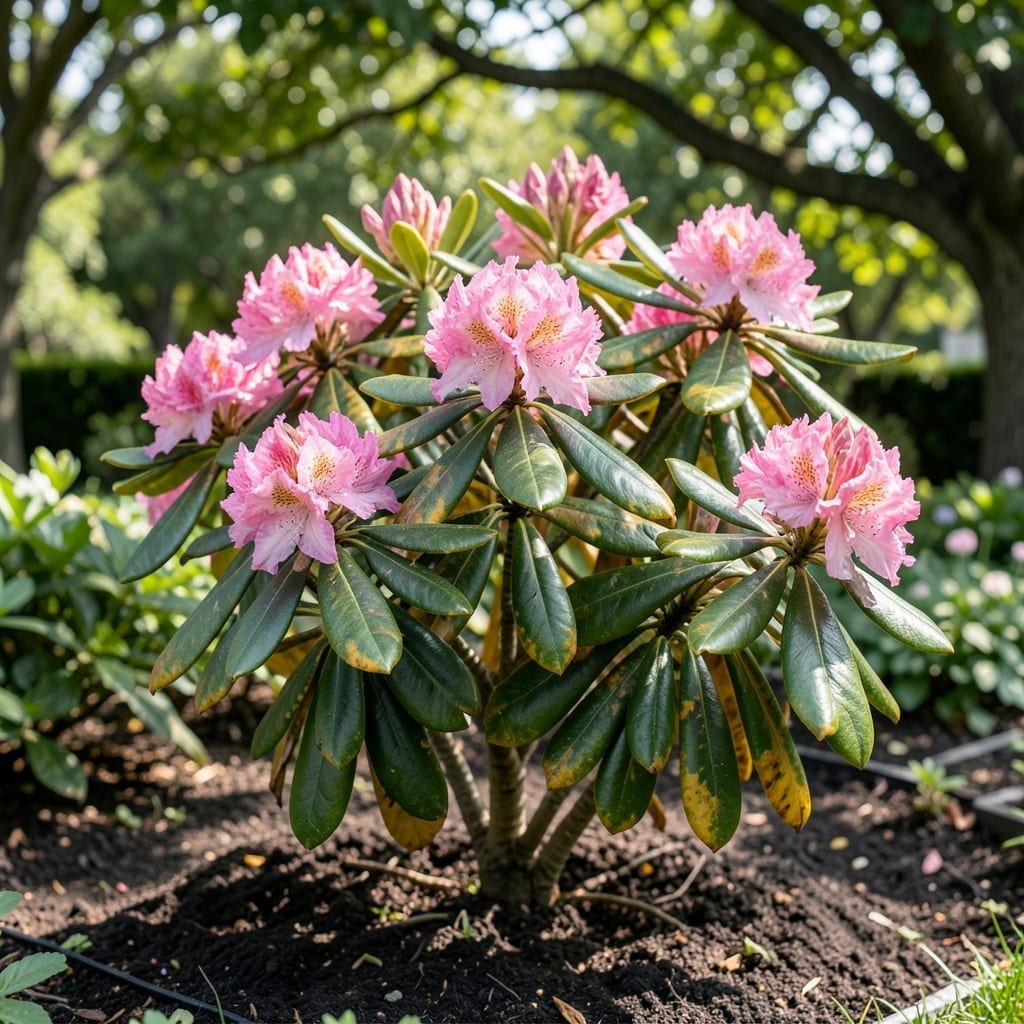
Yellow leaves on your rhododendron aren’t a death sentence—they’re a cry for help. I’ve nursed dozens back to health by fixing what’s missing in their care.
Most often, it’s an iron deficiency showing up as yellow leaves with green veins. But overwatering, poor drainage, or the wrong soil pH can do the same damage. The fix starts with testing your soil and adjusting accordingly.
Within 2-3 weeks of the right treatment, you’ll see new growth returning to that vibrant green. The key is catching it early before the whole plant declines.
Works for all rhododendron varieties, whether they’re in the ground or in containers. Here’s how to diagnose and fix it for good.
Yellowing leaves on your rhododendron are often a distress signal. Below are the most common causes, each with clear, actionable explanations to help you diagnose and fix the issue.
Rhododendrons thrive in acidic soil (pH 4.5–5.5). When the soil lacks essential nutrients, leaves turn yellow. Nitrogen deficiency typically causes uniform yellowing, while iron chlorosis (due to high pH or poor uptake) leads to yellow leaves with green veins. Test your soil and amend with sulfur or chelated iron to restore balance.
Root rot from soggy soil starves roots of oxygen, impairing nutrient absorption. Symptoms include yellowing leaves, wilting, and stunted growth. Ensure your rhododendron is planted in well-draining, moisture-retentive soil. Adjust watering to keep soil evenly moist but not waterlogged.
Too much direct sunlight can scorch leaves, causing yellow or brown patches. Rhododendrons prefer dappled shade. If exposure is unavoidable, provide afternoon shade and mulch to retain moisture. Cold drafts or sudden temperature swings can also stress the plant, leading to discoloration.
Sap-sucking pests like lace bugs or spider mites drain nutrients, causing stippling and yellowing. Inspect leaf undersides for tiny insects or webbing. Treat with horticultural oil or insecticidal soap, targeting both pests and their eggs for full eradication.
If your rhododendron’s leaves are turning yellow, don’t worry—there are clear fixes for each underlying cause. Here’s how to tackle the most common issues and restore your plant’s vibrant green foliage.
Iron or Magnesium Shortage: Apply a chelated iron supplement or Epsom salt (1 tablespoon per gallon of water) directly to the soil. For long-term prevention, use an acid-loving plant fertilizer (like one for azaleas) every 4–6 weeks during growing season.
Nitrogen Deficiency: Work in a slow-release, balanced fertilizer (10-10-10) around the root zone. Avoid over-fertilizing, which can burn roots. 💡 Pro Tip: Test soil pH first—rhododendrons thrive in 4.5–5.5 pH.
Overwatering: Let the top 1–2 inches of soil dry out between waterings. Improve drainage by mixing in pine bark fines or perlite. Ensure pots have drainage holes.
Underwatering: Water deeply 2–3 times per week (more in heatwaves). Mulch with 2–3 inches of wood chips to retain moisture. 🎯 Prevention: Use a moisture meter to avoid guessing.
For Phytophthora root rot (yellowing + wilting), remove affected roots and treat with a copper-based fungicide. Prevent recurrence by improving air circulation and avoiding soggy soil. ✨ Bonus: Plant in raised beds if drainage is poor.
Too Much Sun: Move potted plants to dappled shade or use shade cloth. For in-ground plants, add a lightweight row cover during peak afternoon sun.
Cold Damage: Protect with burlap wraps or mulch heavily before frost. Avoid late-season fertilizing, which encourages tender new growth.
Address the issue early, and your rhododendron will reward you with lush, green leaves in no time!
This is classic iron chlorosis. Apply chelated iron to the soil and test your pH—rhododendrons need 4.5-5.5. Lower pH with sulfur if needed.
Yes, soggy soil leads to root rot. Let the top 1-2 inches dry between waterings and ensure good drainage. Potted plants need drainage holes.
Use an acid-loving plant fertilizer (like azalea food) every 4-6 weeks in growing season. Avoid high-nitrogen formulas unless soil test confirms deficiency.