
Beautiful Plants For Your Interior
Beautiful Plants For Your Interior
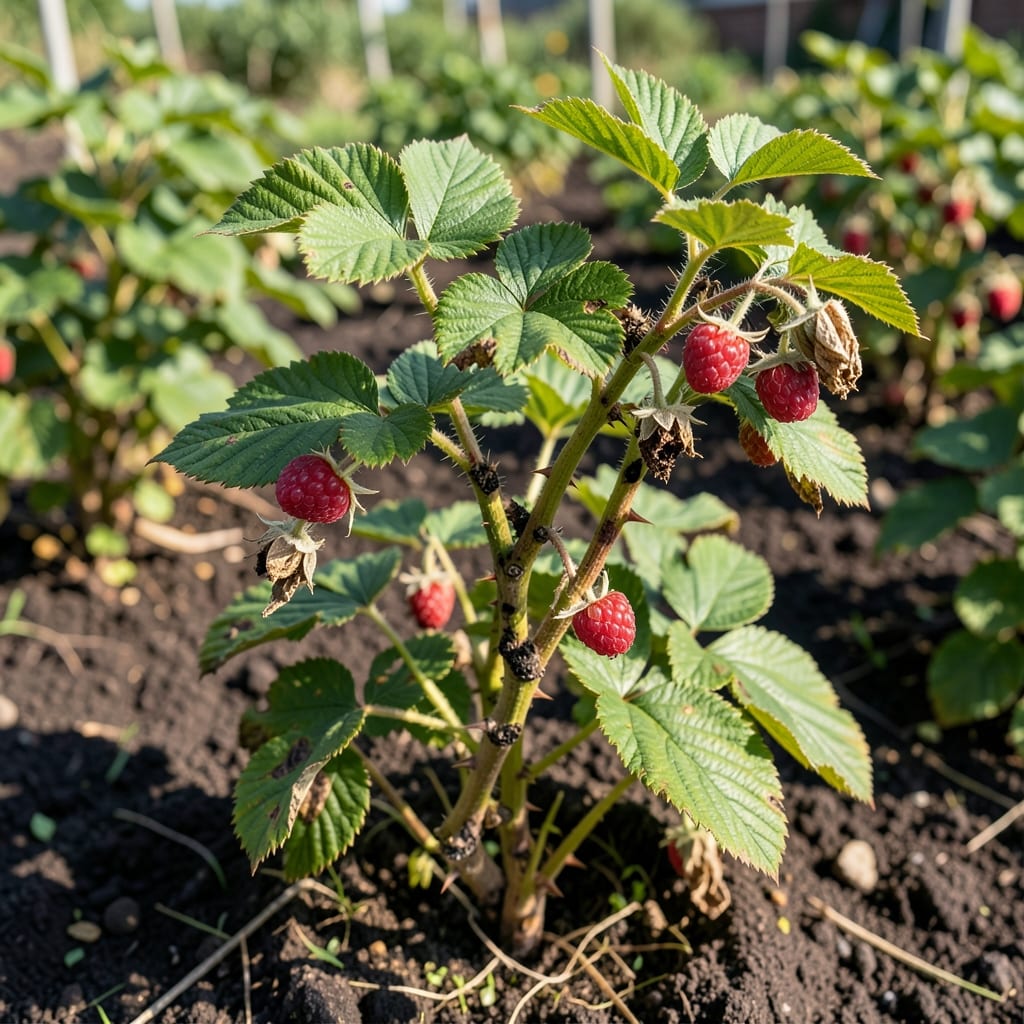
Spotted purple patches on your raspberry canes last week. Not sunburn, not frost damage—this is the early warning sign of cane blight, and it spreads fast if you ignore it.
I lost an entire row of summer-bearing raspberries to this my first year. The canes wilted overnight, turned black, and crumbled at the touch. Lesson learned: early detection means the difference between a minor trim and uprooting everything.
You’ll catch it first at the tips—discolored patches, cracked bark, maybe a little ooze. Then it moves down the cane. The good news is pruning infected sections immediately can save the rest of the plant.
Works for all raspberry varieties, whether you’re growing in rows, containers, or along a fence. Here’s how to spot it before it’s too late.
Raspberry cane blight is a frustrating fungal disease, but understanding its causes helps you prevent it. Below are the primary triggers, explained simply.
The fungus Leptosphaeria coniothyrium thrives in damp environments. Rain, overhead irrigation, or even morning dew can splash spores onto healthy canes, especially if infected plant debris is present. Wet foliage for 6+ hours significantly boosts infection risk.
Dead or diseased canes and leaves harbor fungal spores year-round. If not removed and destroyed (not composted!), these spores reinfect new growth in spring. Pruning wounds also provide easy entry points for the fungus.
Using contaminated tools or pruning during wet weather spreads the pathogen. Always sterilize pruners with rubbing alcohol between cuts, and prune only in dry conditions to minimize spore transmission.
Dense raspberry patches trap moisture and reduce airflow, creating a perfect breeding ground for blight. Thin canes annually to improve circulation, and space plants at least 2–3 feet apart to lower humidity around foliage.
Raspberry cane blight can be managed effectively with the right approach. Below are practical solutions tailored to the most common causes, along with prevention tips to keep your plants healthy.
If you spot dark lesions or wilting on your raspberry canes, act fast. Use clean, sharp pruners to remove infected canes at least 6 inches below the visible damage. Burn or dispose of the material—do not compost, as the fungus can survive and spread. Sterilize your tools with rubbing alcohol after each cut to prevent contamination.
Poor airflow creates a humid environment where blight thrives. Thin out dense canes to allow light and air to penetrate. Space plants 18–24 inches apart and prune regularly to maintain an open structure. Consider trellising raspberry rows to keep canes upright and separated.
Overhead watering spreads spores quickly. Switch to drip irrigation or soaker hoses to keep foliage dry. Water early in the day so canes dry before evening. Avoid working with wet plants, and remove weeds that trap moisture around the base.
For severe cases, use a copper-based fungicide or lime sulfur spray at the first sign of infection. Apply in early spring before buds break, and repeat every 7–10 days during wet periods. Always follow label instructions and wear protective gear.
Prevention Tip 💡: Choose resistant raspberry varieties like ‘Boyne’ or ‘Nova’, and rotate planting locations every 5–7 years to reduce fungal buildup in the soil.
This fungal disease primarily affects raspberries and blackberries. It doesn’t typically spread to unrelated plants, but can infect other cane fruits in your garden. Always remove and destroy infected material promptly.
If the entire cane is blackened and brittle, it’s best to remove the whole plant. For partial infections, prune 6 inches below visible damage and sterilize tools between cuts. Early action is key.
The fungus can persist in soil and plant debris for 2-3 years. Avoid planting susceptible crops in the same spot. Rotate with non-host plants like beans or corn.
Prune in late winter when plants are dormant and conditions are dry. This removes overwintering spores before new growth starts. Always disinfect pruning tools with rubbing alcohol.