
Beautiful Plants For Your Interior
Beautiful Plants For Your Interior
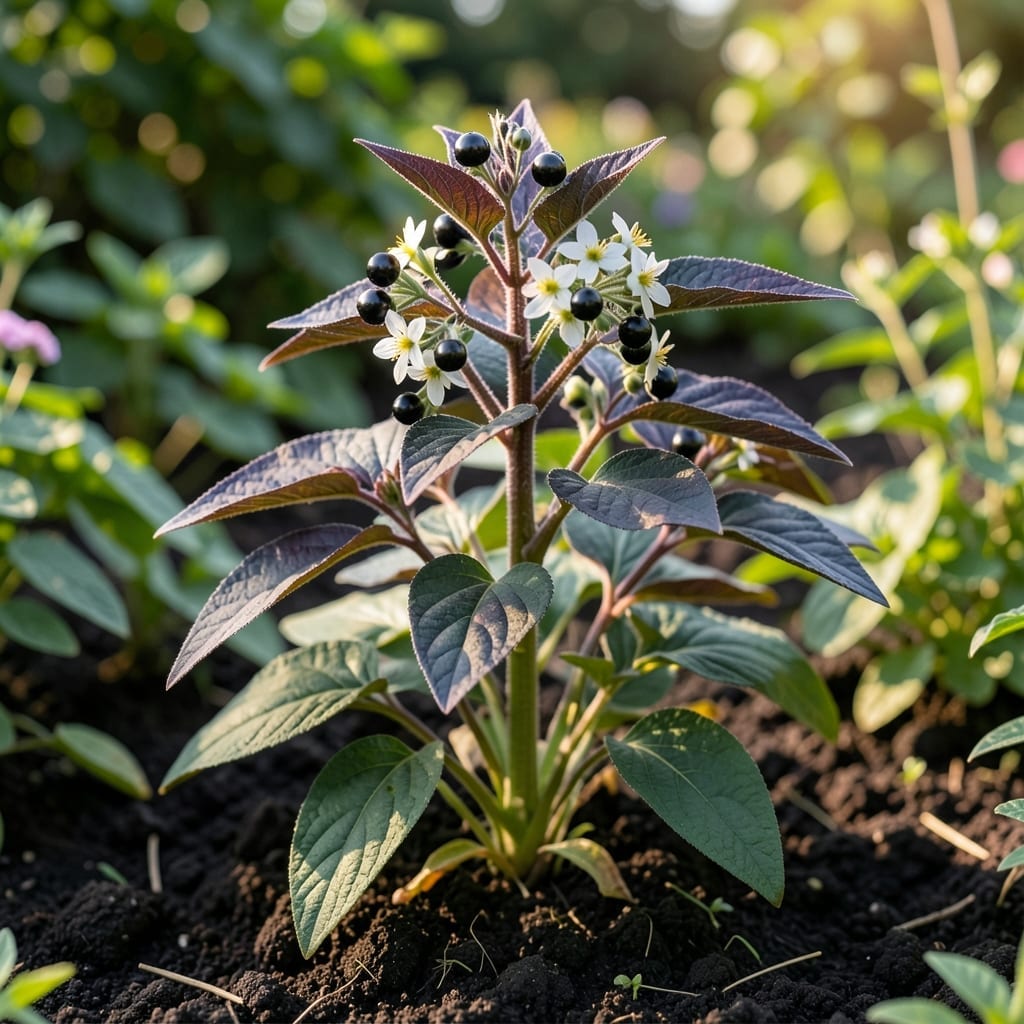
Those deep purple leaves in your garden might be more dangerous than you think. I learned the hard way that nightshade plants can look deceptively beautiful while hiding serious toxicity risks.
Identifying nightshade starts with spotting its dark purple foliage and glossy, egg-shaped leaves. The plants often appear in disturbed soil or along fence lines, spreading quickly if left unchecked.
Safe removal means wearing gloves and using a trowel to extract the entire root system. Never compost nightshade—it can regrow or poison your pile.
If you have pets or small children, make this a priority. A single berry or leaf can cause serious illness, and the plants are notoriously persistent.
The striking purple tint in nightshade leaves is often a visual distress signal, triggered by specific biological and environmental factors. Here’s what’s behind the color shift:
Nightshades (like tomatoes, peppers, or eggplants) turn purple when soil lacks phosphorus, a nutrient critical for energy transfer. Without it, anthocyanins—pigments that produce purple hues—accumulate in leaves as a coping mechanism. This often appears first in older leaves. Action: Test soil and amend with bone meal or phosphoric fertilizer.
Chilly temperatures (below 50°F/10°C) slow phosphorus uptake, even if soil levels are adequate. The plant’s metabolism stalls, and purple veins or blotches emerge, especially on new growth. Action: Use row covers or move potted plants indoors during cold snaps.
Some nightshade varieties, like Solanum atropurpureum, naturally develop purple foliage due to high anthocyanin concentrations. If the color is uniform and the plant thrives, it’s likely not a deficiency but a hereditary trait. Action: Confirm the species before treating for nutrient issues.
Certain viruses (e.g., Tomato Spotted Wilt Virus) disrupt chlorophyll production, causing mottled purple and yellow patterns. Leaves may also curl or wilt. Action: Remove infected plants immediately to prevent spread; control thrips (common vectors) with neem oil.
If you’ve identified purple nightshade leaves in your garden, act quickly to remove the plant safely and prevent regrowth. Here’s how to tackle each issue:
Pull the plant by the roots using gloves to avoid skin contact. Place it in a sealed bag and dispose of it with household trash—never compost. For large infestations, use a shovel to dig deep and remove the entire root system.
Apply a glyphosate-based herbicide to stubborn patches, following label instructions. Spot-treat to avoid harming nearby plants. Reapply as needed until the plant is fully eradicated.
Mulch garden beds to block sunlight and suppress new growth. Regularly inspect your yard for seedlings, especially in spring. Keep the area free of debris where nightshade might take root.
Pro tip: 💡 Wear long sleeves and wash hands thoroughly after handling to prevent skin irritation or accidental ingestion.
By combining removal, treatment, and prevention, you can keep your garden safe and nightshade-free.
Yes, all parts of nightshade plants contain toxic alkaloids like solanine. Even small amounts can cause severe illness in humans and pets. Never touch or consume them without protection.
Look for purple-tinged leaves, glossy egg-shaped foliage, and small berries. Nightshade often grows in disturbed soil or along fences. When in doubt, consult a gardening expert.
Contact your vet or an animal poison control center immediately. Symptoms may include vomiting, diarrhea, or lethargy. Bring a sample of the plant for identification.
Vinegar or boiling water can work on small patches, but they may require multiple applications. For large infestations, manual removal is safest to avoid harming other plants.