
Beautiful Plants For Your Interior
Beautiful Plants For Your Interior
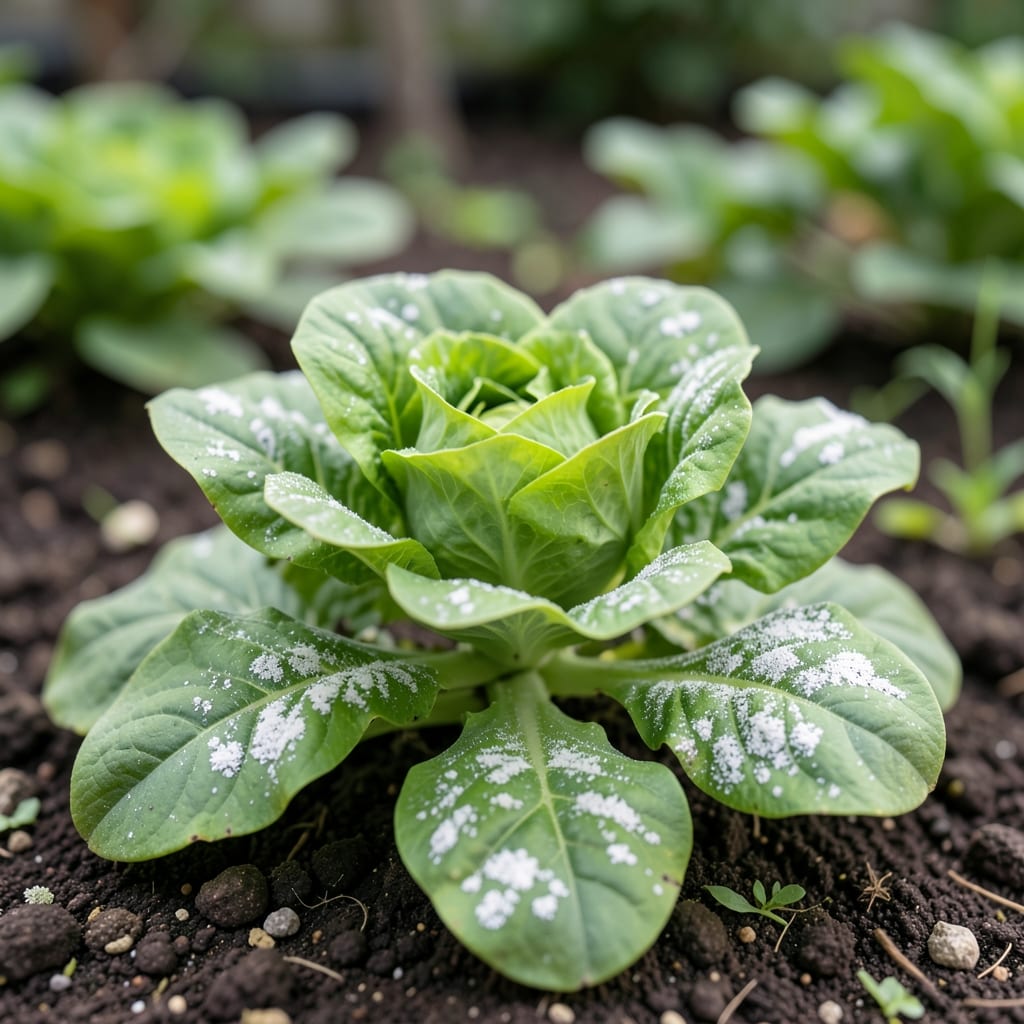
White powder on your lettuce leaves means trouble. I’ve lost entire crops to powdery mildew before learning the simple fixes that actually work.
This fungus spreads fast in crowded beds with poor airflow. The key is catching it early before it turns leaves yellow and crispy. A weekly inspection of your plants makes all the difference.
Organic sprays like baking soda or neem oil stop it in its tracks. But prevention through spacing and watering at the base keeps it from coming back.
Your lettuce will stay crisp and green with these techniques. No more watching helplessly as your crop turns to dust.
Powdery mildew on lettuce thrives under specific environmental conditions and cultural practices. Understanding these triggers helps you prevent outbreaks before they start.
The fungus Golovinomyces cichoracearum (the primary pathogen for lettuce) spores germinate best in relative humidity above 85%. Dense plant canopies or poor air circulation trap moisture, creating a perfect breeding ground. Overhead irrigation, especially in the evening, prolongs leaf wetness, accelerating spore production.
Unlike many fungal diseases, powdery mildew favors moderate temperatures (60–80°F or 15–27°C) with cool nights. These conditions stress lettuce plants, weakening their natural defenses. Sudden temperature swings can also reduce the efficacy of plant proteins that inhibit fungal growth.
Planting lettuce too closely restricts airflow, which prevents leaves from drying quickly. This stagnant environment allows spores to settle and infect tissues. Spacing rows 12–18 inches apart and thinning seedlings reduces humidity buildup and limits spore dispersal.
Some lettuce cultivars, like crisphead (Iceberg) types, are genetically more vulnerable to powdery mildew. Older or stressed plants also produce fewer defensive compounds. Choosing resistant varieties (e.g., Lactuca sativa ‘Salad Bowl’ or ‘Oakleaf’) can significantly lower infection risk.
Excess nitrogen promotes lush, soft growth that’s easier for fungi to penetrate. Conversely, calcium or potassium deficiencies weaken cell walls, making lettuce more susceptible. A balanced fertilizer (e.g., 5-10-10) and soil testing help maintain plant vigor.
Powdery mildew on lettuce can be frustrating, but these targeted solutions will help you stop the spread and protect future crops. Act fast for the best results!
Crowded plants trap humidity, creating a perfect breeding ground for mildew. Fix this by:
Prevention tip: 💡 Space rows 18–24 inches apart and rotate planting locations yearly.
Wet foliage fuels fungal growth. Switch to these practices:
Prevention tip: 🌡️ Mulch with straw to reduce soil splash and humidity around plants.
Treat active infections with these DIY or store-bought options:
Prevention tip: ✨ Rotate sprays to prevent fungal resistance.
Stressed lettuce is more vulnerable. Keep plants healthy by:
Prevention tip: 🎯 Avoid over-fertilizing with nitrogen, which can promote soft growth prone to disease.
No, it’s best to avoid eating affected leaves. While not toxic, the fungal growth can cause off-flavors. Remove and discard infected leaves, then wash the remaining ones thoroughly before consuming.
Under ideal conditions, spores can spread across a garden in 2-3 days. Warm temperatures with high humidity accelerate growth. Isolate infected plants immediately to contain it.
The fungus overwinters in plant debris, so it can reappear. Remove all infected plant material in fall and rotate crops. Using resistant varieties also helps prevent recurrence.
Neem oil applied weekly at the first sign works best. A baking soda spray (1 tsp per quart of water) is also effective. Apply in the evening for best results.