
Beautiful Plants For Your Interior
Beautiful Plants For Your Interior
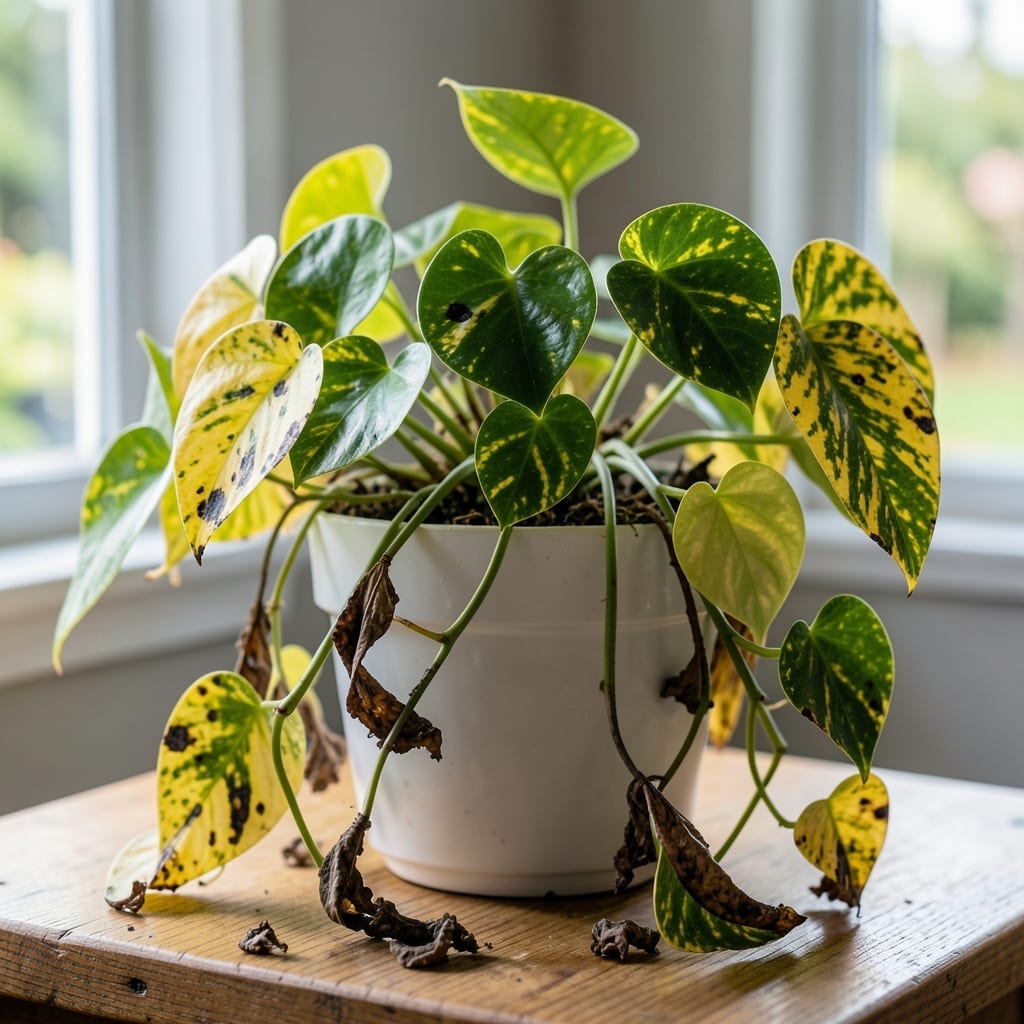
Blackened leaves on your pothos don’t mean game over. I’ve nursed countless plants back from the brink of cold damage, and the recovery process is simpler than you’d expect.
Cold damage shows up as mushy black stems or crispy brown leaves, usually after a drafty window or sudden temperature drop. The key is acting fast—trim the damaged parts and move your plant to a warmer spot with indirect light.
Within 2-3 weeks, new growth should appear if the roots stayed healthy. I’ve saved pothos that looked completely dead by following this exact method, and the plants often come back stronger.
Prevention is easier than cure: keep plants away from cold windows and monitor indoor temperatures during winter. Here’s how to spot the early warning signs.
Pothos plants thrive in warm, stable environments, so sudden or prolonged exposure to cold can trigger visible damage. Here’s why it happens:
Pothos are tropical plants and cannot tolerate temperatures below 50°F (10°C). When exposed to colder air—whether from a drafty window, outdoor chill, or an unheated room—their cells begin to freeze and rupture. This disrupts nutrient transport, leading to blackened, mushy leaves and stems.
Even brief exposure to cold drafts (e.g., near open windows, air conditioning vents, or doors) can shock the plant. The rapid temperature drop causes cellular stress, which manifests as wilting, yellowing, or necrotic (dead) tissue. Pothos near single-pane windows in winter are especially vulnerable.
Direct contact with frost or freezing temperatures (32°F/0°C or below) is fatal. Ice crystals form inside plant tissues, destroying cell walls and halting water uptake. Leaves turn black and brittle, often falling off entirely. Outdoor pothos or those on unheated porches are at highest risk.
Cold damage isn’t just about air temperature—chilled roots are equally harmful. If the soil drops below 60°F (15°C), root activity slows, preventing the plant from absorbing water and nutrients. This leads to root rot or stunted growth, with above-ground symptoms like drooping or discolored foliage.
Pro tip: Always check soil temperature with a thermometer if you suspect cold stress.
Don’t panic if your pothos is looking a little worse for wear after a cold snap. With the right steps, you can nurse it back to health and prevent future issues. Here’s how to tackle the most common problems caused by cold damage.
If the leaves are black, soft, or mushy, they’re likely beyond saving. Use clean, sharp scissors or pruning shears to trim these damaged leaves at the base. This prevents rot from spreading and allows the plant to focus its energy on healthy growth. Pro tip: 💡 Sterilize your tools with rubbing alcohol before and after pruning to avoid spreading disease.
Cold shock can cause stems to wilt or droop. Move your pothos to a warmer spot (ideally between 65–85°F) and check the soil. If it’s dry, water it lightly—avoid overwatering, as cold-stressed roots are more prone to rot. A humidity tray or misting can also help revive limp stems.
Yellow leaves often signal stress from temperature fluctuations. Keep your pothos in bright, indirect light (avoid direct sun, which can further stress it) and maintain a consistent temperature. Avoid drafty windows, AC vents, or cold floors. If the damage is minor, the plant may recover on its own with stable conditions.
With a little care, your pothos will bounce back and thrive! ✨
Look for blackened, mushy leaves or stems, which signal cell damage. Wilting or yellowing foliage also indicates stress. Check for crispy edges on leaves exposed to drafts.
Yes, if the roots remain healthy. Trim damaged parts, move to a warm spot with indirect light, and maintain 65–85°F. New growth should appear in 2-3 weeks.
If stems are black and mushy, they’re likely dead. Cut them back to healthy tissue and ensure the remaining plant stays warm. Avoid overwatering cold-stressed roots.
Keep pothos away from drafty windows, AC vents, or cold floors. Use a thermometer to monitor temperatures and move plants indoors before it drops below 50°F.