
Beautiful Plants For Your Interior
Beautiful Plants For Your Interior
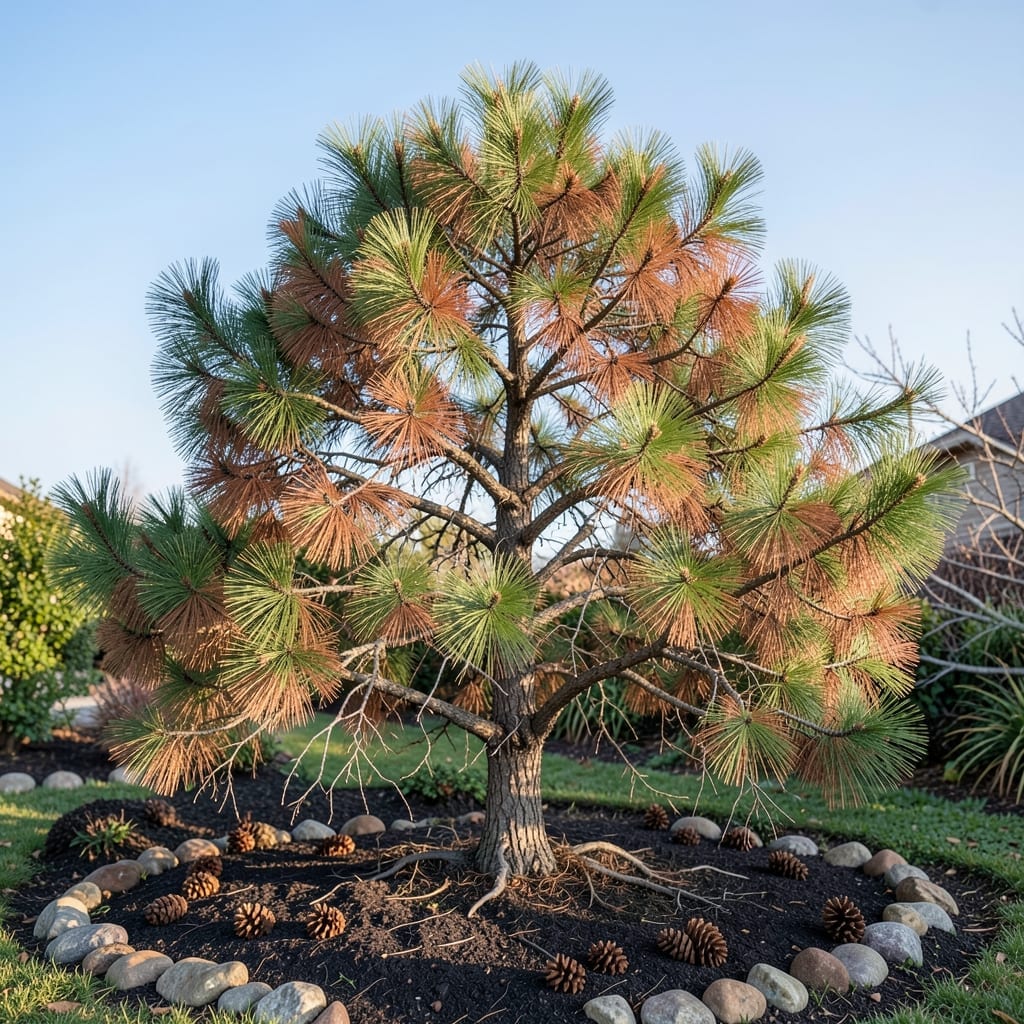
Brown needles on your pines aren’t just ugly—they’re a warning. I’ve watched healthy trees decline fast when drought stress hits, but the right watering can pull them back from the brink.
Most people water too little or too often. The key is deep, slow soaking that reaches 12-18 inches down, where pine roots actually live. A hose left trickling for 2-3 hours does more than daily sprinkles.
You’ll see new growth within 4-6 weeks if you catch it early. The needles turn from brittle to supple, and the tree starts pushing fresh, green shoots.
Works for young and mature pines alike. Here’s how to do it right.
Pine trees thrive in consistent moisture, so when drought hits, stress follows. Several key factors trigger pine tree drought stress, often working together to weaken the tree. Here’s why it happens:
High temperatures accelerate water evaporation from the soil and the tree’s needles. When humidity is low, pines lose moisture faster than their roots can absorb it, leading to xylem cavitation—a condition where air bubbles block water transport in the tree’s vascular system.
Pines depend on deep, well-drained soil to access water. During droughts, shallow soil layers dry out first, forcing roots to work harder. If the water table drops or irrigation is inadequate, the tree’s stomata (pores on needles) close to conserve water, reducing photosynthesis and stunting growth.
Young or transplanted pines with underdeveloped root systems are especially vulnerable. Compacted or clay-heavy soils restrict root penetration, limiting their ability to seek out water. Without deep roots, pines rely on surface moisture, which vanishes quickly in dry spells.
Drought stress is often worsened by other factors like soil compaction, pest infestations (e.g., bark beetles), or nutrient deficiencies. Weakened trees struggle to recover, creating a cycle of decline. Even windy conditions can increase water loss through transpiration.
Understanding these causes helps you take targeted action—like deep watering or mulching—to mitigate stress before it becomes irreversible.
When your pine tree shows signs of drought stress, quick and targeted action can help it recover. Here’s how to address the most common causes and prevent future issues.
Pine trees need deep, infrequent watering to encourage strong root growth. Use a soaker hose or drip irrigation to deliver water slowly at the base, ensuring it penetrates 12–18 inches into the soil. Water early in the morning to reduce evaporation. Aim for 1–2 inches of water per week during dry spells, adjusting for rainfall.
Prevention tip: 🌱 Mulch around the base (keeping it 3–4 inches away from the trunk) to retain moisture and regulate soil temperature.
If water pools around the tree or drains too quickly, the roots can’t absorb moisture effectively. Test drainage by digging a small hole and filling it with water—if it doesn’t drain within 4–6 hours, the soil may be compacted. Aerate the soil around the tree (without damaging roots) and mix in organic matter like compost to improve texture.
Prevention tip: 💡 Avoid heavy clay soils by amending the planting area with sand or pine bark fines before planting new trees.
Young or newly transplanted pines are especially vulnerable to scorching sun. Use shade cloth (30–50% opacity) to shield the tree during peak afternoon heat, or plant it near taller, established trees for natural protection. Remove shade coverings once the tree recovers to avoid weak growth.
Prevention tip: ✨ Choose drought-tolerant pine varieties like Pinus sylvestris (Scots Pine) or Pinus ponderosa (Ponderosa Pine) for hot, dry climates.
Drought-stressed pines attract pests like bark beetles. Prune dead or dying branches immediately to remove breeding grounds. Apply beneficial nematodes or horticultural oil to deter insects, and avoid over-fertilizing, which can weaken the tree further.
Prevention tip: 🎯 Keep trees well-watered and mulched to reduce stress and make them less susceptible to pests.
Water deeply 1-2 times per week during dry spells, delivering 1-2 inches total. Always check soil 12-18 inches down first—if it’s damp, wait. Overwatering can be just as harmful.
Look for needles turning brown or gray-green, especially at the tips. They may also feel brittle or drop prematurely. Young pines often show yellowing first.
Yes! Apply 3-4 inches of organic mulch around the base, keeping it away from the trunk. This retains moisture and moderates soil temperature.
Mild cases may bounce back after rain, but severe stress often needs intervention. Consistent deep watering for 4-6 weeks gives the best recovery chances.