
Beautiful Plants For Your Interior
Beautiful Plants For Your Interior
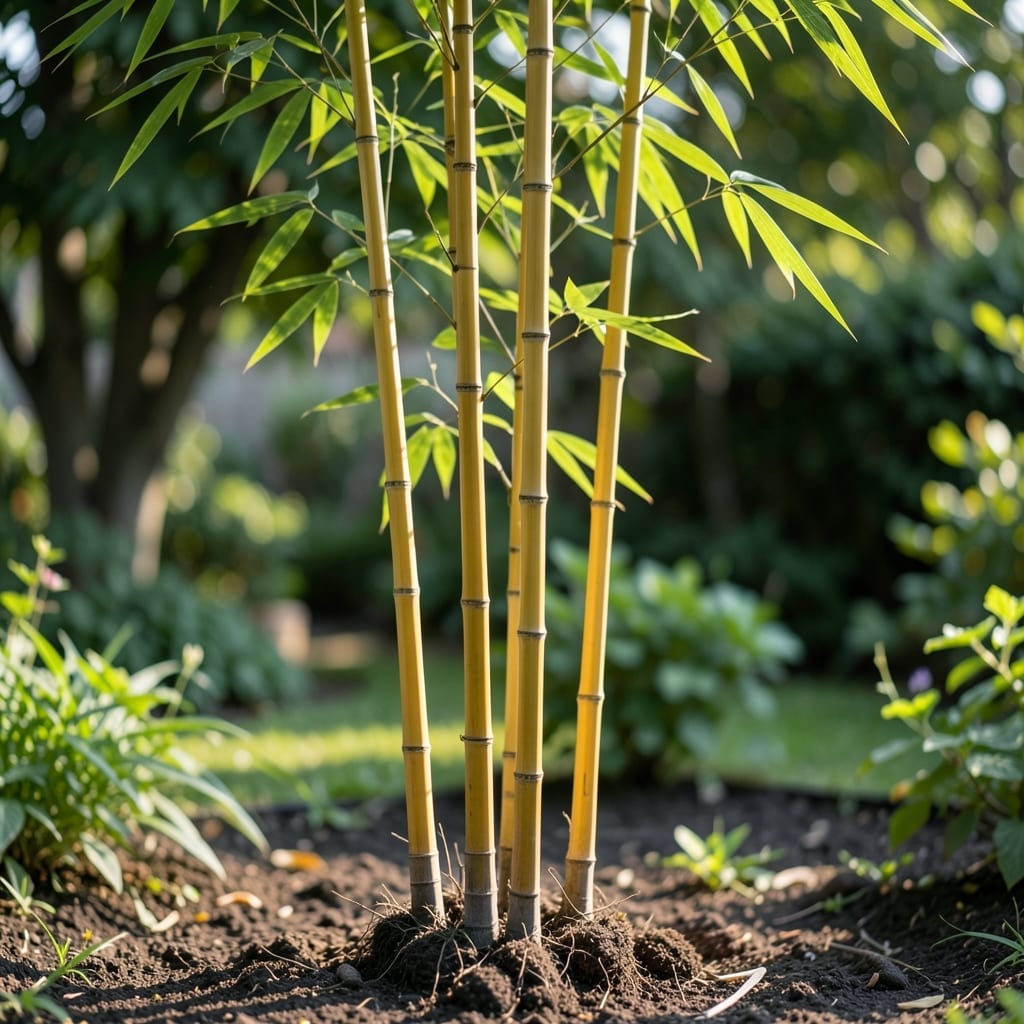
Yellow Groove bamboo transformed my backyard into a living privacy screen. I was skeptical at first—bamboo has a reputation for being invasive—but this variety stays contained while looking stunning.
It thrives in partial shade with well-draining soil and moderate watering. Within 2-3 seasons, you’ll have lush green canes with golden stripes that catch the light beautifully. The maintenance is surprisingly low once established.
📚 In This Guide
This running bamboo thrives with consistent care and produces stunning golden culms with deep green stripes.
Choose a site with full sun to partial shade—at least 6 hours of direct sunlight daily ensures the vibrant yellow and green coloration this cultivar is known for. Phyllostachys aureosulcata tolerates a range of soil types but performs best in well-draining, slightly acidic loam.
I always test drainage by digging a 1-foot deep hole, filling it with water, and checking if it drains within 1 hour. If water lingers, amend with compost or sand. Avoid low-lying areas where cold air settles, as this species is hardy to 0°F but benefits from air circulation.
Dig a planting hole twice as wide and deep as the root ball. Since this is a running bamboo, install a 30-inch deep HDPE root barrier around the perimeter to prevent invasive spread. The barrier should extend 2-3 inches above soil level to stop rhizomes from escaping over the top.
Backfill with native soil mixed with 50% organic matter to encourage establishment. Water deeply after planting, ensuring the soil settles around the roots without air pockets. I’ve found that mulching with 2-3 inches of organic mulch helps retain moisture while suppressing weeds.
Keep the soil consistently moist but not waterlogged during the first growing season. Water deeply 2-3 times per week, providing about 1 inch of water each time. Once established, Phyllostachys aureosulcata is moderately drought-tolerant but looks its best with regular moisture.
Check soil moisture by inserting your finger 2 inches deep—if it feels dry, it’s time to water. Reduce frequency in late fall and winter, but never let the soil dry out completely. This species shows stress with curling leaves, which is your cue to adjust watering.
Apply a balanced, slow-release fertilizer once in early spring and again in mid-summer to support vigorous growth. I use a 10-10-10 formula at half the recommended strength to avoid burning the roots. Yellow groove bamboo responds well to nitrogen, which promotes lush foliage and strong culm development.
Prune older, weaker culms at ground level in late winter or early spring to make room for new shoots. Remove any dead or damaged canes immediately to maintain air circulation. Thin out one-third of the oldest culms annually to rejuvenate the grove and encourage larger, more colorful new growth.
Inspect the planting area monthly during the growing season for signs of rhizome escape. If you spot new shoots outside the barrier, dig them up immediately. This cultivar can spread aggressively if not contained, so vigilance is key.
Watch for yellowing leaves, which often indicate nutrient deficiency or overwatering. If the culms lose their vibrant color, a soil test can help identify pH imbalances. I’ve found that a spring application of sulfur can help lower pH if the soil becomes too alkaline over time.
The small details in planting and maintenance make all the difference with this striking bamboo.
Sunlight Essentials: The 6 hours of direct sunlight mentioned in Step 1 isn’t just a suggestion—it’s critical for maintaining that signature golden-yellow culm coloration. I’ve seen groves planted in full shade lose their vibrant striping entirely within a season. If your space only gets morning sun, prioritize east-facing locations.
Drainage Test Refinement: That 1-hour drainage test from Step 1 is your best insurance against root rot. If water lingers beyond an hour, don’t just add compost—consider installing a French drain system. Well-draining soil is non-negotiable, especially since this species is hardy down to 0°F and will suffer in soggy winter conditions.
Barrier Installation Pro Tip: When installing the 30-inch deep HDPE root barrier in Step 2, overlap the seams by at least 6 inches and secure with waterproof tape. I learned this the hard way after finding rhizomes escaping through tiny gaps. The 2-3 inches above soil level extension is equally important—rhizomes can travel horizontally just as aggressively as they grow downward.
Watering Wisdom: The 2-3 times per week watering schedule in Step 3 works perfectly during establishment, but pay attention to your soil’s behavior. In sandy soils, you might need to water daily during heatwaves, while clay soils may only need that 1 inch of water once a week. Always check that 2-inch depth with your finger—this simple test prevents both underwatering and root rot.
This running bamboo can grow 2–4 feet per year under ideal conditions, reaching 10–16 feet tall. Growth slows in cooler climates or poor soil.
Spring or early fall is ideal, allowing roots to establish before extreme heat or cold. Avoid planting in summer droughts or winter frosts.
Install rhizome barriers (HDPE, 30+ inches deep) or plant in large containers. Regularly prune underground runners to prevent invasive spread.
Overwatering, nutrient deficiency, or poor drainage often cause yellowing. Check soil moisture and fertilize with nitrogen-rich formulas if needed.
Yes! Clumping bamboos like Fargesia stay contained without spreading aggressively, offering similar beauty with less maintenance.