
Beautiful Plants For Your Interior
Beautiful Plants For Your Interior
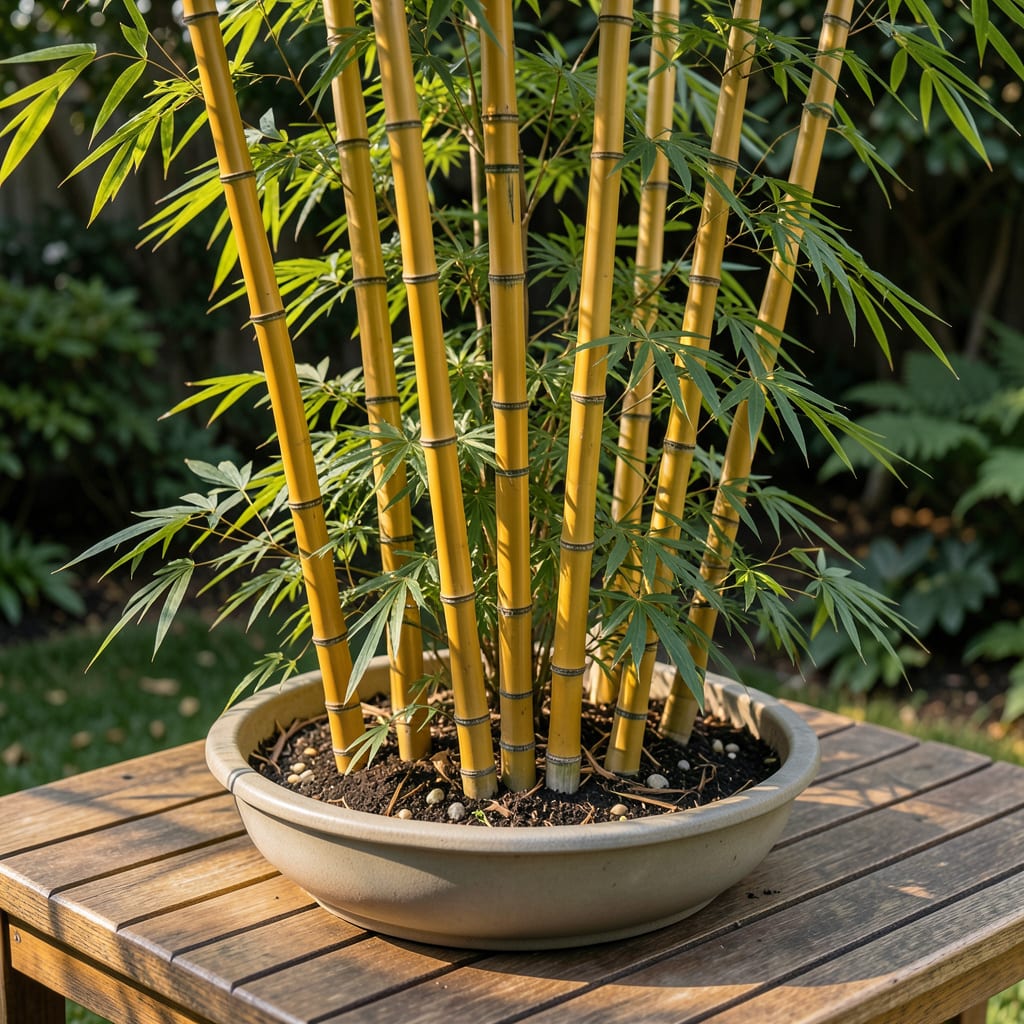
This bamboo transforms any landscape with its golden-yellow culms and rapid growth. I planted my first stand five years ago, and it still stops visitors in their tracks.
Reaching 25-40 feet tall, it creates living privacy screens faster than any fence. The key is giving it space to run—this isn’t a container plant. It thrives in zones 5-9 with minimal fuss.
📚 In This Guide
This running bamboo spreads quickly, so proper placement and containment ensure it thrives without taking over.
Choose a site with full sun to partial shade—this variety tolerates shade better than most bamboos but grows fastest with at least 6 hours of direct sunlight daily. The soil should be well-draining and slightly acidic to neutral (pH 5.5-7.0). Avoid low-lying areas where water pools after rain.
I always test drainage first by digging a 1-foot-deep hole, filling it with water, and checking if it empties within 2-3 hours. If it doesn’t, amend the soil with compost or choose a different spot. This prevents root rot, which can kill even established plants.
Because this is a running bamboo, it will spread aggressively without containment. Install HDPE root barriers (at least 30 inches deep) in a continuous trench around the planting area. Overlap barrier ends by 12 inches and secure with waterproof tape to prevent roots from escaping.
Real talk: I’ve seen this variety send up shoots 20 feet away from the original planting in a single season without barriers. For smaller gardens, consider planting in large containers or raised beds instead. The barriers should extend 2-3 inches above soil level to catch surface runners.
Dig a hole twice as wide as the root ball but no deeper. Place the plant so the top of the root ball sits 1-2 inches above the surrounding soil—this allows for settling. Space plants 5-8 feet apart if growing multiple; they’ll fill in quickly.
Backfill with native soil, gently firming as you go to eliminate air pockets. Water thoroughly after planting until the soil is saturated and the water pools briefly at the surface. You’ll see new shoots emerging from the base within 4-6 weeks if conditions are right.
Water deeply 2-3 times per week for the first 3-4 months until the plant is established. After that, it’s relatively drought-tolerant but grows fastest with consistent moisture. Check soil by sticking your finger 2 inches deep—if it feels dry, it’s time to water.
Fertilize in early spring with a balanced 10-10-10 or 20-20-20 slow-release fertilizer. Apply according to package instructions, but I’ve found that ½ the recommended amount works just as well for this vigorous grower. Over-fertilizing leads to excessive leafy growth at the expense of culm (stem) development.
Remove dead or weak canes at ground level in late winter before new growth starts. Thin out about ⅓ of the oldest canes annually to improve air circulation and encourage stronger new growth. Use clean, sharp pruners and sanitize between cuts with rubbing alcohol to prevent disease spread.
If you notice yellowing leaves, it’s often a sign of nutrient deficiency or overwatering. Here’s the thing—this variety is prone to iron deficiency in alkaline soils, so a foliar spray of chelated iron can help if leaves develop interveinal chlorosis (yellowing between veins).
These insights will help you avoid pitfalls and maximize growth for your bamboo.
Site Selection: For optimal growth, ensure the site receives those critical 6 hours of direct sunlight daily. While this variety tolerates partial shade, full sun accelerates growth and enhances the vibrant yellow groove coloring that makes it so striking.
Drainage Test: Don’t skip the drainage test from Step 1—dig that 1-foot-deep hole and verify it empties within 2-3 hours. Poor drainage is the number one killer of young bamboo plants, leading to root rot that’s often irreversible.
Barrier Installation: When installing the 30-inch deep HDPE root barriers in Step 2, ensure the 12-inch overlap at the ends is securely taped. I’ve seen too many installations fail because roots found tiny gaps to escape through.
Planting Depth: The 1-2 inches above soil level planting depth in Step 3 is non-negotiable. Planting too deep suffocates the roots, while planting too high exposes them to drying out. This small detail makes a huge difference in establishment success.
This bamboo is one of the fastest-growing varieties, often reaching heights of 15–25 feet in just 3–5 years under ideal conditions. It can grow up to 2–4 feet per year once established, especially in warm climates with ample water and sunlight.
Yes, it can spread aggressively if not contained. To prevent invasiveness, plant it in large containers or install underground rhizome barriers. Regular pruning of runners also helps control its growth.
It thrives in full sun to partial shade and prefers well-draining, moist soil. Tolerates a wide range of temperatures (USDA zones 5–10) but may need winter protection in colder areas.
Divide the rhizomes in early spring or late fall. Dig up a section with roots and at least one culm (stem), then replant it in a new location or container. Keep the soil moist until established.
Yellowing leaves can indicate overwatering, nutrient deficiency, or poor drainage. Check soil moisture and fertility, and ensure the plant isn’t waterlogged. A balanced fertilizer can help restore vibrancy.
