
Beautiful Plants For Your Interior
Beautiful Plants For Your Interior
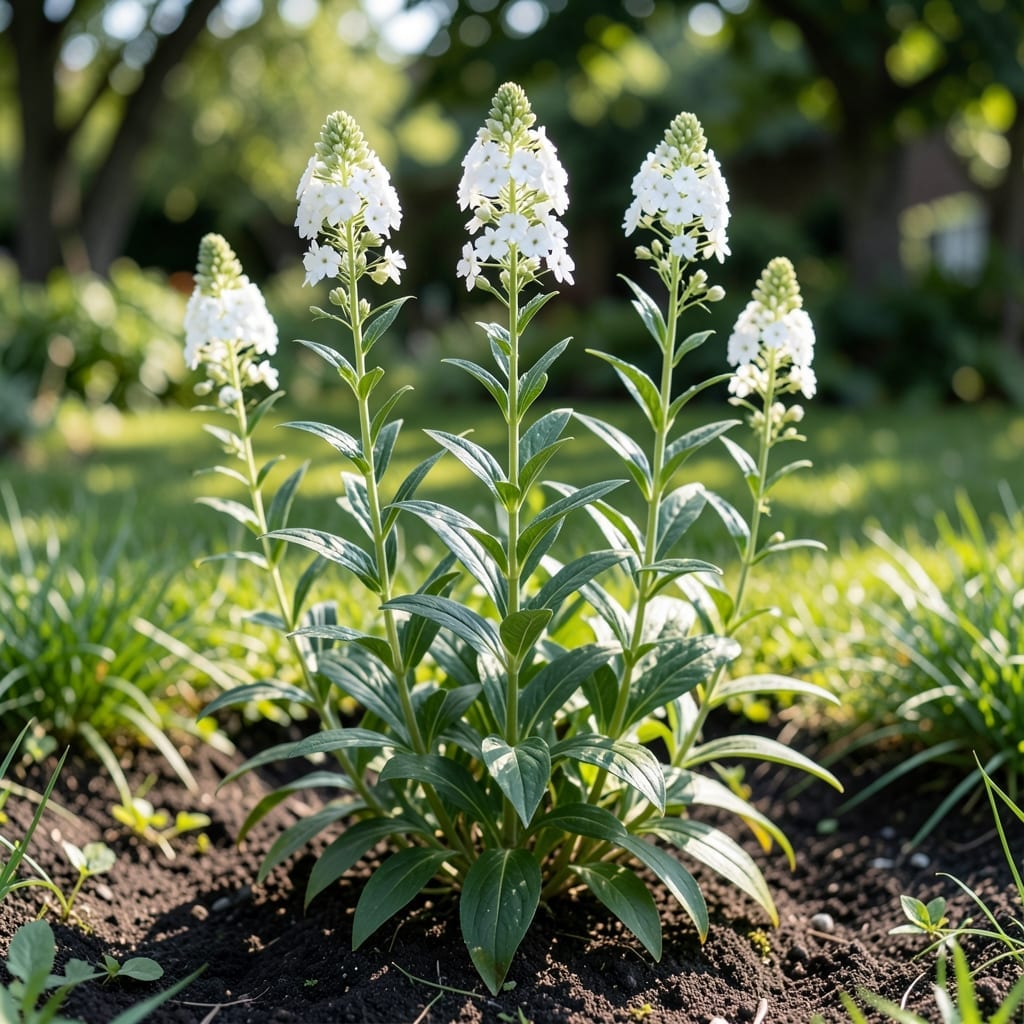
White phlox fills summer evenings with a sweet perfume that stops neighbors in their tracks. I planted my first cluster three years ago, and it’s come back stronger every season with almost no effort from me.
These low-maintenance perennials thrive in full sun to partial shade, spreading into thick mounds of fragrant blossoms. Give them well-draining soil and occasional water, and they’ll reward you with blooms from mid-summer through early fall.
📚 In This Guide
This foolproof method delivers waves of fragrant blooms with remarkably little effort once established.
Select a site with full sun to partial shade, though morning sun and afternoon shade produces the most vibrant blooms in warmer climates. The soil must drain well—phlox despises soggy roots. If your soil is heavy clay, amend it with compost to improve drainage before planting.
I always test drainage by digging a 1-foot-deep hole, filling it with water, and watching how quickly it disappears. If water remains after 4 hours, the spot needs improvement. White phlox also prefers slightly acidic to neutral soil with a pH between 6.0 and 7.0.
Loosen the soil to a depth of 12-15 inches and mix in a 2-3 inch layer of organic matter like compost or well-rotted manure. This improves both drainage and fertility. Remove any weeds or grass, as they’ll compete with your phlox for nutrients and water.
Space plants 18-24 inches apart to allow for air circulation, which helps prevent powdery mildew—a common issue with phlox. If you’re planting multiple rows, leave 24 inches between them. This spacing also makes it easier to access plants for maintenance.
Dig a hole slightly wider and just as deep as the root ball of your phlox plant. Gently remove the plant from its container and loosen any circling roots with your fingers. Place the plant in the hole so the top of the root ball is level with the surrounding soil.
Backfill the hole with soil, pressing lightly to eliminate air pockets. Water thoroughly after planting to settle the soil around the roots. I’ve found that a 1-2 inch layer of mulch around the base helps retain moisture and suppress weeds, but keep it away from the stems to avoid rot.
Water newly planted phlox deeply once or twice a week for the first 4-6 weeks, ensuring the soil stays evenly moist but not waterlogged. Once established, phlox is fairly drought-tolerant, but it blooms best with consistent moisture, especially during dry spells.
Apply a balanced, slow-release fertilizer in early spring as new growth appears. I use a 10-10-10 formula and follow the package instructions for amounts. Deadhead spent blooms regularly to encourage a second flush of flowers. Cut back the entire plant to 2-3 inches above the ground after the first hard frost to promote healthy regrowth the following year.
Watch for signs of powdery mildew, such as a white, powdery coating on the leaves. If it appears, improve air circulation by thinning out some stems or applying a fungicide. Phlox can also attract spider mites, especially in hot, dry weather—blast them off with a strong stream of water or use insecticidal soap if necessary.
Divide clumps every 3-4 years in early spring or fall to prevent overcrowding and maintain vigor. Dig up the entire clump, separate it into smaller sections with a sharp knife or spade, and replant the divisions. This keeps your phlox healthy and ensures continuous blooms for years to come.
These insights will help you avoid common pitfalls and ensure thriving phlox with minimal effort.
Drainage Test: In Step 1, that 1-foot-deep hole drainage test is non-negotiable. If water lingers after 4 hours, your phlox will suffer from root rot. I learned this the hard way after losing two plants in a low spot that seemed fine at first glance.
Soil Preparation: For Step 2, don’t skimp on the 12-15 inch soil loosening depth. I’ve found that shallow preparation leads to weak root systems that struggle during dry spells. The 2-3 inch layer of organic matter is your insurance policy against both drought and poor soil.
Planting Depth: In Step 3, planting too deep is a common mistake that causes stem rot. The top of the root ball should be exactly level with the surrounding soil—no deeper. That 1-2 inch mulch layer helps, but keep it away from stems to prevent moisture buildup against the plant.
Long-Term Maintenance: For Step 5, that 3-4 year division schedule isn’t just busywork. Overcrowded phlox blooms poorly and becomes more susceptible to powdery mildew. I mark my calendar for early spring division—it’s the secret to continuous vigorous blooms.
Water deeply once a week, especially during dry spells. Ensure the soil is moist but not soggy to prevent root rot. Mulching helps retain moisture.
Plant in early spring or fall for best results. This allows roots to establish before extreme heat or cold. Avoid summer planting unless in a cool climate.
Watch for powdery mildew, spider mites, and aphids. Improve air circulation, avoid overhead watering, and remove affected leaves to prevent spread.
Yes! Use a large pot with well-draining soil. Ensure it gets at least 6 hours of sunlight daily and water consistently to keep the soil moist.
Lack of sunlight, poor soil, or over-fertilizing (especially with high nitrogen) can delay blooms. Prune spent flowers to encourage more blooms.