
Beautiful Plants For Your Interior
Beautiful Plants For Your Interior
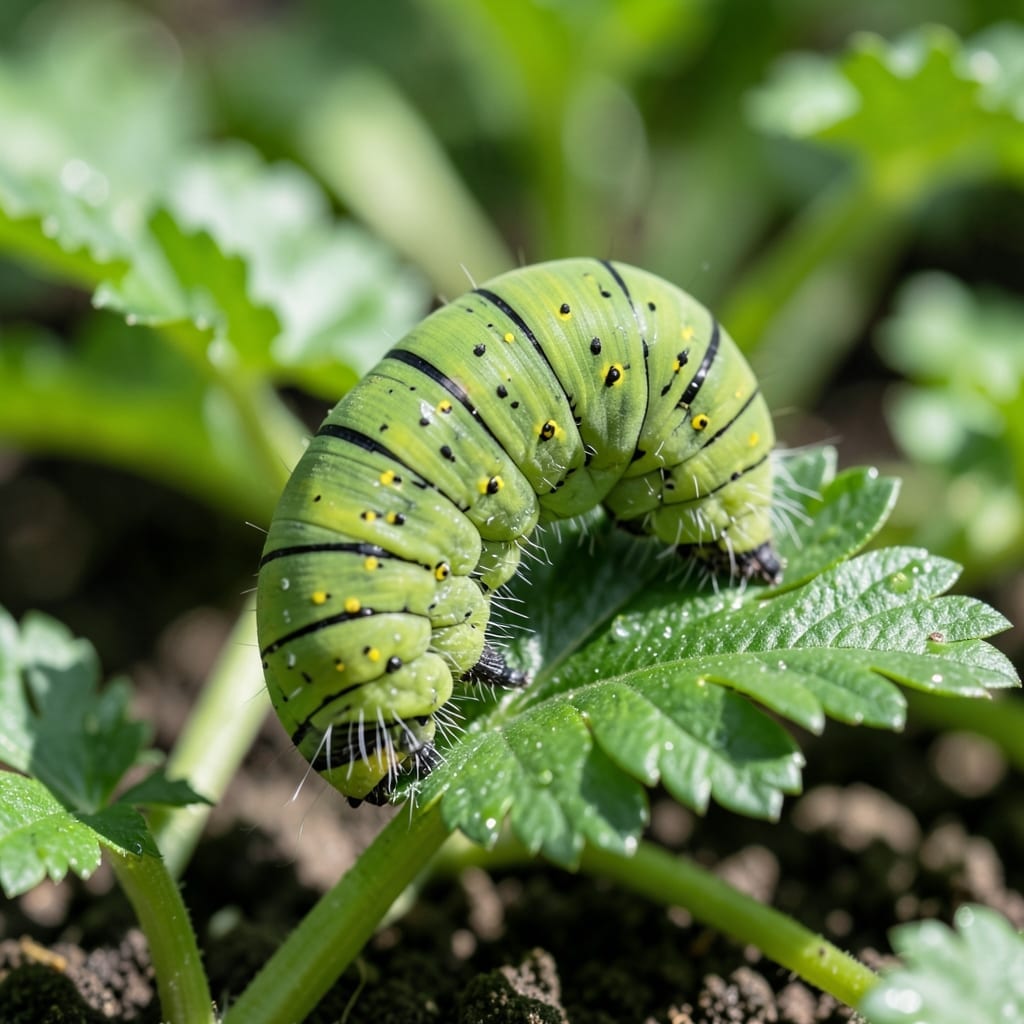
Those tiny eggs on your parsley aren’t just dirt specks. I spotted my first parsley worm cluster last June—black swallowtail caterpillars in disguise, munching through my herbs in 48 hours flat.
They start as pinprick yellow eggs, then transform through five stages: from black-and-white bands to bright green with black stripes. Each molt reveals a hungrier version, stripping leaves bare before your eyes.
Here’s the thing—these aren’t just pests. They’re future butterflies. But when they’re decimating your dill, you need a plan.
I’ll show you how to spot them early, protect your plants, and decide whether to relocate or remove. No garden should be a caterpillar buffet.
The presence of parsley worms, or Papilio polyxenes larvae, is a natural part of the ecosystem, but understanding why they appear in your garden can help you manage their impact. These caterpillars are the larval stage of the Eastern Black Swallowtail butterfly, and their life cycle is closely tied to host plants like parsley, dill, and carrots. Below are the primary reasons they show up in your garden.
Female swallowtail butterflies lay their eggs on plants in the Apiaceae family, such as parsley, because these are the only food sources their larvae can consume. If your garden includes these plants, it becomes an ideal breeding ground. The butterflies are attracted to the strong scent and nectar of these herbs, making them a prime target for egg-laying.
Parsley worms are most active during warm months, typically from late spring to early fall. The butterfly’s life cycle accelerates in higher temperatures, leading to more frequent egg-laying. If your region experiences mild winters, some larvae may even survive and pupate, emerging as adults in the spring to start the cycle anew.
Eastern Black Swallowtails are known to migrate in search of food and suitable breeding sites. If your garden is along their migratory path or offers abundant host plants, it increases the likelihood of butterfly visits—and subsequent parsley worm infestations. Urban and suburban gardens with diverse plantings are particularly appealing.
In gardens with limited biodiversity, natural predators like parasitic wasps, birds, or spiders may be absent. Without these checks, parsley worm populations can grow unchecked. Encouraging a balanced ecosystem with native plants and beneficial insects can help regulate their numbers naturally.
Parsley worms can quickly turn your lush herb garden into a chewed-up mess, but don’t panic—there are simple, effective ways to handle them at every stage. Below are practical solutions tailored to each issue, along with preventive tips to keep your parsley (and dill, carrot, or fennel) thriving.
Check the undersides of leaves for tiny yellow eggs. Gently wipe them off with a damp cloth or spray them away with a strong stream of water. For larger infestations, apply neem oil as a natural deterrent.
Prevention: Inspect plants weekly, especially in early summer when butterflies are active. Encourage beneficial insects like parasitic wasps by planting companion flowers (e.g., marigolds or yarrow).
If you spot the iconic black-and-yellow striped caterpillars, pluck them off by hand (wear gloves if you’re squeamish!) and drop them into soapy water. Alternatively, relocate them to a wild patch of Queen Anne’s lace—they’ll happily feast there instead.
Prevention: Use floating row covers to block adult butterflies from laying eggs. Rotate crops yearly to disrupt their life cycle.
For severe cases, spray Bt (Bacillus thuringiensis), a bacteria-based treatment that targets caterpillars without harming other insects. Apply in the evening for best results, as Bt breaks down in sunlight.
Prevention: Keep your garden clean—remove plant debris after harvest to eliminate overwintering pupae.
Plant repellent herbs like thyme, rosemary, or mint near your parsley to deter adult butterflies. Intercropping with garlic or onions can also mask the scent of host plants.
Pro Tip 💡: Attract birds with a water bath or birdhouses—they’ll gladly snack on caterpillars for you!
Each of the five larval stages lasts 5-10 days, depending on temperature. Warmer weather speeds up development, while cooler temps slow it down.
Tiny, round, and bright yellow—about the size of a pinhead. They darken to gray just before hatching. Check leaf undersides carefully.
Relocate caterpillars to wild host plants like Queen Anne’s lace instead. This protects your garden while supporting the butterfly population.
Bt (Bacillus thuringiensis) spray is highly effective. Apply at dusk for best results, and reapply after rain.