
Beautiful Plants For Your Interior
Beautiful Plants For Your Interior
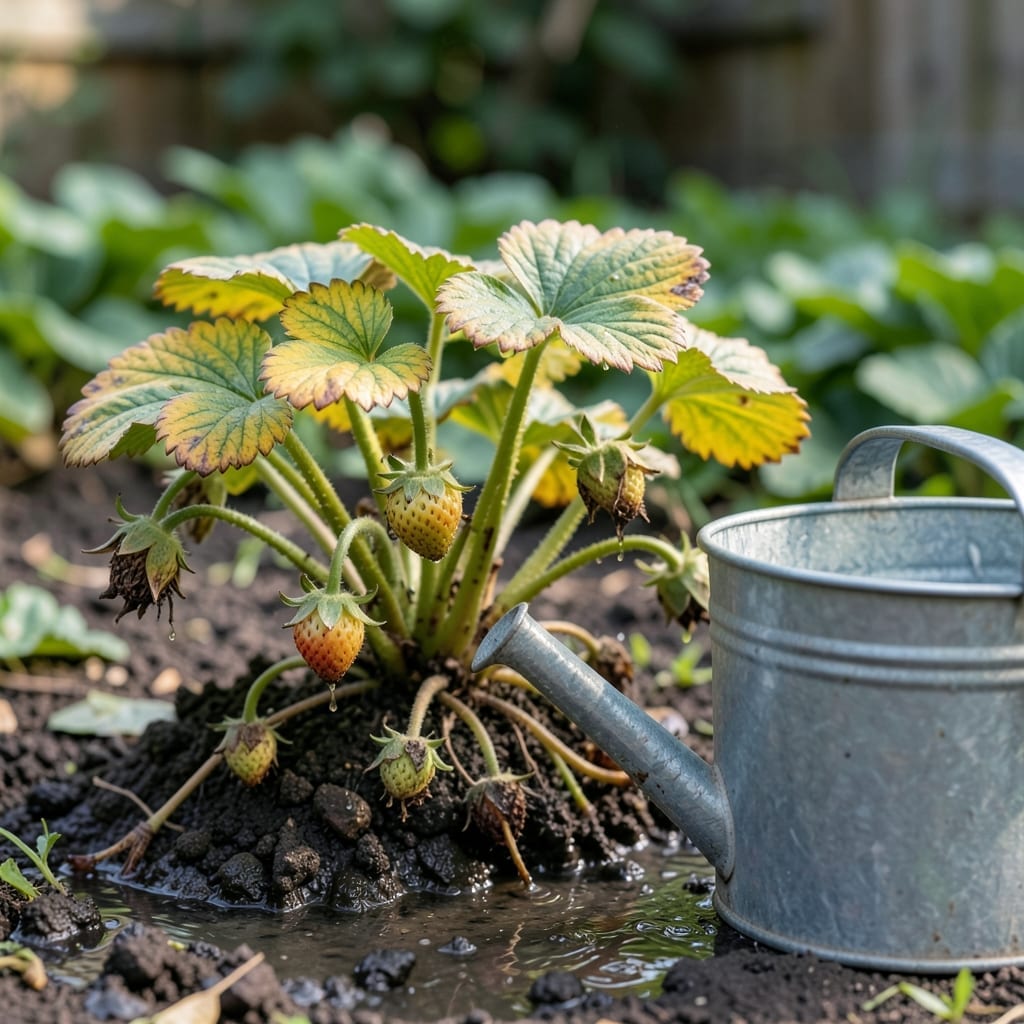
Yellowing leaves and mushy stems spelled trouble for my strawberries last June. I learned the hard way that too much water does more damage than drought—roots drown, leaves droop, and rot sets in fast.
Here’s the thing—overwatering isn’t just about frequency. Poor drainage, heavy soil, or even consistent drizzle can create the same problem. The fix starts with letting the soil dry slightly between waterings and improving airflow around plants.
Your plants can bounce back within 2-3 weeks with the right approach. I saved my entire patch by adjusting my routine and focusing on root health rather than surface symptoms.
Works for garden beds, containers, or hanging baskets. Let’s get those berries thriving again.
Overwatering strawberries often stems from well-intentioned but misguided care. Understanding the root causes helps prevent this common issue. Below are the primary reasons why it happens:
Strawberries require consistent moisture, but too much water—especially in poorly draining soil—leads to root asphyxiation. When roots are submerged, they can’t absorb oxygen, slowing growth and promoting rot. A good rule: Water only when the top inch of soil feels dry.
Heavy, clay-rich soils retain water for too long, drowning the roots. Strawberries thrive in loamy, well-draining soil with organic matter. If your soil stays soggy, amend it with compost or sand to improve aeration.
Excess nitrogen or organic fertilizers can increase water retention in the soil, leading to overwatering even if you’re not adding extra water. Stick to balanced, slow-release fertilizers and follow package instructions to avoid this pitfall.
Potted strawberries often suffer from overwatering if the container lacks drainage holes. Without proper drainage, water pools at the bottom, creating a swampy environment. Always use pots with holes and elevate them to ensure excess water escapes.
If your strawberry plants are showing signs of overwatering, act quickly to help them recover. Here’s how to address the most common issues and restore their health.
If the leaves are turning yellow, your plants are likely drowning. Stop watering immediately and let the soil dry out. To prevent future issues, ensure your containers or garden beds have proper drainage. Use pots with drainage holes or amend heavy soil with compost or sand to improve water flow. Pro tip: 🌱 Water only when the top inch of soil feels dry.
If the roots are mushy and brown, root rot has set in. Gently remove the plant from the soil and trim away the affected roots with clean scissors. Repot the plant in fresh, well-draining soil. Avoid overwatering in the future by watering at the base of the plant, not the leaves. Pro tip: 💡 Use a fungicide if the rot is severe.
Wilting can be a sign of both overwatering and underwatering. If the soil is soggy, hold off on watering until it dries out. To prevent overwatering, stick to a consistent schedule—water deeply once or twice a week, depending on the weather. Pro tip: ⏰ Water early in the morning to allow excess moisture to evaporate during the day.
With these steps, your strawberries will bounce back and thrive! 🍓
Water deeply 1-2 times per week, depending on weather. Always check the top inch of soil—if it’s dry, it’s time to water. Early morning is best to allow excess moisture to evaporate.
Yes, most plants bounce back in 2-3 weeks if you stop watering and improve drainage. Trim mushy roots and repot in fresh soil for severe cases.
Use loamy, well-draining soil with organic matter. Heavy clay retains too much water—amend with compost or sand to prevent soggy roots.
Yellow leaves often signal overwatering or poor drainage. Let the soil dry slightly between waterings and ensure containers have drainage holes.