
Beautiful Plants For Your Interior
Beautiful Plants For Your Interior
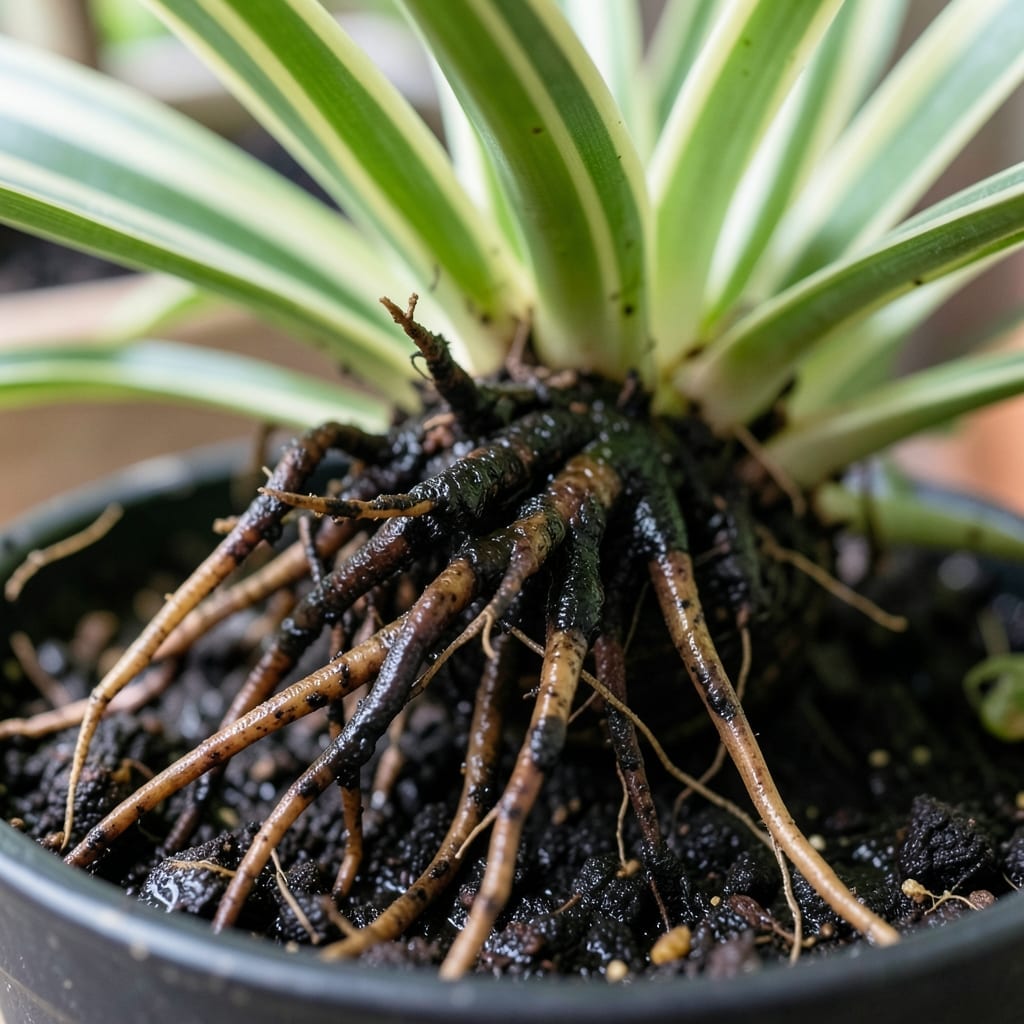
Yellow leaves and mushy stems mean your spider plant is drowning. I’ve saved dozens from overwatering, and the first step is always the same: stop watering immediately and check the roots.
The problem isn’t just too much water—it’s roots sitting in soggy soil without drainage. Healthy roots are white and firm; black or squishy ones mean rot has set in. The fix starts with a clean pair of scissors.
You’ll see new growth within 2-3 weeks if you catch it early. The key is repotting into fresh, well-draining soil and a container with holes. No fancy tools needed—just a sharp eye and steady hands.
Works for any spider plant variety, from variegated to solid green. Here’s how to bring it back to life.
Overwatering in spider plants (Chlorophytum comosum) is rarely about how much water you use—it’s about how often and how well the roots can recover. Here’s why it happens, broken down by the most common (and fixable) culprits:
Spider plants thrive in well-draining soil. When potted in dense, compacted mixes (like pure peat or garden soil), water lingers around the roots, suffocating them. Science behind it: Roots need oxygen to respire; waterlogged soil cuts off this supply, leading to root rot (Pythium or Phytophthora fungi). Even a pot without drainage holes can turn your plant’s home into a swamp.
Watering on a rigid schedule (e.g., “every Monday”) ignores the plant’s actual needs. Spider plants prefer their soil to dry slightly between waterings. Key trigger: Overwatering disrupts the soil’s microbial balance, favoring anaerobic bacteria that attack roots. A moist topsoil ≠ a thirsty plant—always check the top 1–2 inches of soil first.
Larger pots seem like a good idea for growth, but they hold more soil—and thus more water—than the roots can absorb. Result: The excess moisture stagnates, creating a breeding ground for root rot. Spider plants do best in snug containers where the soil dries faster between waterings.
Spider plants in dim corners or north-facing windows use less water because photosynthesis (and thus transpiration) slows down. Problem: If you water at the same rate as a sunlit plant, the soil stays soggy. Pair low light with reduced watering to match the plant’s lowered metabolic rate.
If your spider plant’s roots are soggy, brown, or mushy, it’s time to act fast. Here’s how to revive it based on the issue:
Gently remove the plant from its pot and trim away black, mushy roots with clean scissors. Rinse the remaining healthy roots under lukewarm water to wash off excess soil and bacteria. Repot in fresh, well-draining potting mix (add perlite or sand for airflow) and a pot with drainage holes. Prevention tip: 💡 Water only when the top 1-2 inches of soil are dry—stick your finger in to check!
If leaves are yellow but roots look firm, your plant is likely drowning. Hold off on watering for 5-7 days, then resume with a lighter hand. Place the pot in a spot with bright, indirect light to help it recover. Prevention tip: 🎯 Use a moisture meter or the “lift test”—a light pot means it’s time to water.
If water pools on the surface, the soil may be too dense. Aerate it with a fork or chopstick to improve drainage, or repot into a chunkier mix (try 50% potting soil + 50% perlite/orchid bark). Prevention tip: ✨ Avoid heavy garden soil—spider plants thrive in airy, fast-draining blends.
If your pot lacks drainage holes, drill some or switch to one that does. For decorative cache pots, empty excess water from the saucer after 10 minutes. Prevention tip: 🌡️ Terra cotta pots wick away moisture faster than plastic, making them ideal for overwaterers.
With these fixes, your spider plant’s roots (and leaves!) will bounce back in no time.
Healthy roots are white and firm. If they appear black or mushy, your plant likely has root rot from overwatering. Gently remove it from the pot to inspect.
Stop watering immediately and move the plant to a spot with bright, indirect light. Check the pot for drainage holes—if missing, repot or drill some.
No, always use fresh, well-draining potting mix after root trimming. Old soil may harbor fungi or bacteria that can reinfect the plant.
Wait until the top 1-2 inches of soil are dry. This usually means watering every 7-10 days, but always check first.