
Beautiful Plants For Your Interior
Beautiful Plants For Your Interior
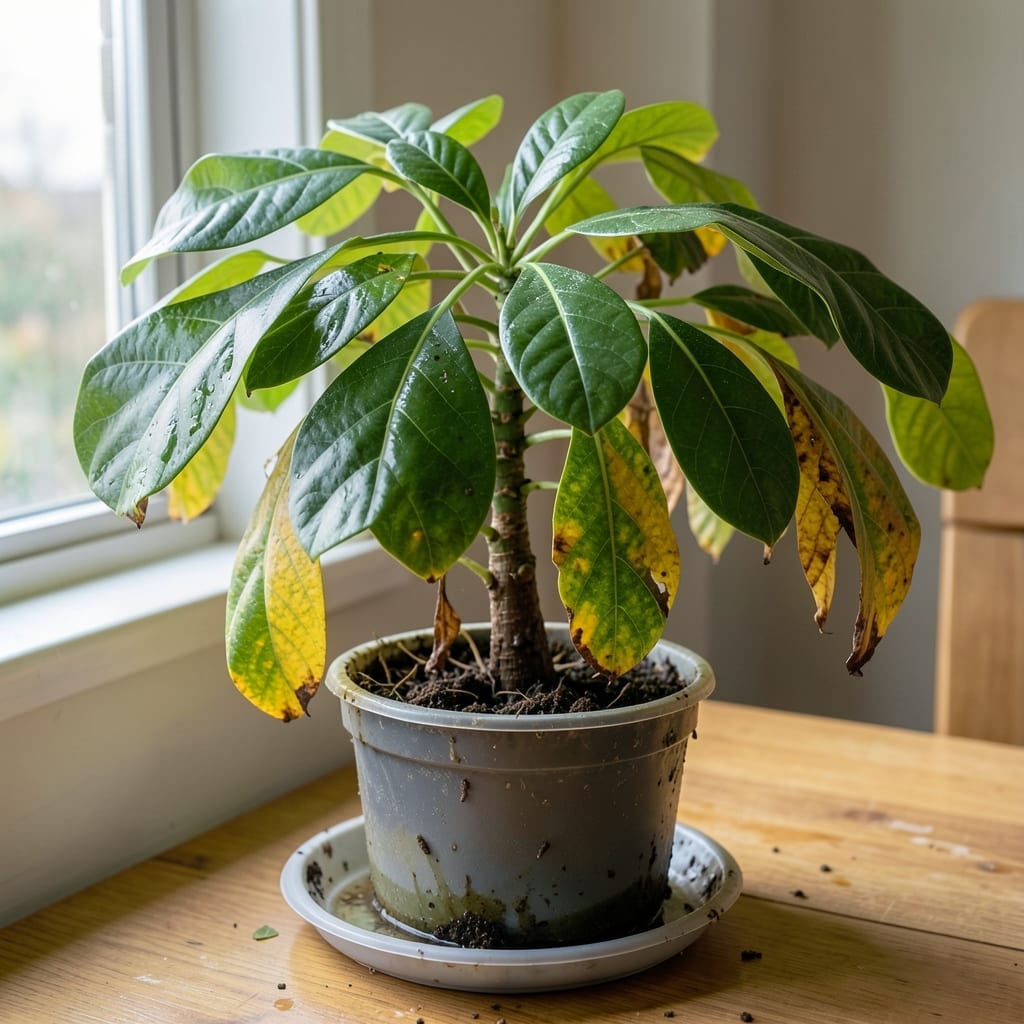
Yellow leaves on your schefflera? I’ve been there—panicked, holding a drooping plant, wondering what went wrong.
Overwatering is usually the culprit, and it sneaks up fast. The soil stays soggy, roots suffocate, and before you know it, you’re dealing with root rot. I lost three scheffleras before learning to check the soil first.
Here’s the thing—this is fixable. With a few adjustments to your watering routine and some quick action, your plant can bounce back. The key is catching it early.
You’ll see new growth in 2-3 weeks once the roots recover. No fancy tools, just consistency and a little patience.
Overwatering your Schefflera often stems from a few common but preventable missteps. Understanding these causes helps you adjust your care routine and keep your plant thriving. Below are the primary reasons why this issue occurs.
Scheffleras thrive in well-draining soil that allows roots to breathe. When watered too frequently, the soil remains soggy, depriving roots of oxygen. This leads to root asphyxiation and creates an ideal environment for root rot pathogens like Phytophthora and Pythium to flourish.
Pots without drainage holes or those filled with compacted, non-porous soil trap excess water. Even if you water appropriately, poor drainage prevents the soil from drying out, causing the roots to drown in stagnant moisture. Always use containers with drainage and a well-aerated potting mix.
Planting a Schefflera in a pot that’s too large can also lead to overwatering. Excess soil retains more moisture than the plant can absorb, increasing the risk of waterlogging. Choose a pot that’s just 1–2 inches larger in diameter than the root ball to maintain balance.
Cooler temperatures and low light conditions slow down evaporation and water uptake. If you water on a fixed schedule without accounting for seasonal changes, your Schefflera may end up sitting in damp soil for extended periods. Adjust watering frequency based on environmental factors.
Don’t panic—your Schefflera can bounce back with the right care. Below are targeted fixes for the most common overwatering symptoms, plus prevention tips to keep your plant thriving.
Fix: Trim the affected leaves with clean shears to redirect energy to healthy growth. Reduce watering immediately and let the top 1-2 inches of soil dry out before the next drink. Place the plant in bright, indirect light to aid recovery.
Prevention: 💡 Pro tip: Water only when the topsoil feels dry. Use a moisture meter for precision!
Fix: Stop watering and check the roots. If they’re soggy, repot the plant in fresh, well-draining soil. Snip any mushy, black roots to prevent rot from spreading. Keep the plant in a warm spot with gentle airflow to speed up drying.
Prevention: Ensure your pot has drainage holes, and empty the saucer after watering to avoid waterlogged soil.
Fix: Act fast—remove the plant from its pot, rinse the roots under lukewarm water, and trim away any dark, soft roots with sterilized scissors. Repot in a clean container with a mix of potting soil and perlite for better drainage. Hold off on watering for a few days.
Prevention: ✨ Pro tip: Add a layer of pebbles or clay balls at the bottom of the pot to improve drainage. Water less frequently in cooler months when growth slows.
With these steps, your Schefflera will be back to its lush, vibrant self in no time! Just remember: less water is often more.
Water when the top 1-2 inches of soil feel dry. Typically, this means every 7-10 days, but adjust based on light and temperature. Always check soil moisture first!
Yellow leaves often signal overwatering. Trim affected leaves, reduce watering, and ensure the pot has drainage. Bright, indirect light helps recovery.
Yes! Remove the plant, rinse roots, and trim dark, mushy sections. Repot in fresh, well-draining soil and avoid watering for 3-5 days.
Use a well-draining mix with perlite or sand. Add a layer of pebbles at the pot’s bottom to improve drainage and prevent soggy soil.