
Beautiful Plants For Your Interior
Beautiful Plants For Your Interior
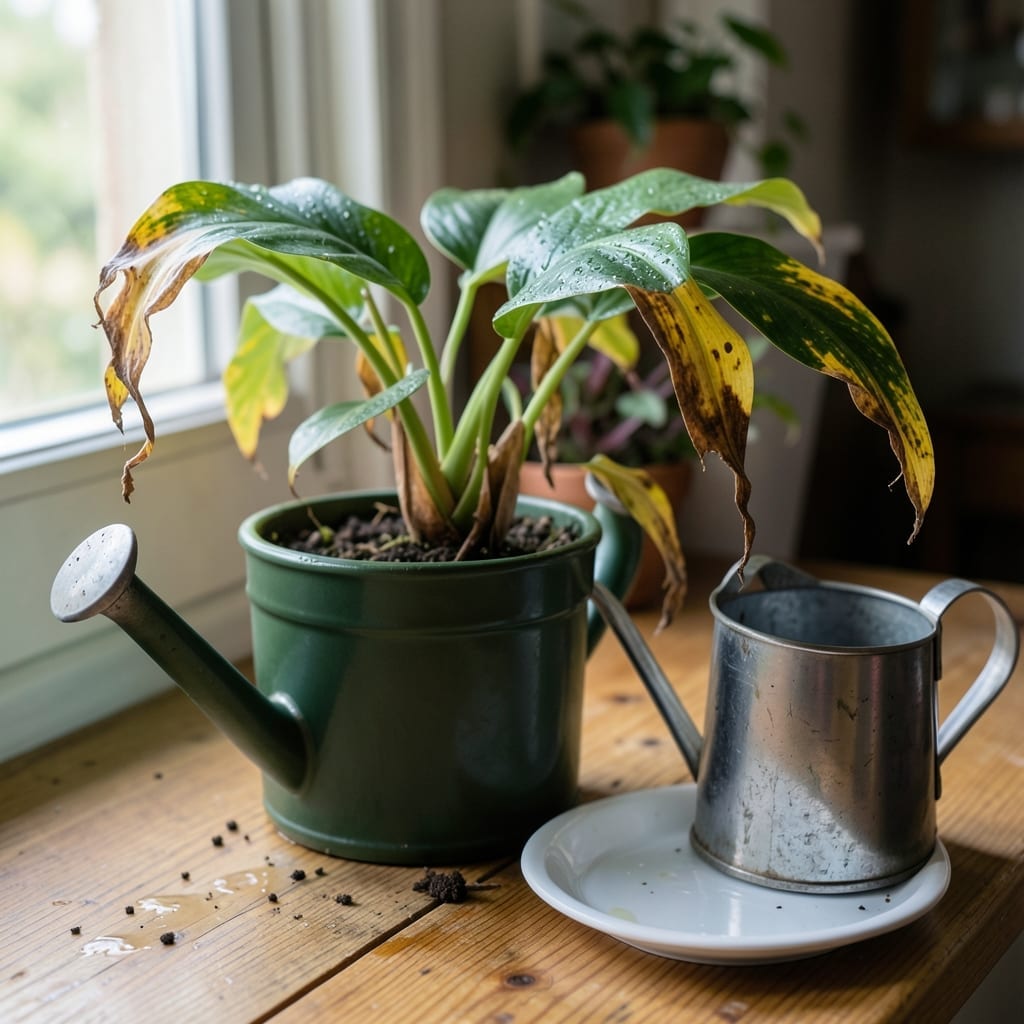
Yellow leaves and mushy stems scream trouble. I’ve learned the hard way that overwatering does more damage than drought, turning healthy plants into sad, drooping casualties overnight.
The signs are unmistakable: leaves turn bright yellow or develop soft brown spots, soil stays soggy for days, and roots look dark and mushy instead of white and firm. Most people water on autopilot, not realizing they’re suffocating their plants.
Fixing it starts with stopping the water immediately and checking drainage. A simple repotting with fresh soil can save most plants if you catch it early. The key is letting the top 1-2 inches of soil dry out between waterings.
Prevention is simpler than the cure. Use pots with drainage holes, water only when needed, and pay attention to what your plants are telling you. They’ll thank you with vibrant green growth instead of yellow warnings.
Overwatering disrupts a plant’s natural balance, but it’s rarely just about too much water. The real issue is how that water interferes with critical plant functions. Here’s why it happens:
When pots lack drainage holes or soil is too dense (like clay-heavy mixes), water pools at the roots. This suffocates the root system by displacing oxygen in the soil pores—a condition called hypoxia. Without oxygen, roots can’t respire, leading to cell death and rot.
Many gardeners water on a fixed schedule (e.g., “every Monday”) rather than checking soil moisture. Plants in cool, humid environments or low-light conditions need far less water than those in hot, dry spots. Overwatering in these cases overwhelm the plant’s ability to transpire, causing waterlogged tissues and nutrient imbalances.
A pot that’s too large for the plant retains excess water because the roots can’t absorb it all. This creates a stale, soggy environment where harmful bacteria and fungi (like Phytophthora or Pythium) thrive, attacking the roots and stem.
Peat-heavy or compacted soils retain moisture long after watering. While great for moisture-loving plants like ferns, most houseplants (e.g., succulents, snake plants) need a fast-draining mix. Without it, roots sit in dampness, unable to access oxygen, and begin to decay.
Don’t panic—your plant can bounce back with a few simple fixes. Here’s how to tackle each overwatered plant sign and prevent future mishaps.
If yellowing leaves are your main issue, stop watering immediately and let the soil dry out. Stick your finger 1-2 inches into the soil—if it’s damp, wait. Resume watering only when the top inch feels dry. Switch to a pot with drainage holes if yours lacks them, and always empty the saucer after watering.
Prevention tip: Use a moisture meter 🌡️ to take the guesswork out of watering.
For mushy, dark roots, act fast. Gently remove the plant from its pot and trim away black or slimy roots with clean scissors. Repot in fresh, well-draining soil (a cactus or succulent mix works well for most plants). Avoid fertilizing until the plant recovers—it’s too stressed to process nutrients.
Prevention tip: Add perlite or sand to your soil mix ✨ to improve drainage.
Wilting despite wet soil? Your plant might be suffocating. Move it to a spot with better airflow (but avoid direct drafts). If it’s in a decorative pot without drainage, transfer it to a nursery pot inside the decorative one, then remove it for watering.
Prevention tip: Group plants loosely 🎯 to allow air circulation between them.
White mold or a foul smell? Scrape off visible mold from the soil surface and sprinkle cinnamon (a natural antifungal) on top. For severe cases, repot the plant and discard the old soil. Avoid misting leaves until the issue clears.
Prevention tip: Water in the morning 🌞 so excess moisture evaporates during the day.
Yellow leaves that feel soft or squishy often signal overwatering. Check the soil—if it’s soggy and smells musty, that’s a clear sign. Healthy yellowing from aging leaves starts at the bottom and feels dry.
Wilting with wet soil usually means roots can’t breathe due to excess water. This is called root asphyxiation. Stop watering and move the plant to a spot with better airflow.
Yes, if caught early! Trim black, mushy roots and repot in fresh, dry soil. Water lightly and avoid fertilizing for 2-3 weeks. Most plants bounce back with proper care.
Water only when the top 1-2 inches of soil feel dry. This varies by plant type, pot size, and environment. Always check before watering—never stick to a fixed schedule.