
Beautiful Plants For Your Interior
Beautiful Plants For Your Interior
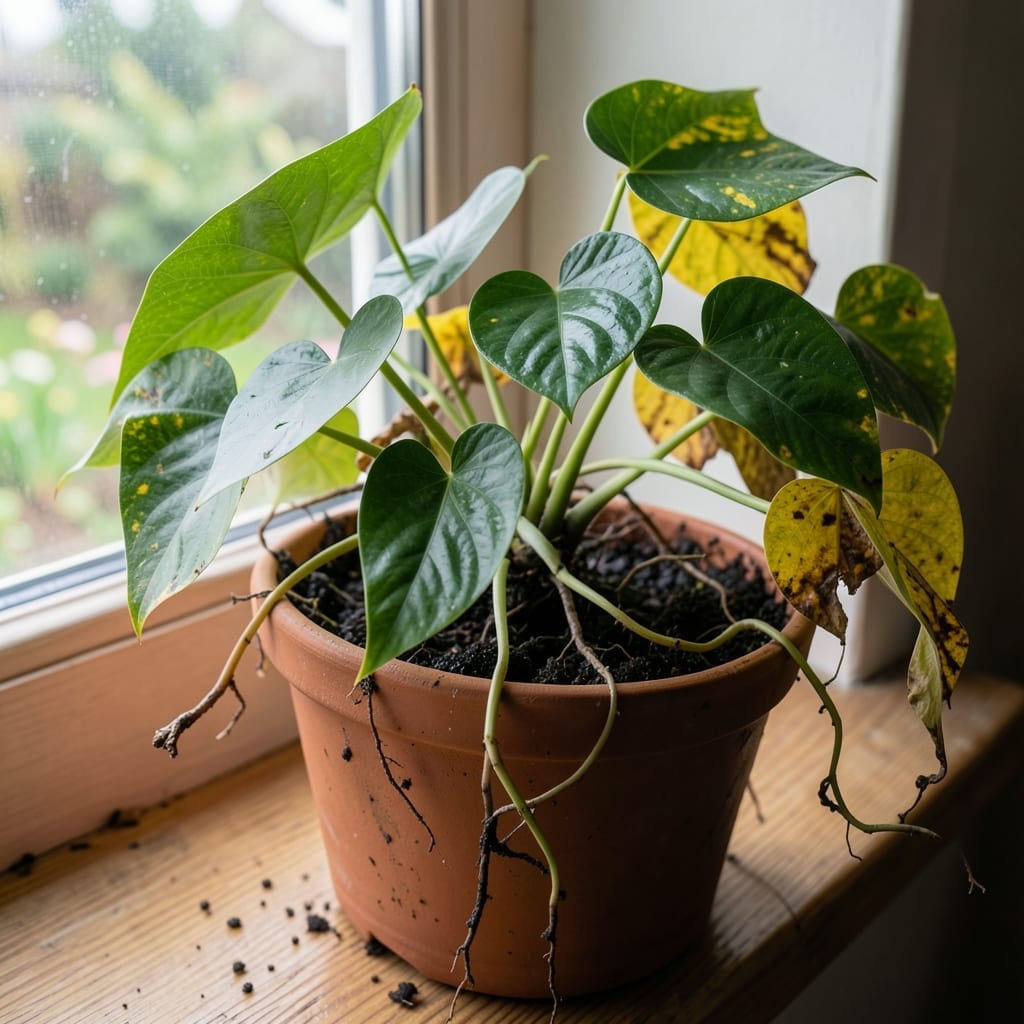
Yellow leaves and sagging stems scream for help. I’ve rescued countless philodendrons from the brink by catching overwatering early, and the fix is simpler than you’d think.
Most people drown their plants out of love, not realizing the roots need air as much as moisture. A foolproof check—stick your finger in the soil—reveals the truth before the damage becomes permanent.
Within days of adjusting your routine, you’ll see perked-up foliage and fresh growth. The plant bounces back faster than you’d expect, as long as the roots aren’t completely rotted.
Works for all philodendron varieties, from heartleaf to Hope. Here’s how to nurse yours back to health.
An overwatered philodendron often stems from a few predictable missteps in care. Understanding these causes helps you adjust your routine before the problem worsens.
Philodendrons thrive in moist but not soggy soil. When watered too often, their roots are deprived of oxygen, leading to root rot. The soil should dry out slightly between waterings—typically every 1-2 weeks, depending on light and humidity.
Pots without drainage holes or compacted soil trap excess water, drowning the roots. Always use containers with drainage and a well-aerating potting mix (e.g., peat-based with perlite) to prevent waterlogging.
A pot that’s too large holds more moisture than the plant can absorb, increasing the risk of overwatering. Choose a container only 1-2 inches wider than the root ball to maintain balance.
Philodendrons in dim or cold environments use water more slowly. If you don’t adjust your watering schedule, the soil stays wet too long. Move the plant to brighter, warmer conditions or reduce watering frequency.
Here’s how to nurse your philodendron back to health by tackling each overwatering symptom at its root. Start by addressing the most critical issues first, then adjust your care routine to prevent future problems.
If your philodendron’s leaves are turning yellow, it’s a clear sign of excess moisture. Stop watering immediately and check the soil. If it feels soggy, let it dry out completely before watering again. Ensure your pot has drainage holes to prevent water from pooling at the roots. Repot the plant in fresh, well-draining soil if the current mix retains too much water.
Prevention tip: 💡 Water only when the top 1-2 inches of soil are dry. Use a moisture meter for precision.
Wilting despite wet soil often means the roots are suffocating. Gently remove the plant from its pot and inspect the roots. Trim any mushy, dark roots with clean scissors, as these are rotting. Repot the plant in a clean container with fresh soil, and avoid compacting the mix too tightly.
Prevention tip: ✨ Use a chunky, airy soil mix with perlite or orchid bark to promote better airflow.
White mold or a foul smell indicates fungal growth, which thrives in damp conditions. Remove any affected soil and treat the plant with a fungicide or a diluted hydrogen peroxide solution (1 part peroxide to 3 parts water). Clean the pot with a bleach solution (1 part bleach to 9 parts water) before reuse.
Prevention tip: 🌡️ Avoid letting the pot sit in saucers of water, and ensure good air circulation around the plant.
Small, water-filled blisters on the leaves (edema) occur when roots absorb water faster than the plant can use it. Move your philodendron to a spot with lower humidity and hold off on watering until the soil dries. Increase airflow with a small fan if needed.
Prevention tip: 🎯 Group plants loosely to avoid trapping humidity, and water in the morning to allow excess moisture to evaporate during the day.
Water only when the top 1-2 inches of soil are dry. Typically, this means every 7-14 days, but always check the soil first. Factors like light and humidity can change the schedule.
Yellowing leaves and drooping stems are early red flags. If the soil feels soggy and smells musty, root rot may have started. Catch it early by checking the roots for mushy, dark spots.
Yes! Trim away all mushy roots with clean scissors, then repot in fresh, well-draining soil. Avoid watering for 3-5 days to let roots recover. Prevention is easier than treatment.