
Beautiful Plants For Your Interior
Beautiful Plants For Your Interior
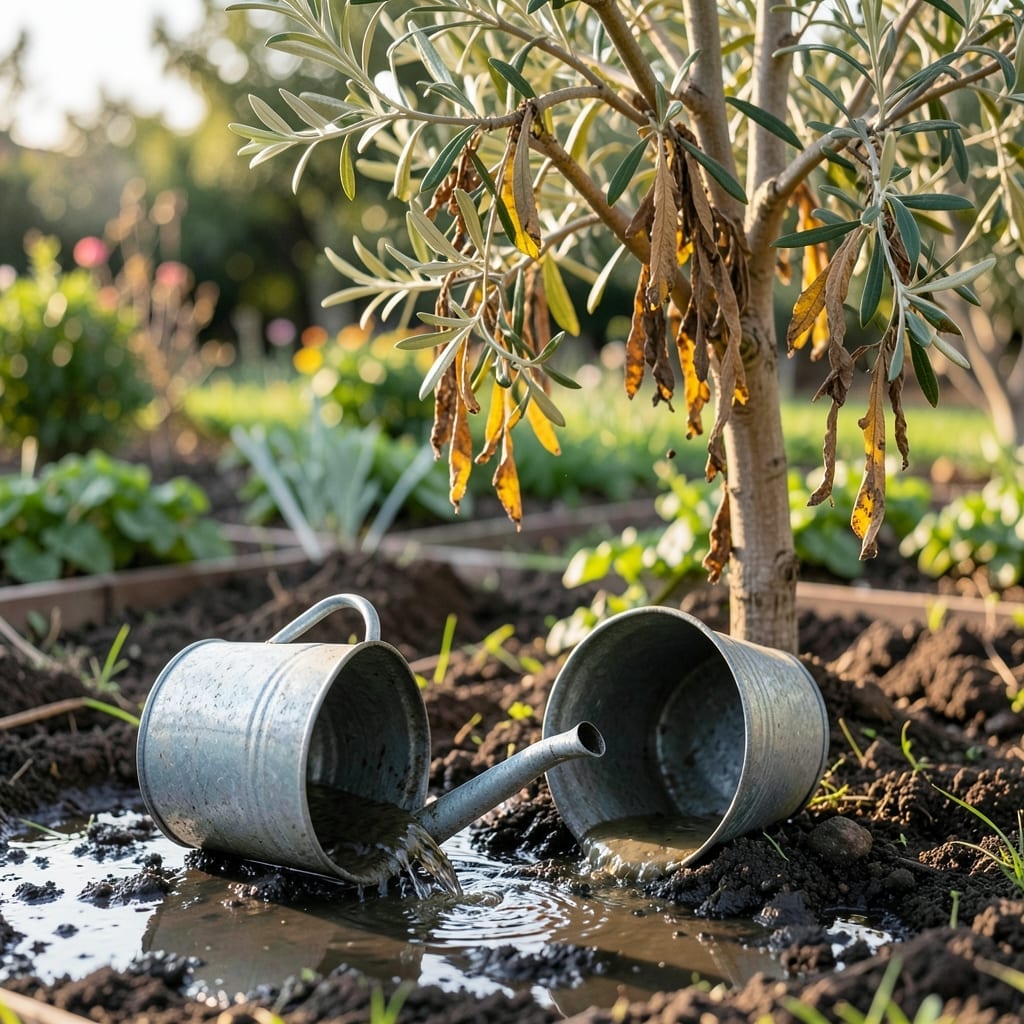
Yellow leaves and wilting branches on your olive tree? It’s likely drowning. Overwatering is the most common mistake I see with these Mediterranean natives that prefer dry conditions over soggy soil.
I learned this the hard way after killing two olive saplings by treating them like thirsty tropical plants. The roots suffocate when waterlogged, leading to rot that spreads fast in 48 hours if left unchecked.
Recovery starts with letting the soil dry completely between waterings. A simple moisture meter or your finger can save you—water only when the top 2-3 inches feel bone dry.
This approach works for potted or in-ground trees and prevents future crises. Here’s how to bring it back from the brink.
Overwatering an olive tree often stems from misunderstanding its natural habitat. Olive trees (Olea europaea) are native to the Mediterranean, where they thrive in dry, well-draining soil and endure long periods of drought. Replicating these conditions is key to their health. Below are the most common causes of overwatering and the science behind them.
Many gardeners assume frequent watering equals better growth, but olive trees require minimal moisture. Their roots are adapted to search for water deep in the soil, and overwatering disrupts this process. When soil remains soggy, it deprives roots of oxygen, leading to anaerobic conditions that suffocate the tree and encourage root rot pathogens like Phytophthora.
Olive trees hate wet feet. Heavy, clay-rich, or compacted soils retain too much water, creating a stagnant environment where roots cannot breathe. Ideal soil for olive trees should be sandy, loamy, or rocky to allow excess water to drain quickly. Without proper drainage, even moderate watering can lead to waterlogged roots.
Potted olive trees are especially vulnerable if the container lacks drainage holes or uses a non-porous material (e.g., plastic without drainage). Water accumulates at the bottom, creating a reservoir of stagnant moisture that promotes fungal growth. Always use terracotta or fabric pots with ample drainage to mimic natural conditions.
During rainy seasons or in humid climates, olive trees need even less supplemental watering. Many gardeners fail to adjust their watering schedule, leading to accidental overwatering. Monitor soil moisture by sticking your finger 2 inches deep—if it feels damp, hold off on watering until it dries out.
Reviving an overwatered olive tree starts with addressing the root of the issue—literally. Below are targeted solutions for common symptoms, along with prevention tips to keep your tree thriving.
If the leaves are turning yellow, stop watering immediately and let the soil dry out completely. Olive trees prefer dry conditions, so water only when the top 2-3 inches of soil are bone-dry. Use a moisture meter or your finger to test. Prevention tip: 💡 Stick to a deep but infrequent watering routine—once every 2-3 weeks in summer, less in cooler months.
Wilting or leaf drop often signals root suffocation. Repot the tree in well-draining soil mixed with perlite or sand, and ensure the container has drainage holes. If planted in the ground, amend the soil with coarse sand or gravel. Prevention tip: ✨ Elevate potted trees on feet or a stand to prevent water pooling at the base.
A sour or musty smell means root rot has set in. Trim away black, mushy roots with sterilized pruners and repot the tree in fresh, dry soil. For severe cases, use a fungicide like copper-based solution to kill off remaining pathogens. Prevention tip: 🌡️ Avoid over-potting—choose a container only slightly larger than the root ball to prevent excess moisture retention.
If growth has slowed, prune damaged branches to redirect energy to healthy parts of the tree. Reduce fertilizer use, as overwatered trees struggle to absorb nutrients. Prevention tip: 🎯 Mulch lightly around the base (keeping it away from the trunk) to regulate soil moisture without trapping water.
With these steps, your olive tree can bounce back—just give it time and a lot less water!
Water deeply but infrequently—once every 2-3 weeks in summer, even less in cooler months. Always check that the top 2-3 inches of soil are completely dry first.
Yes, if caught early. Stop watering, improve drainage, and trim any rotten roots. With proper care, most trees bounce back within 4-6 weeks.
Use well-draining mixes like sandy loam or add perlite/sand to regular soil. Avoid heavy clay or compacted soil that holds moisture.
Yellow leaves often signal root suffocation from too much water. Stop watering and let the soil dry completely to prevent further damage.