
Beautiful Plants For Your Interior
Beautiful Plants For Your Interior
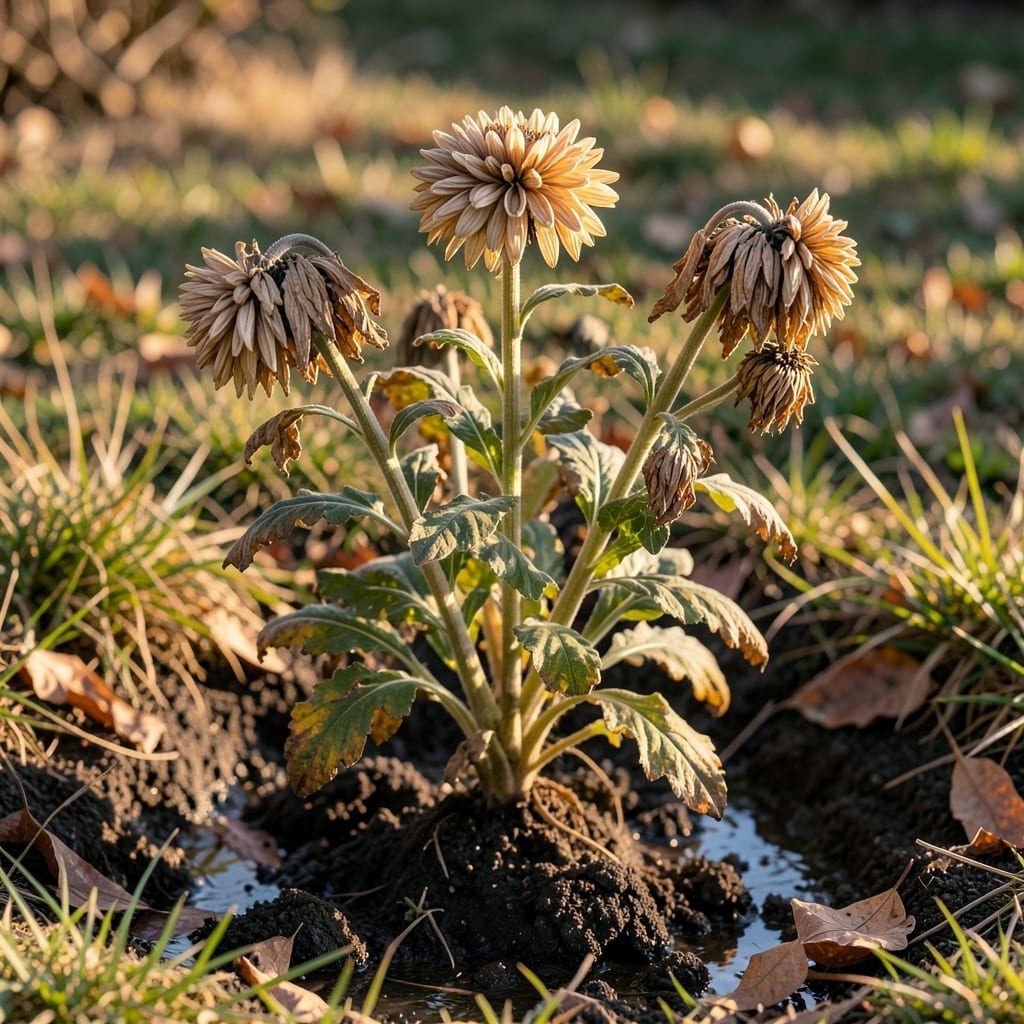
Yellowing leaves and droopy stems on your mums usually mean one thing: too much water. I’ve nursed back dozens of sad, soggy plants with a few simple fixes.
Overwatering suffocates the roots, turning vibrant blooms into wilted messes. The first sign is often leaves that look limp despite wet soil. Within 24-48 hours of proper care, you’ll see improvement.
Start by letting the soil dry out between waterings. Check the top inch with your finger—if it’s damp, hold off. Most mums only need watering 2-3 times a week, even in hot weather.
Reviving them takes patience but works. Move the pot to bright, indirect light and trim any blackened stems. They bounce back faster than you’d expect.
Overwatering chrysanthemums (mums) is a common issue that stems from a few key factors. Understanding these causes can help you prevent drooping leaves and root damage.
Mums thrive in well-draining soil. When planted in containers without drainage holes or heavy clay soil, water pools around the roots, leading to root rot. This condition suffocates the roots, preventing them from absorbing oxygen and nutrients, which causes wilting and yellowing leaves.
Mums require consistent moisture but can’t tolerate soggy conditions. Overzealous watering—especially in cool, humid weather—creates waterlogged soil. This disrupts the plant’s osmotic balance, where roots can’t uptake water efficiently, ironically leading to dehydration-like symptoms (drooping, crispy edges).
High humidity or low light reduces evaporation, slowing soil drying. In such conditions, even moderate watering can overwhelm the plant. Additionally, mums in shaded areas or crowded pots (with competing roots) are more prone to overwatering stress.
Reviving overwatered mums starts with addressing the root causes. Below are targeted fixes for common issues, paired with prevention tips to keep your plants thriving. 🌱
If the soil feels soggy, stop watering immediately. Gently tilt the pot to drain excess water, or move potted mums to a shaded, well-ventilated area to speed up evaporation. For garden mums, check the soil’s drainage—amend heavy clay with compost or sand. Prevention tip: Always use pots with drainage holes and empty saucers after watering. 💡
Root rot thrives in waterlogged soil. Carefully remove the plant, trim black or mushy roots with sterilized shears, and repot in fresh, well-draining soil. Choose a mix with perlite or vermiculite for better airflow. Prevention tip: Water only when the top inch of soil is dry. ✨
Overwatering often stems from a fixed schedule rather than checking soil moisture. Switch to watering in the early morning and reduce frequency—mums prefer slightly dry conditions over constant dampness. Use a moisture meter for precision. Prevention tip: Group mums with similar water needs to avoid over-saturating some while under-watering others. 🎯
Yellow or wilting leaves won’t recover. Prune them to redirect energy to healthy growth. Disinfect tools between cuts to prevent disease spread. Prevention tip: Improve air circulation around plants to discourage fungal growth. 🌬️
With these steps, your mums can bounce back—and stay vibrant with the right care!
Look for yellowing leaves, mushy stems, or a foul odor from the soil. These are classic signs of overwatering. Also check if the soil stays soggy for days after watering.
Yes, if caught early. Remove the plant, trim black/mushy roots, and repot in fresh, dry soil. Water lightly until it recovers, usually within 1-2 weeks.
Check the top inch of soil—water only when it feels dry. Most potted mums need water 2-3 times a week, less in cool weather.
Use a well-draining mix with perlite or sand. Avoid heavy clay or dense potting soils. Containers must have drainage holes to let excess water escape.