
Beautiful Plants For Your Interior
Beautiful Plants For Your Interior
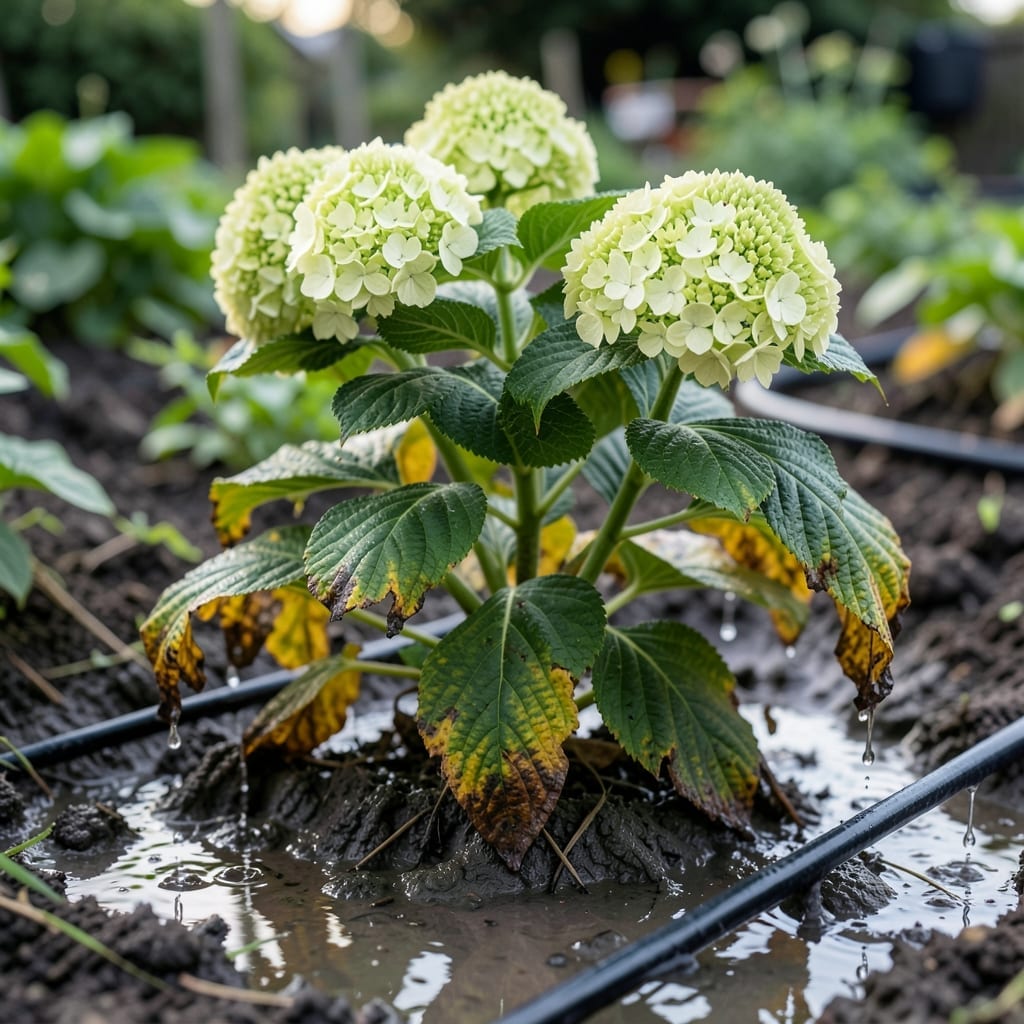
Yellow leaves on your Limelight hydrangea aren’t a death sentence. I’ve rescued mine from the brink more times than I’d like to admit.
Overwatering creates the perfect storm: soggy roots, oxygen starvation, and leaves turning yellow faster than fall foliage. The fix starts with letting the soil dry between waterings—finger-test the top 2 inches before reaching for the hose.
You’ll see improvement within 7-10 days of adjusting your routine. The plant bounces back with deeper green leaves and stronger stems once the roots can breathe again.
Works for container plants too—just ensure your pots have drainage holes. Here’s how to bring it back to life.
Overwatering your Limelight hydrangea isn’t just about giving it too much water—it’s about disrupting the plant’s natural balance. Here’s why it happens and the science behind each cause:
Hydrangeas thrive in well-draining soil that allows excess water to flow away from the roots. When planted in heavy clay or compacted soil, water pools around the roots, suffocating them. The lack of oxygen triggers root rot, a fungal infection that turns roots mushy and black. Without healthy roots, the plant can’t absorb nutrients, leading to yellowing leaves.
Many gardeners water on a fixed schedule (e.g., daily) rather than checking soil moisture. Limelight hydrangeas prefer consistently moist but not soggy soil. Overwatering fills the air pockets in the soil, preventing root respiration. Over time, this stress manifests as chlorosis (yellowing) due to nutrient uptake issues, particularly iron and magnesium.
Using a container without drainage holes or one that’s too large traps excess water. In oversized pots, the soil stays wet longer because the roots can’t absorb all the moisture. This creates a perfect environment for Phytophthora and Pythium fungi, which attack the roots and stem base, causing wilting and leaf discoloration.
Heavy rainfall or poor site selection (e.g., low-lying areas) can overwhelm even well-draining soil. Limelight hydrangeas in such spots may suffer from waterlogged conditions after storms. Prolonged saturation leaches nutrients from the soil and asphyxiates roots, leading to stunted growth and yellow foliage.
If your Limelight hydrangea is showing signs of overwatering, quick and targeted action can bring it back to health. Below are the most effective fixes, mapped to specific symptoms, along with prevention tips to keep your plant thriving.
If the roots are mushy or black, stop watering immediately. Remove the plant from its pot or dig around the base in the ground, and trim away any rotten roots with clean, sharp shears. Repot in fresh, well-draining soil or amend garden soil with compost and perlite. Prevention tip: 💡 Always use pots with drainage holes and avoid saucers that trap water.
Yellow leaves often signal waterlogged soil. Let the top 1-2 inches of soil dry out before watering again. If the plant is in a pot, move it to a breezy spot to help the soil dry faster. For in-ground plants, gently loosen the soil around the base to improve aeration. Prevention tip: ✨ Water deeply but less frequently—Limelight hydrangeas prefer consistent moisture but hate soggy feet.
If the leaves are wilting even though the soil is damp, the roots may be suffocating. Aerate the soil by lightly forking it or, for potted plants, repot into a looser mix. Avoid compacting the soil when replanting. Prevention tip: 🌡️ Mulch with bark or pine needles to regulate moisture while still allowing airflow.
If you spot mold or a foul odor, a copper-based fungicide can help. Apply according to the product instructions, and remove any heavily affected leaves or stems. Prevention tip: 🎯 Space plants properly to reduce humidity buildup and water at the base to keep foliage dry.
Water when the top 1-2 inches of soil feel dry to the touch. This usually means 2-3 times per week in hot weather, less in cooler months. Always check soil moisture first!
Yellowing leaves, especially on lower branches, are the first clue. You may also notice wilting despite wet soil or a foul odor from the roots. Act quickly if you see these.
Yes! Trim away black, mushy roots and repot in fresh, well-draining soil. Stop watering for 5-7 days to let the roots recover. Most plants bounce back with proper care.
A moisture meter takes the guesswork out of watering. Insert it 2-3 inches deep—if it reads “wet,” hold off on watering. It’s a great tool for preventing overwatering.