
Beautiful Plants For Your Interior
Beautiful Plants For Your Interior
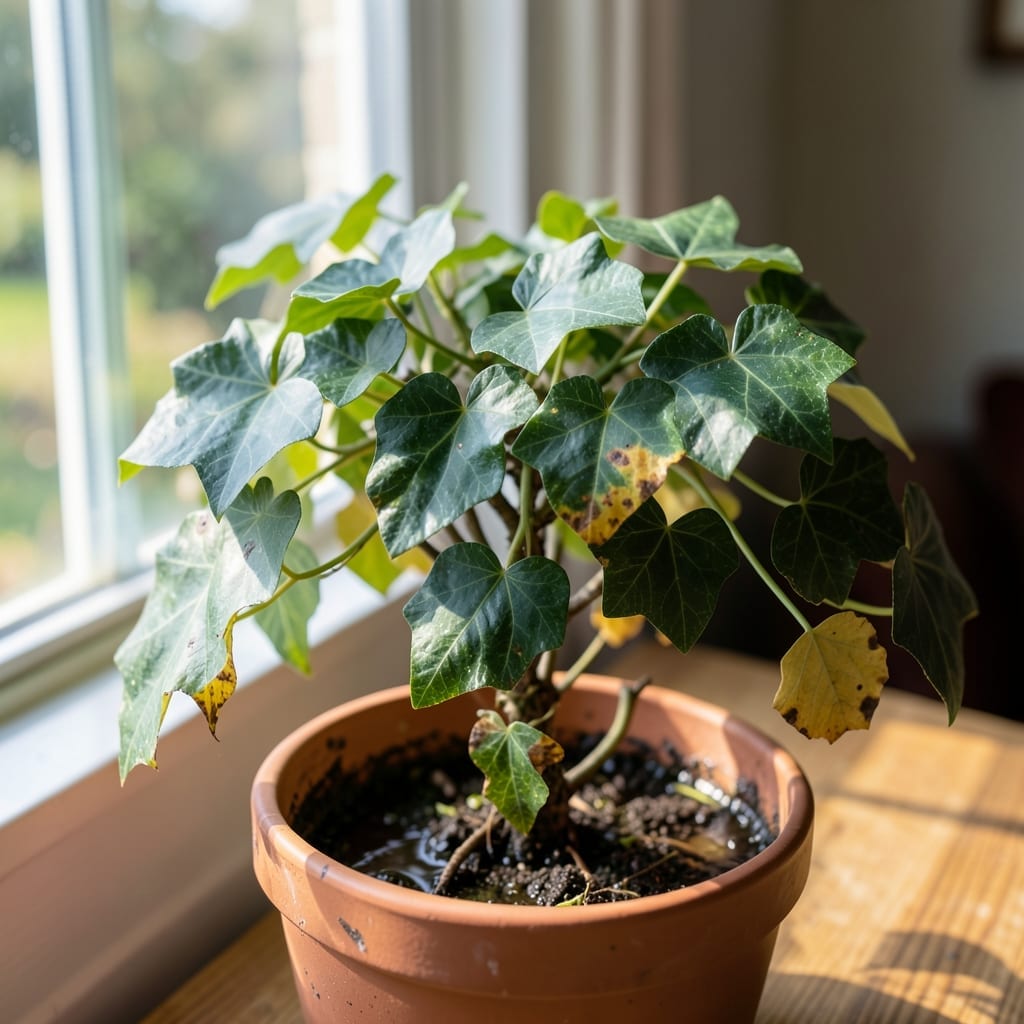
Yellow leaves and mushy stems meant my ivy was drowning, not thriving. I learned the hard way that soggy soil does more damage than dry spells ever could.
Overwatered ivy shows distress through wilting, leaf drop, and a sour smell from the roots. The fix starts with letting the soil dry out completely between waterings—most people don’t realize how little these plants actually need.
Once you adjust the routine, new growth appears within 2-3 weeks. The key is checking moisture with your finger, not the watering can, and using pots with drainage holes to prevent future issues.
This approach works for all ivy varieties, from English to Swedish. Your plant will bounce back stronger and more resilient than before.
Overwatering ivy often stems from well-meaning but misguided care. Here’s why it happens and how to avoid it:
Ivy thrives in slightly dry conditions between waterings. Frequent watering—especially without checking soil moisture—leads to waterlogged roots. The plant’s roots need oxygen, and saturing the soil blocks their ability to respire, causing root rot and yellowing leaves.
Pots without drainage holes or soil that retains too much moisture (like dense clay mixes) trap water around the roots. Ivy in such conditions can’t shed excess water, leading to edema (swollen, blistered leaves) and weakened growth. Always use containers with drainage and a well-aerated potting mix.
Cooler temperatures or low light slows evaporation, meaning soil stays wet longer. If you water on a fixed schedule without adjusting for season or location, ivy becomes prone to overwatering. Check soil dryness (top 1–2 inches) before watering—this simple step prevents most issues.
A pot that’s too large holds excess moisture, increasing the risk of soggy soil. Ivy prefers snug roots; oversized containers delay drying and encourage fungal growth. Repot only when roots outgrow the current container, and choose a pot just 1–2 inches wider in diameter.
Overwatered ivy can bounce back with the right care. Here’s how to tackle the most common issues and prevent them in the future.
If your ivy’s soil is waterlogged, stop watering immediately and let it dry out. Gently remove the plant from its pot and inspect the roots for rot (mushy, dark roots). Trim any affected roots with clean scissors, then repot in fresh, well-draining soil. Use a pot with drainage holes to prevent future sogginess.
Prevention tip: 💡 Water only when the top inch of soil feels dry. Stick your finger in to check!
Yellowing or drooping leaves often signal excess moisture. Move your ivy to a bright, indirect light spot to help it recover faster. Reduce watering frequency and ensure the pot isn’t sitting in a saucer of water, which can suffocate the roots.
Prevention tip: ✨ Use a moisture meter to take the guesswork out of watering.
For severe cases with mushy roots, act fast. Remove the ivy from its pot, rinse the roots to wash away infected soil, and trim any black or slimy roots. Repot in clean soil and a sterile container. Avoid fertilizing until the plant shows new growth, as stressed roots can’t absorb nutrients well.
Prevention tip: 🌡️ Choose a soil mix with perlite or sand to boost drainage.
Overwatering can stunt growth by depriving roots of oxygen. Place your ivy in a well-ventilated area and avoid overcrowding with other plants. If humidity is high, consider a small fan nearby (on low) to improve air circulation.
Prevention tip: 🎯 Group plants with similar water needs together to avoid overwatering one while underwatering another.
Check the top 1-2 inches of soil with your finger. If it feels damp, wait to water. Yellow leaves and mushy stems are clear signs you’re watering too much.
Yes, if caught early. Trim black, mushy roots with clean scissors, repot in fresh soil, and avoid watering for 5-7 days. Recovery takes 2-3 weeks with proper care.
Use containers with drainage holes and a well-aerated soil mix. Terracotta pots dry out faster than plastic, helping prevent soggy soil.
Reduce watering significantly in cooler months. Water only when soil is completely dry to the touch, often just every 10-14 days.