
Beautiful Plants For Your Interior
Beautiful Plants For Your Interior
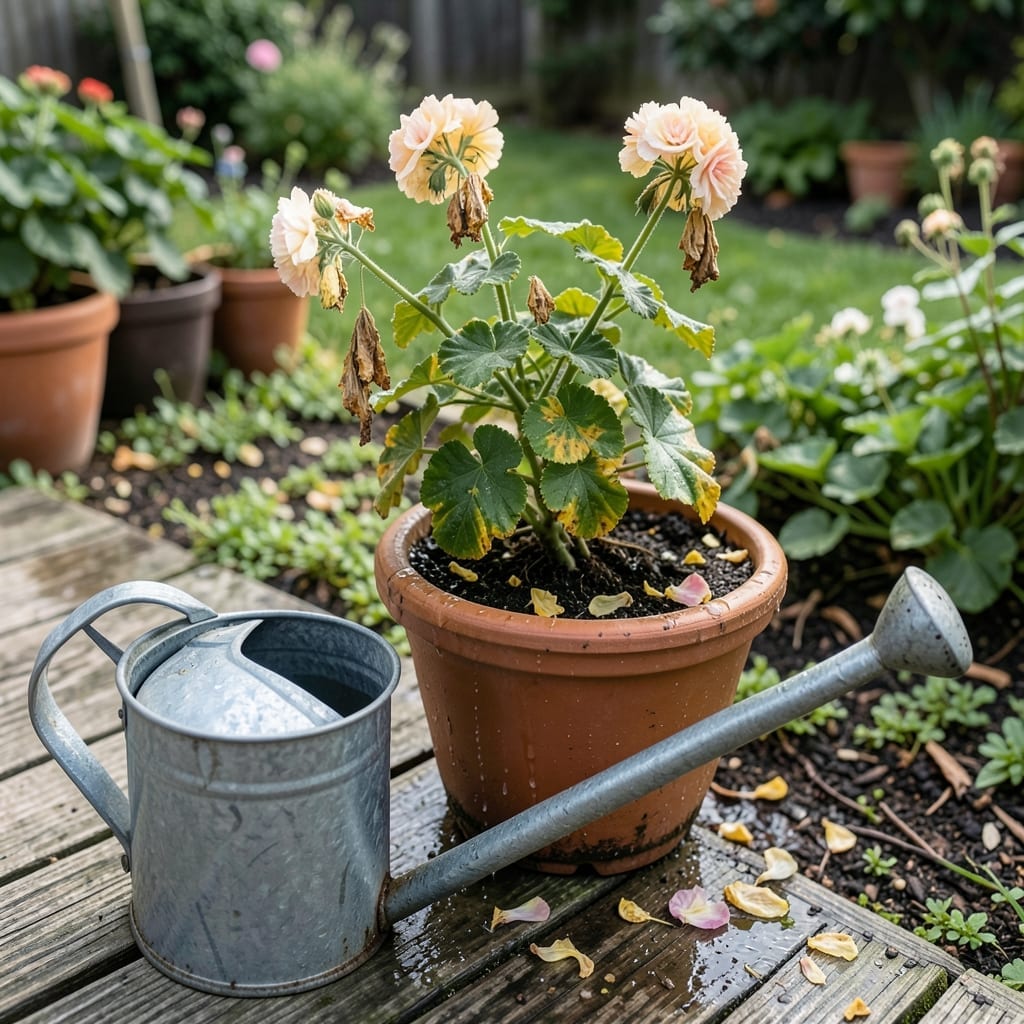
Yellow leaves and mushy stems on your geraniums aren’t a death sentence. I’ve rescued dozens from the brink by catching the first signs of overwatering before the roots rot completely.
The fix starts with your watering can—put it down for 5-7 days and let the soil dry out. Most geraniums bounce back once their roots can breathe again. The key is good drainage and the courage to water less often.
You’ll know it’s working when new growth appears firm and green instead of limp. The transformation can happen in as little as 10 days with the right approach.
This method works for potted plants on patios or geraniums in garden beds. Here’s how to save yours before it’s too late.
Overwatering geraniums is a common mistake, often rooted in good intentions. Understanding the why helps you adjust your care routine effectively. Below are the primary causes, each with a scientific basis to guide your approach.
Geraniums (Pelargonium spp.) are drought-tolerant plants native to arid regions. Their roots evolved to thrive in well-draining soil with infrequent watering. When watered too often, the soil stays saturated, depriving roots of oxygen. This leads to root asphyxiation and encourages anaerobic conditions, where harmful bacteria and fungi (like Phytophthora or Pythium) proliferate, causing root rot.
Even moderate watering can cause issues if the pot or soil lacks proper drainage. Geraniums need containers with drainage holes to allow excess water to escape. Without them, water pools at the bottom, creating a waterlogged root zone. Clay or compacted soils exacerbate this by holding moisture longer than the plant can handle.
Geraniums in low-light conditions or humid environments use water more slowly. If you water them on the same schedule as those in bright, dry areas, the soil remains damp for extended periods. This slows transpiration (the plant’s water release process), increasing the risk of overwatering symptoms like yellowing leaves or mushy stems.
Planting geraniums in oversized pots can also lead to overwatering. Large containers hold more soil, which retains moisture longer. The roots may not expand quickly enough to absorb the excess water, leaving them vulnerable to rot. Always choose a pot just 1–2 inches wider than the root ball.
Reviving overwatered geraniums starts with addressing the root causes. Here’s how to tackle each issue head-on:
If your geraniums show yellow or droopy leaves, scale back watering immediately. Let the top 1–2 inches of soil dry out before watering again. Stick your finger in the soil to test moisture—if it feels damp, wait another day or two. Switch to a pot with drainage holes if yours lacks them, and empty saucers after watering to prevent soggy roots.
Prevention tip: 💡 Water deeply but less frequently—once a week is often enough for potted geraniums in moderate climates.
For mushy, dark roots, act fast. Gently remove the plant from its pot and trim away black or slimy roots with clean scissors. Repot in fresh, well-draining soil (a mix with perlite or sand works well). Avoid fertilizing until the plant recovers—stressed roots can’t absorb nutrients effectively.
Prevention tip: ✨ Use terracotta pots—they wick away excess moisture better than plastic.
White mold or a foul smell means fungus is thriving. Remove affected soil and drench the remaining soil with a fungicide (or a DIY mix of 1 part hydrogen peroxide to 10 parts water). Move the plant to a sunnier, breezier spot to speed up drying. Clean up fallen leaves or debris around the pot to reduce fungal spores.
Prevention tip: 🌡️ Space plants apart to ensure good air circulation, and avoid overhead watering.
If the soil stays soggy, it’s likely too dense. Mix in coarse sand, perlite, or vermiculite to improve drainage. For severe cases, replace the soil entirely. Poke holes in the soil with a stick to aerate the roots and help them breathe.
Prevention tip: 🎯 Raise pots off the ground with feet or a stand to prevent water pooling at the base.
Water when the top 1-2 inches of soil feel dry. In most climates, this means once per week. Always check soil moisture with your finger before watering.
Early symptoms include yellowing leaves and wilting. Later signs are mushy stems and black, slimy roots. Act at the first yellow leaf to prevent root rot.
Yes, but act quickly! Trim all black roots, repot in fresh, well-draining soil, and hold off on fertilizing. Most recover within 2-3 weeks with proper care.
Terracotta is porous and wicks away excess moisture better than plastic. They’re ideal for geraniums and other drought-tolerant plants.