
Beautiful Plants For Your Interior
Beautiful Plants For Your Interior
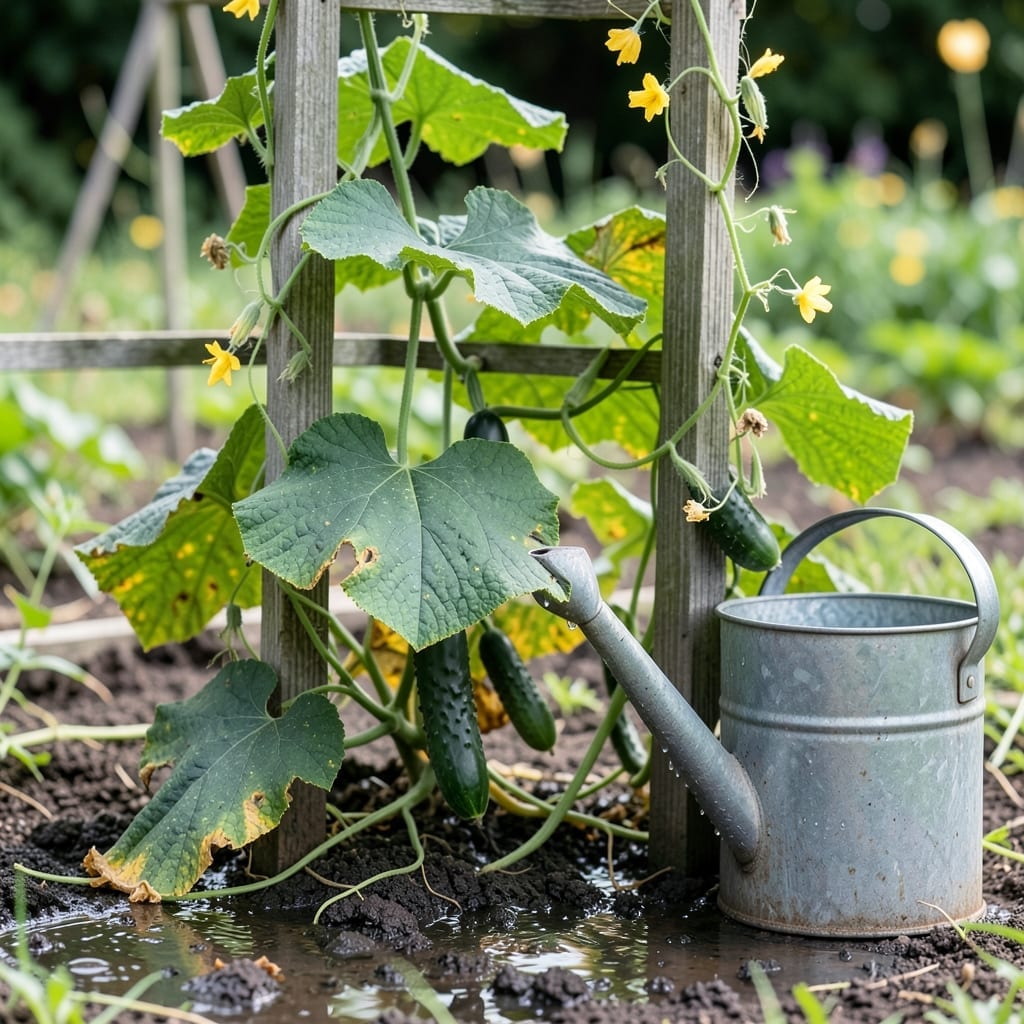
Yellow cucumber leaves and mushy stems aren’t a death sentence. I’ve brought back plants that looked completely beyond hope with just a few simple adjustments.
The first sign is usually drooping leaves that don’t perk up, even after watering. Then the yellowing starts, and the stems get soft. Most people grab the watering can again—that’s the exact wrong move.
What these plants actually need is a break. Stop watering, check the soil an inch down, and let them dry out a bit. You’ll see improvement within 2-3 days.
This works for container plants and garden beds alike. The key is acting fast before root rot sets in permanently.
Overwatering cucumbers often stems from well-intentioned but misguided care. Here’s why it happens:
Cucumbers thrive in well-draining soil. Heavy clay or compacted soil traps water around the roots, suffocating them and preventing oxygen uptake. This leads to root rot, a primary culprit behind yellowing leaves and wilting. Action: Amend soil with compost or sand to improve drainage.
Many gardeners assume cucumbers need daily water, but overwatering disrupts the plant’s natural balance. Cucumber roots require both moisture and air. Soggy soil drowns roots, halting nutrient absorption. Action: Water only when the top inch of soil feels dry.
High humidity, cool temperatures, or shaded areas slow evaporation, leaving soil waterlogged. Cucumbers in such conditions are prone to edema (blisters on leaves) and fungal diseases. Action: Adjust watering based on weather—less in cool, cloudy weeks.
Potted cucumbers often suffer from poor drainage holes or saucers that trap excess water. Stagnant water at the base rots roots quickly. Action: Use containers with drainage holes and empty saucers after watering.
Here’s how to nurse your cucumbers back to health, step by step. Address the root cause first, then adjust your care routine to prevent a repeat.
Fix: Trim affected leaves with clean scissors to redirect energy to healthy growth. If the entire plant looks pale, check the soil—if it’s waterlogged, stop watering immediately and let the top 1-2 inches dry out.
Prevent: Water only when the soil feels dry at a depth of 1 inch. Use a moisture meter for precision. 💡 Pro tip: Mulch with straw to retain moisture without oversaturating roots.
Fix: Gently loosen compacted soil around the base to improve drainage. If the stem is soft or mushy, the plant may be beyond saving—remove it to protect neighboring plants from fungal spread.
Prevent: Plant cucumbers in raised beds or containers with drainage holes. Mix in compost or perlite to improve soil structure. 🎯 Key move: Water at the base, not the leaves, to reduce humidity around the plant.
Fix: Remove infected leaves and treat the plant with a copper-based fungicide or a DIY mix of 1 teaspoon baking soda + 1 quart water + a drop of dish soap. Spray in the early morning.
Prevent: Space plants 12–18 inches apart for airflow. Avoid overhead watering, and water early in the day so foliage dries quickly. ✨ Bonus: Prune excess leaves to increase ventilation.
With these adjustments, your cucumbers should perk up in 1–2 weeks. Stay consistent, and your garden will thank you!
Look for yellowing leaves, especially lower ones, and stems that feel soft or mushy. Soil that stays soggy for days after watering is another red flag.
Yes, if you act quickly. Stop watering immediately and let the top 1-2 inches of soil dry out. Trim damaged leaves to help the plant focus on new growth.
Water deeply 1-2 times per week, depending on weather. Check soil moisture by sticking your finger 1 inch down—only water if it feels dry.
If the soil doesn’t drain within 24-48 hours, repotting into fresh, well-draining mix is your best bet. This prevents root rot from spreading further.