
Beautiful Plants For Your Interior
Beautiful Plants For Your Interior
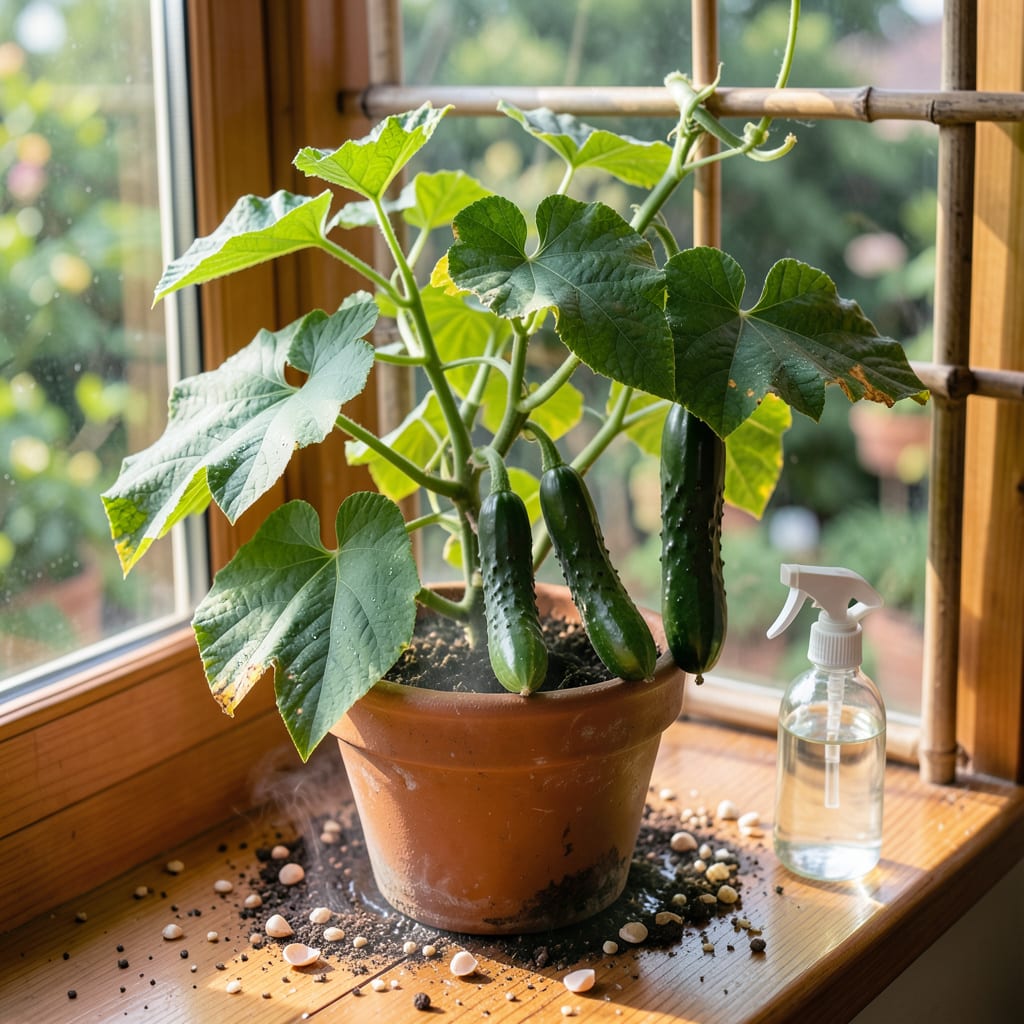
Yellow cucumber leaves are your plant’s way of waving a white flag. I’ve learned they’re usually screaming about one of four things: too much love (water), not enough love (nutrients), uninvited guests (pests), or a bad case of the sniffles (disease).
Here’s the thing—most gardeners grab the spray bottle first when they should grab a soil test. 90% of cases fix themselves with a simple nitrogen boost or adjusted watering schedule. The leaves bounce back faster than you’d expect.
You’ll know you’ve nailed it when new growth comes in deep green and the vines start climbing again. Old leaves won’t recover, but the plant will. That’s your sign the fix worked.
Prevention’s simpler than treatment: consistent watering, balanced fertilizer every 2 weeks, and a sharp eye for early trouble. Catch it early, and you’ll never lose a crop to yellowing again.
Yellowing cucumber leaves often signal an underlying issue that disrupts the plant’s health. Below are the most common causes, explained with actionable insights to help you diagnose the problem.
Cucumbers are heavy feeders, and a lack of essential nutrients can lead to chlorosis (yellowing). Nitrogen deficiency typically causes uniform yellowing of older leaves first, as the plant redirects nitrogen to new growth. Magnesium deficiency appears as yellow patches between leaf veins, often called interveinal chlorosis, while iron deficiency affects younger leaves first, turning them pale yellow or white. A soil test can confirm deficiencies, guiding targeted fertilizer application.
Excess water or compacted soil suffocates roots, reducing their ability to absorb oxygen and nutrients. This leads to root rot, where roots turn brown and mushy, and leaves yellow as a stress response. Cucumber plants prefer consistently moist—but not soggy—soil. Ensure pots have drainage holes and garden beds are well-aerated with organic matter.
Downy mildew and powdery mildew are common fungal culprits that start as yellow spots or patches on leaves, often with a fuzzy or powdery coating. Bacterial leaf spot causes small, water-soaked yellow lesions that may turn brown. These pathogens thrive in humid, wet conditions. Improve airflow, avoid overhead watering, and remove infected leaves promptly to prevent spread.
Sap-sucking pests like aphids, spider mites, and whiteflies drain plant fluids, causing yellowing, curling, or stippling on leaves. Check the undersides of leaves for tiny insects or webbing. A strong blast of water or insecticidal soap can dislodge and control early infestations.
Extreme temperatures, excessive sunlight, or sudden shade can stress cucumbers, leading to yellowing. Heat stress (above 90°F) may cause leaves to scorch, while cold snaps (below 50°F) slow growth and nutrient uptake. Provide afternoon shade in hot climates and use row covers to protect against unexpected cold.
Yellowing cucumber leaves can often be reversed with the right approach. Below are targeted solutions for the most common causes, along with prevention tips to keep your plants thriving.
Fix: Check the soil moisture by inserting your finger 1-2 inches deep. If it feels soggy, hold off on watering until the top inch dries out. Ensure your pots or garden beds have proper drainage holes. For container plants, elevate them to prevent waterlogging.
Prevention: Water deeply but infrequently—aim for 1-2 times per week, adjusting for rainfall. Use well-draining soil mixed with compost or perlite.
Fix: If leaves are uniformly yellow, a nitrogen deficit may be the culprit. Apply a balanced, water-soluble fertilizer (10-10-10) or a nitrogen-rich organic option like fish emulsion. For older leaves turning yellow with green veins, suspect magnesium deficiency—spritz leaves with a 1% Epsom salt solution (1 tablespoon per gallon of water).
Prevention: Test your soil annually and amend it with compost before planting. Feed cucumbers every 3-4 weeks during the growing season with a vegetable-specific fertilizer.
Fix: Cucumbers need 6-8 hours of sunlight daily. If leaves are yellowing due to sunburn (often crispy or bleached), provide afternoon shade with a shade cloth. For leggy, pale plants, relocate them to a sunnier spot or trim nearby plants blocking light.
Prevention: Site cucumbers in a location with consistent, dappled sunlight. In hotter climates, use row covers to diffuse intense light.
Fix: Inspect the undersides of leaves for aphids, spider mites, or whiteflies. Blast them off with a strong stream of water or apply insecticidal soap. For severe cases, use neem oil (mix 2 tablespoons per gallon of water) and spray every 5-7 days until pests are gone.
Prevention: Encourage beneficial insects like ladybugs by planting companion flowers (e.g., marigolds). Rotate crops yearly to disrupt pest life cycles.
Fix: Remove and destroy infected leaves immediately to prevent spread. For fungal issues like powdery mildew, apply a baking soda spray (1 teaspoon baking soda, 1 quart water, and a few drops of dish soap). For bacterial infections, copper-based fungicides can help.
Prevention: Space plants 12-18 inches apart for airflow. Water at the base to keep foliage dry, and avoid overhead watering in the evening.
💡 Pro Tip: Regularly inspect your plants for early signs of trouble. Catching issues early makes treatment easier and more effective!
Older leaves turn uniformly yellow first, while new growth stays green. This happens because the plant moves nitrogen to younger leaves. A soil test can confirm the deficiency.
If caught early, roots can recover. But prolonged soggy soil leads to root rot, which is often fatal. Always check soil moisture before watering again.
No, damaged leaves won’t recover, but new growth will be healthy. Focus on fixing the underlying issue to prevent further yellowing.
Mix 1 tablespoon of Epsom salt in 1 gallon of water and spray leaves. You should see improvement within 3-5 days.
