
Beautiful Plants For Your Interior
Beautiful Plants For Your Interior
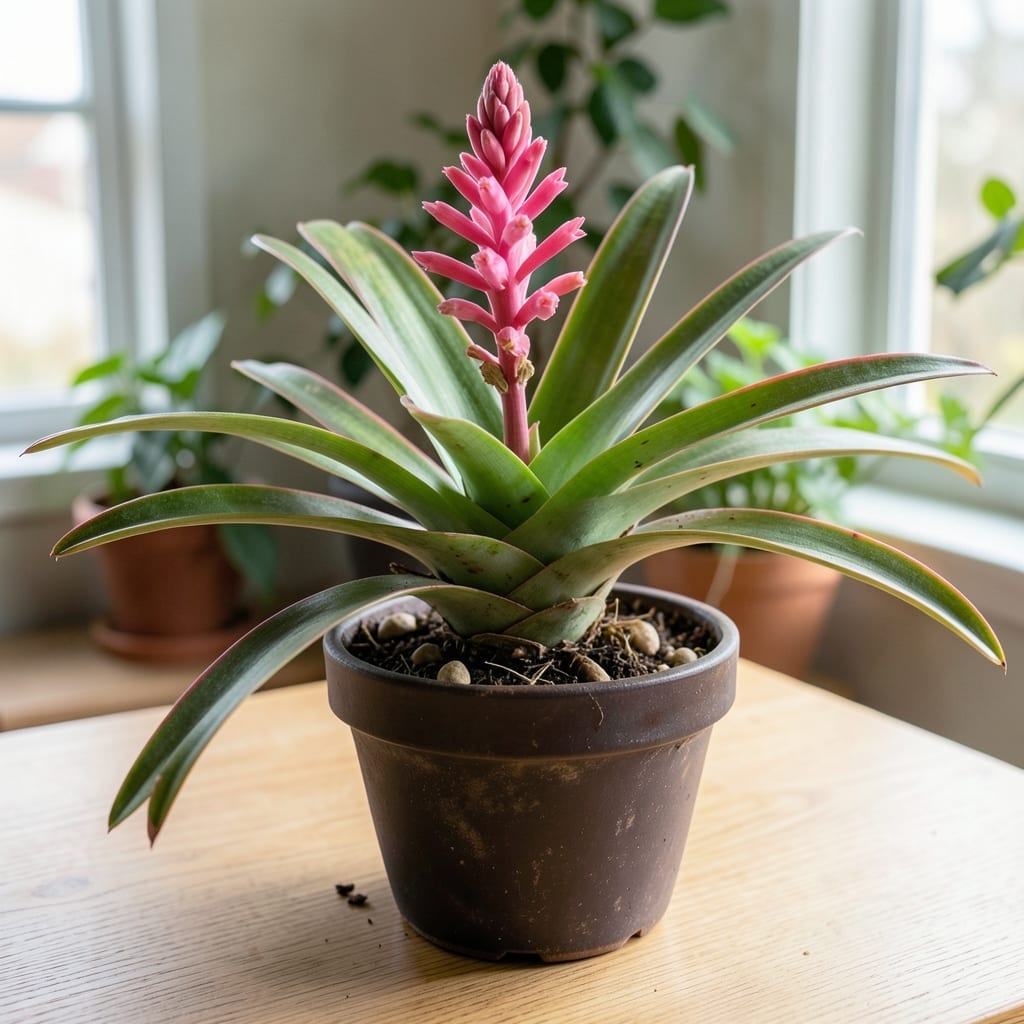
Drooping leaves on your bromeliad scream one thing: too much water. I learned this the hard way after my first one nearly drowned in its own pot.
Root rot sets in fast when soil stays soggy. The fix isn’t complicated—better drainage and a watering adjustment can save it. I’ve revived three this way.
You’ll see improvement in 1-2 weeks once the roots can breathe again. The leaves regain their stiff, arching posture, and that central cup stops looking waterlogged.
Works for any bromeliad variety, from small Aechmea to giant Vriesea. Here’s the rescue plan.
Overwatering a bromeliad often stems from misunderstandings about its natural habitat and needs. This tropical plant thrives in environments where water is available but not excessive. Here’s why it happens:
Bromeliads require well-draining soil or growing mediums to mimic their epiphytic nature (growing on trees in the wild). When planted in dense, water-retentive soil or pots without drainage holes, water accumulates around the roots. This leads to root rot, as the roots cannot access oxygen, causing the plant to suffocate and weaken.
Many gardeners assume bromeliads need frequent watering like traditional houseplants. However, these plants store water in their central cup (tank) and absorb moisture through their leaves. Watering the soil too often disrupts this balance, drowning the roots and promoting fungal growth.
Using oversized pots or containers without drainage holes traps excess water. Bromeliads prefer snug spaces where their roots can anchor without sitting in soggy conditions. A pot that’s too large holds more moisture, increasing the risk of overwatering even with moderate watering.
Humidity and temperature play a role in how quickly water evaporates. In cool, humid conditions, water lingers longer in the soil. If you don’t adjust your watering schedule to account for these factors, the bromeliad’s roots may stay waterlogged, leading to drooping leaves and decline.
If your bromeliad is suffering from too much water, act quickly with these targeted fixes:
Gently remove the plant from its pot and trim away any black, mushy roots with sterilized scissors. Repot in fresh, well-draining mix (50% orchid bark, 50% perlite works great). Avoid watering for 5–7 days to let roots recover. Prevention tip: Use a pot with drainage holes—this is non-negotiable for bromeliads! 💡
Stop watering immediately and tip the pot sideways to drain excess water. Place the plant in a warm, breezy spot to speed up drying. If the soil stays soggy, repot into a chunky, airy mix (avoid dense potting soil). Prevention tip: Water only when the top 1–2 inches of soil feel dry. ✨
Trim severely damaged leaves with clean shears to redirect energy to healthy growth. If the center cup (tank) is overfilled, dump it out and refill with just enough water to cover the base—bromeliads absorb water through their leaves, not roots! Prevention tip: Mist leaves lightly instead of soaking the soil. 🎯
If you spot fuzzy growth or a foul smell, remove affected areas and treat with a copper-based fungicide. Improve airflow around the plant and reduce humidity. Prevention tip: Space plants apart and avoid overhead watering. 🌡️
With these steps, your bromeliad can bounce back—just adjust your watering habits to keep it thriving long-term!
Water only when the top 1-2 inches of soil feel dry. In most homes, this means every 1-2 weeks. Always empty the central cup after 1-2 days to prevent rot.
Yes, if caught early. Remove black, mushy roots and repot in fresh, well-draining mix. Skip watering for 5-7 days to let roots heal. Recovery takes 2-3 weeks.
Use a small pot with drainage holes and an airy mix like 50% orchid bark and 50% perlite. Avoid large containers—they hold too much moisture.
Yellow leaves often signal excess water. Check for soggy soil or a water-filled central cup. Trim damaged leaves and adjust your watering routine.