
Beautiful Plants For Your Interior
Beautiful Plants For Your Interior
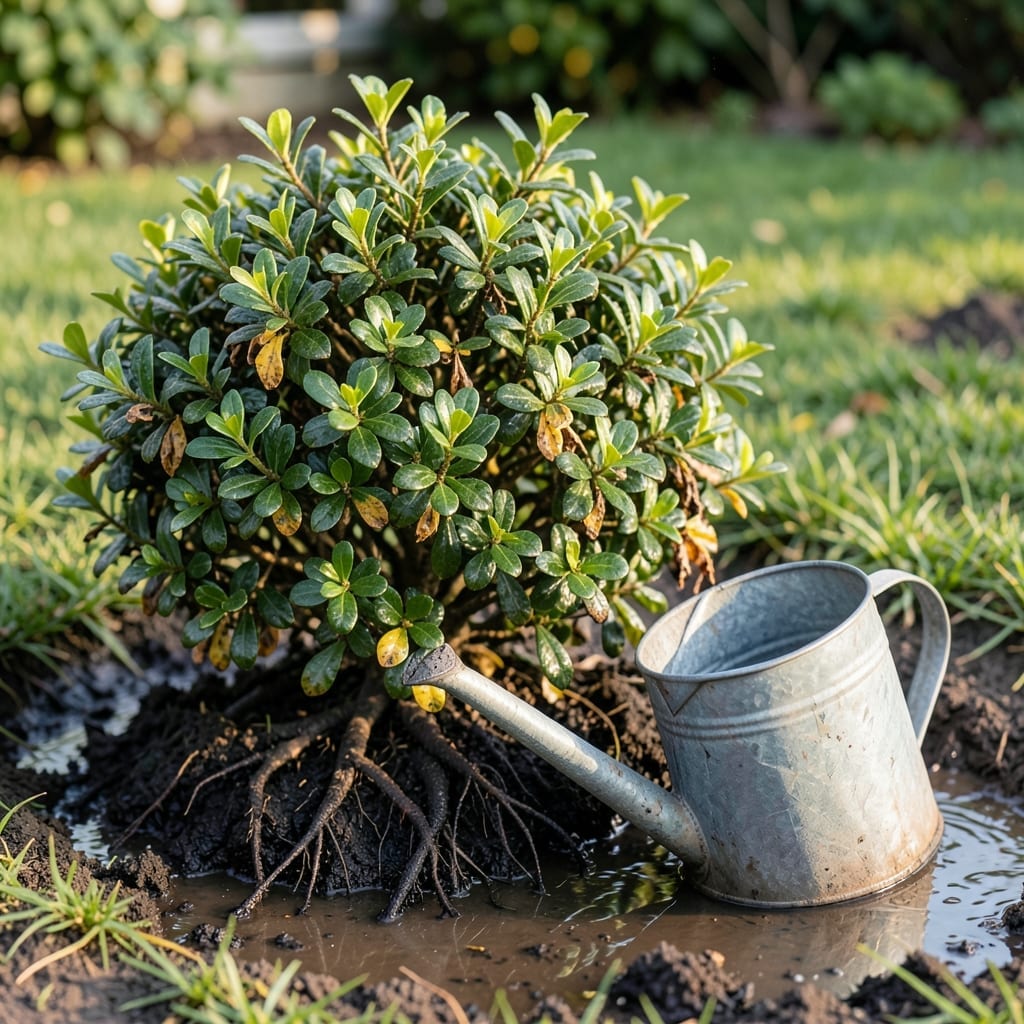
Yellow leaves on boxwoods always mean trouble. I’ve seen this exact pattern too many times—soft, drooping foliage and black stems that signal root rot from overwatering.
The problem sneaks up fast. Soggy soil suffocates roots, and before you know it, your once-lush shrub looks like it’s giving up. The good news? Catching it early means you can still turn things around.
First step is stopping the water completely. Then, check the drainage and trim any mushy roots. With the right adjustments, new growth appears within 2-3 weeks.
Prevention is simpler than you’d think. A well-draining soil mix and a watering schedule based on weather—not habit—keep this from happening again.
Understanding why boxwoods get overwatered starts with recognizing the most common mistakes and environmental triggers. Here’s a breakdown of the root causes:
Boxwoods thrive in well-drained soil, and their roots need oxygen to function. When you water too often or drench the soil, you displace air pockets in the root zone, leading to suffocation. The roots can’t respire, which triggers stress responses like yellowing leaves. Stick to deep, infrequent watering—about 1 inch per week, including rainfall—and always check soil moisture 2–3 inches down before adding more.
Heavy clay or compacted soil holds water like a sponge, leaving boxwood roots submerged. Even normal watering can become excessive in these conditions. Amend the soil with organic matter (like compost or pine bark fines) to improve drainage. Raised beds or planting on a slope can also prevent waterlogging.
Frequent overhead watering (e.g., sprinklers) in humid regions keeps foliage wet for extended periods. This creates a perfect breeding ground for fungal pathogens like Phytophthora, which cause root rot. Switch to drip irrigation or soaker hoses to deliver water directly to the roots, reducing moisture on leaves and stems.
Potted boxwoods are especially vulnerable if their containers lack drainage holes. Water pools at the bottom, drowning the roots. Always use pots with drainage holes and a well-draining potting mix (e.g., 50% soil, 50% perlite or sand). Elevate pots to ensure water can escape freely.
Boxwoods can bounce back from overwatering with the right care. Below are targeted fixes for common symptoms, plus prevention tips to keep your shrubs thriving.
If leaves are turning yellow, your boxwood is likely drowning. Stop watering immediately and check the soil. If it’s soggy, let it dry out completely before watering again. For potted boxwoods, ensure the container has drainage holes. Add perlite or coarse sand to the soil mix to improve aeration. In garden beds, amend heavy clay soil with compost to boost drainage.
Prevention tip: 💡 Water only when the top 1-2 inches of soil feel dry. Use a moisture meter for precision.
Wilting, blackened stems, or a foul odor signal root rot. Act fast: Remove the plant from its pot or dig it up gently. Trim away mushy, dark roots with sterilized pruners, keeping only firm, white roots. Replant in fresh, well-draining soil. For severe cases, drench the soil with a fungicide containing copper or hydrogen peroxide (1 part 3% hydrogen peroxide to 4 parts water) to kill fungal pathogens.
Prevention tip: ✨ Avoid over-mulching, which traps moisture. Keep mulch 2-3 inches away from the base.
If the soil stays wet for days, you’re overdoing it. Switch to deep, infrequent watering—give the plant a thorough soak once a week (twice in extreme heat) instead of daily light spritzes. Early morning is the best time to water, as it allows excess moisture to evaporate during the day. For container plants, elevate pots on feet or bricks to prevent water pooling at the base.
Prevention tip: 🎯 Group plants with similar water needs together to avoid overwatering some while underwatering others.
Boxwoods thrive with 1 inch of water per week, including rainfall. Always check soil moisture 2-3 inches down before watering—if it’s damp, wait. Deep, infrequent watering is far better than daily light sprinkles.
Watch for yellowing leaves, wilting despite wet soil, or black, mushy stems. A foul odor from the soil is another red flag. These symptoms appear within 1-2 weeks of excessive watering.
Yes, if you act quickly! Trim away dark, soft roots with sterilized pruners. Replant in fresh, well-draining soil and stop watering for 5-7 days. Severe cases may need a copper fungicide treatment.
Early morning is ideal. It allows excess moisture to evaporate during the day, reducing fungal risks. Evening watering can leave foliage damp overnight, promoting disease.