
Beautiful Plants For Your Interior
Beautiful Plants For Your Interior
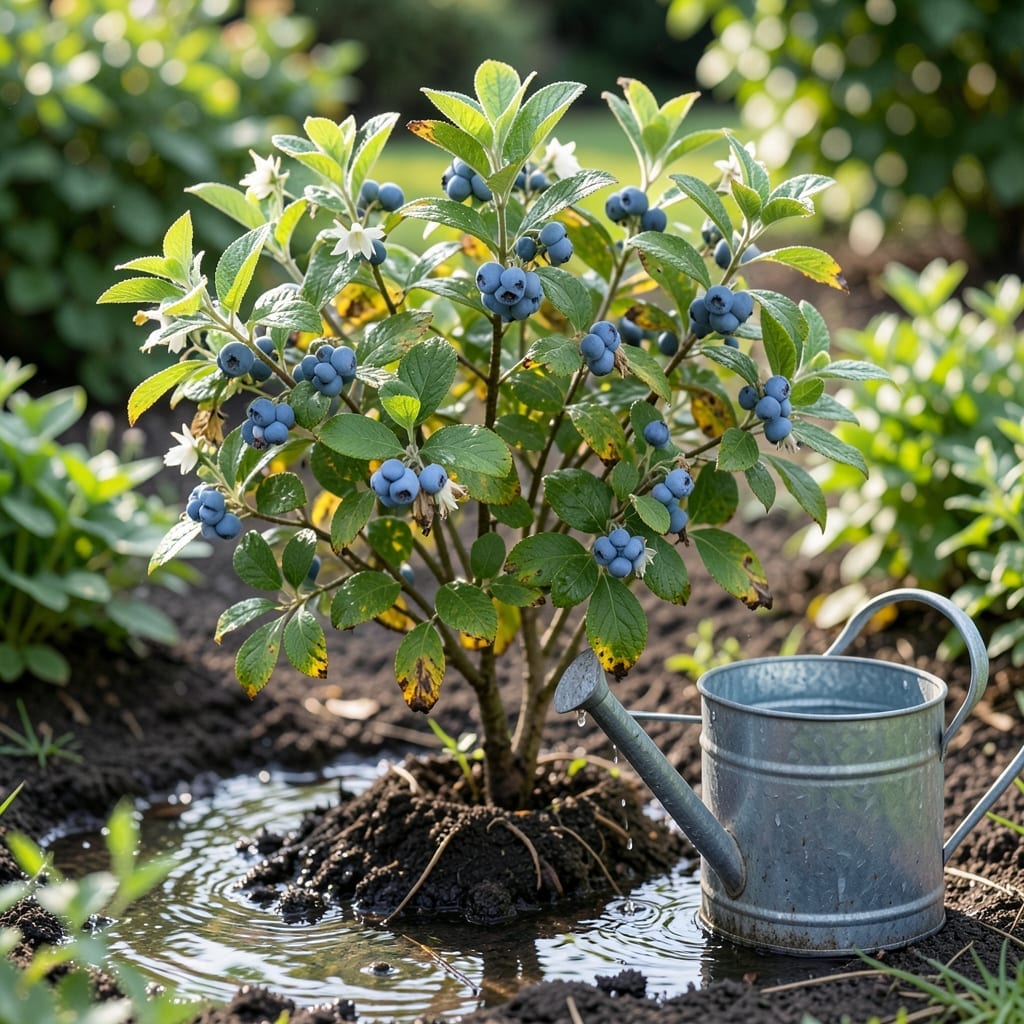
Yellow leaves on your blueberry bush aren’t just unsightly—they’re a distress signal. I’ve seen overwatering turn healthy plants into sad, soggy messes overnight, but the good news is they can bounce back.
The problem starts below the surface. Too much water suffocates roots, turning them brown and mushy instead of white and firm. Your plant can’t breathe, can’t eat, and those yellow leaves are its way of saying help.
Fixing it means stopping the water and letting the soil dry out. Most blueberries need 1-2 inches of water per week, including rain. Check the soil first—if it’s damp an inch down, wait.
With the right adjustments, you’ll see new growth in 2-3 weeks. The key is patience and better watering habits moving forward.
Overwatering a blueberry bush disrupts its delicate balance, leading to stressed roots and poor plant health. Here are the most common causes:
Blueberries thrive in well-draining, acidic soil (pH 4.5–5.5). When watered too often, the soil stays soggy, starving roots of oxygen and encouraging Phytophthora and other waterborne fungi. Stick to 1–2 inches of water per week (including rain), and always check soil moisture 2–3 inches down before watering again.
Heavy clay or compacted soil retains water like a sponge. Blueberry roots—adapted to bog-like but aerated conditions—drown in these environments. Amend planting sites with pine bark fines or peat moss to improve drainage and mimic their natural habitat.
Sprinklers or hoses that wet the foliage promote fungal diseases like Botrytis and Anthracnose, which thrive in humid conditions. Instead, use drip irrigation or soaker hoses to deliver water directly to the root zone, keeping leaves dry.
Potted blueberries are especially vulnerable. Containers without drainage holes trap water at the bottom, creating a drowning hazard. Always use pots with multiple drainage holes and elevate them to prevent waterlogging.
If your blueberry bush is showing signs of overwatering, don’t panic—here’s how to nurse it back to health. Addressing the issue quickly will prevent long-term damage and help your plant thrive again.
If water pools around the roots, the soil may be too dense. Fix it by amending the soil with organic matter like peat moss, compost, or pine bark to boost drainage. For potted bushes, ensure the container has drainage holes and switch to a well-draining potting mix. Prevention tip: 💡 Plant blueberries in raised beds if your garden has heavy clay soil.
Blueberries need consistent moisture but hate soggy roots. Let the top 1-2 inches of soil dry out between waterings. Use a moisture meter or the finger test (stick your finger in the soil—if it’s damp, hold off on watering). Prevention tip: ✨ Water deeply but less frequently, and always water at the base to avoid wetting the leaves.
If roots are brown, mushy, or smelly, root rot may have set in. Trim away affected roots with sterilized pruners and repot the bush in fresh, sterile soil. For severe cases, apply a fungicide labeled for root rot. Prevention tip: 🎯 Avoid over-fertilizing, as excess nutrients can encourage fungal growth.
Yellow leaves often signal stress from excess moisture. Prune crowded branches to improve airflow and ensure the bush gets 6-8 hours of sunlight daily. If growing in containers, move them to a sunnier spot. Prevention tip: 🌡️ Mulch with pine needles or wood chips to regulate soil moisture without trapping water.
Water when the top 1-2 inches of soil feels dry. Typically, this means 1-2 inches of water per week, including rainfall. Always check soil moisture before watering again.
Yellow leaves often indicate overwatering stress. This happens when roots can’t get oxygen due to soggy soil, leading to poor nutrient uptake. Check your watering habits and soil drainage.
Yes, if caught early. Trim affected roots, repot in fresh soil, and improve drainage. Severe cases may need fungicide treatment. Recovery takes 2-3 weeks with proper care.
Use well-draining, acidic soil (pH 4.5-5.5). Amend with pine bark or peat moss. Avoid heavy clay that holds water. Raised beds work well for problematic soils.