
Beautiful Plants For Your Interior
Beautiful Plants For Your Interior
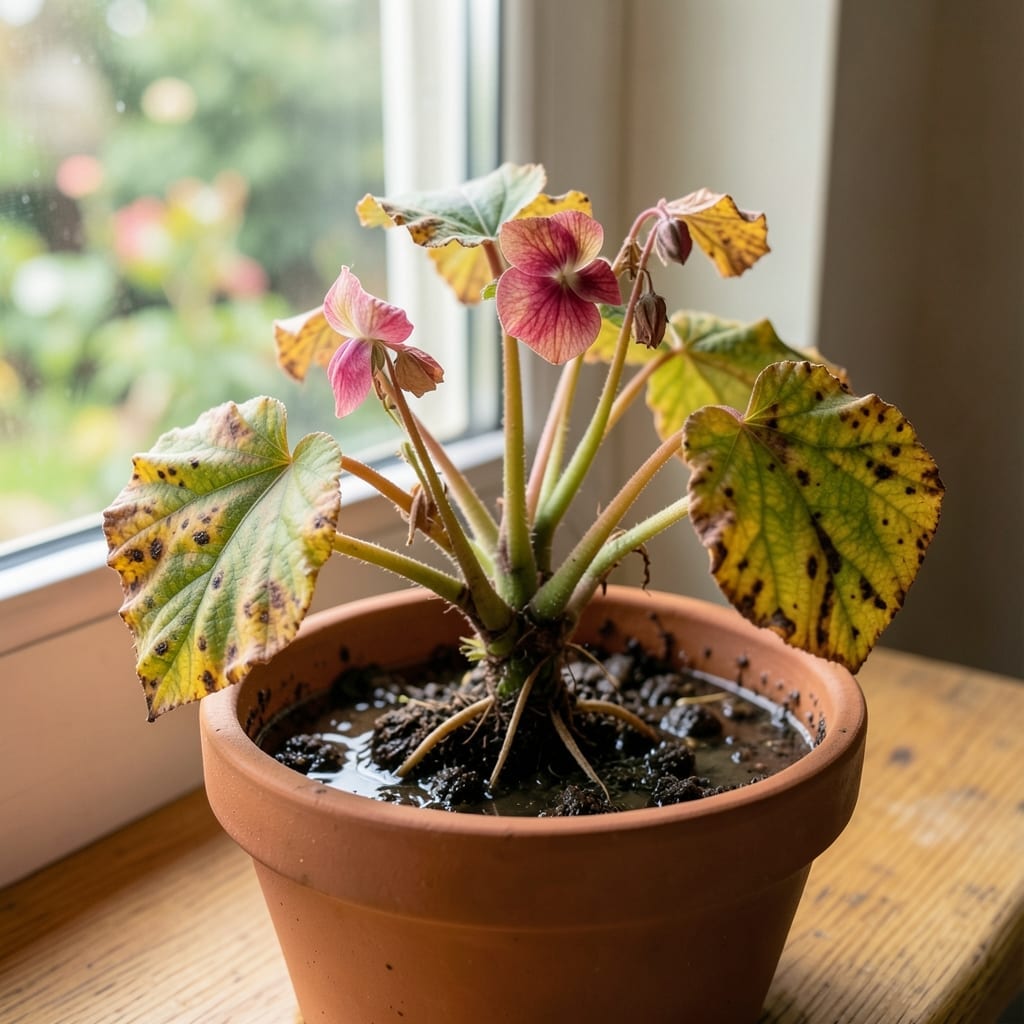
Yellow leaves and droopy stems on your begonia aren’t just sad—they’re a cry for help. I’ve rescued more than my share of overwatered begonias, and the turnaround is faster than you’d think.
Most people kill with kindness, drowning these plants in water they don’t need. Begonias prefer their soil to dry slightly between waterings, and that 2-inch top layer should feel dry to the touch before you even consider the watering can.
The rescue starts with stopping water immediately and checking the roots. Healthy ones are white and firm—mushy brown ones need trimming. Within a week, you’ll see new growth if you’ve caught it early.
Prevention is simpler than the cure: water only when needed, use pots with drainage, and never let your begonias sit in saucers of water. They’ll thank you with vibrant blooms all season.
Overwatering your begonia often stems from a few common missteps in care. Understanding these causes helps you adjust your routine and prevent damage. Here’s why it happens:
Begonias thrive in moist but well-draining soil. When watered too often, the soil stays soggy, depriving roots of oxygen. This leads to root rot, a fungal or bacterial infection that chokes the plant. Stick to watering only when the top 1-2 inches of soil feel dry.
Pots without drainage holes or compacted soil trap water at the roots. Even with proper watering habits, stagnant water suffocates the plant. Use containers with drainage and a loose, airy potting mix (e.g., perlite or orchid bark) to improve aeration.
In dim or cold conditions, begonia roots absorb water more slowly. If you water on the same schedule as in bright, warm weather, the soil stays wet too long. Adjust watering frequency based on light levels and temperature—less in winter, more in summer.
Big containers hold more soil, which retains excess moisture even if the plant’s roots can’t use it. Choose pots just 1-2 inches wider than the root ball to match the plant’s needs.
If your begonia is showing signs of overwatering, don’t panic—these practical fixes can help rescue it. Address each issue directly to restore your plant’s health.
Prune affected leaves with clean scissors to prevent further damage. Prevention tip: Water only when the top inch of soil feels dry—stick your finger in to check! 💡
Gently remove the plant, shake off excess soil, and repot in fresh, well-draining mix. Choose a pot with drainage holes to avoid waterlogging. Pro tip: Use a terracotta pot—it wicks away excess moisture. 🎯
Let the plant sit out of its pot for a few hours to air-dry the roots. Avoid watering until the soil is dry to the touch. Prevention: Use a moisture meter to track soil conditions. ✨
If roots are black or mushy, trim the rotten parts and soak the remaining roots in a diluted hydrogen peroxide solution (1 tsp per cup of water) to disinfect. Repot in clean soil. Prevention: Never let water sit in the saucer—empty it after watering. 🌡️
With these steps, your begonia can bounce back stronger. Stay vigilant, and always prioritize drainage to keep overwatering at bay!
Water only when the top 1-2 inches of soil feel dry. In warm weather, this might mean every 5-7 days, but less in cooler months. Always check soil moisture first.
Yellowing leaves and drooping stems are early warnings. If ignored, you may notice mushy stems or blackened roots. Act quickly to prevent permanent damage.
Yes, if caught early! Trim rotten roots, treat with hydrogen peroxide, and repot in fresh, well-draining soil. Avoid watering for 3-5 days to let roots recover.