
Beautiful Plants For Your Interior
Beautiful Plants For Your Interior
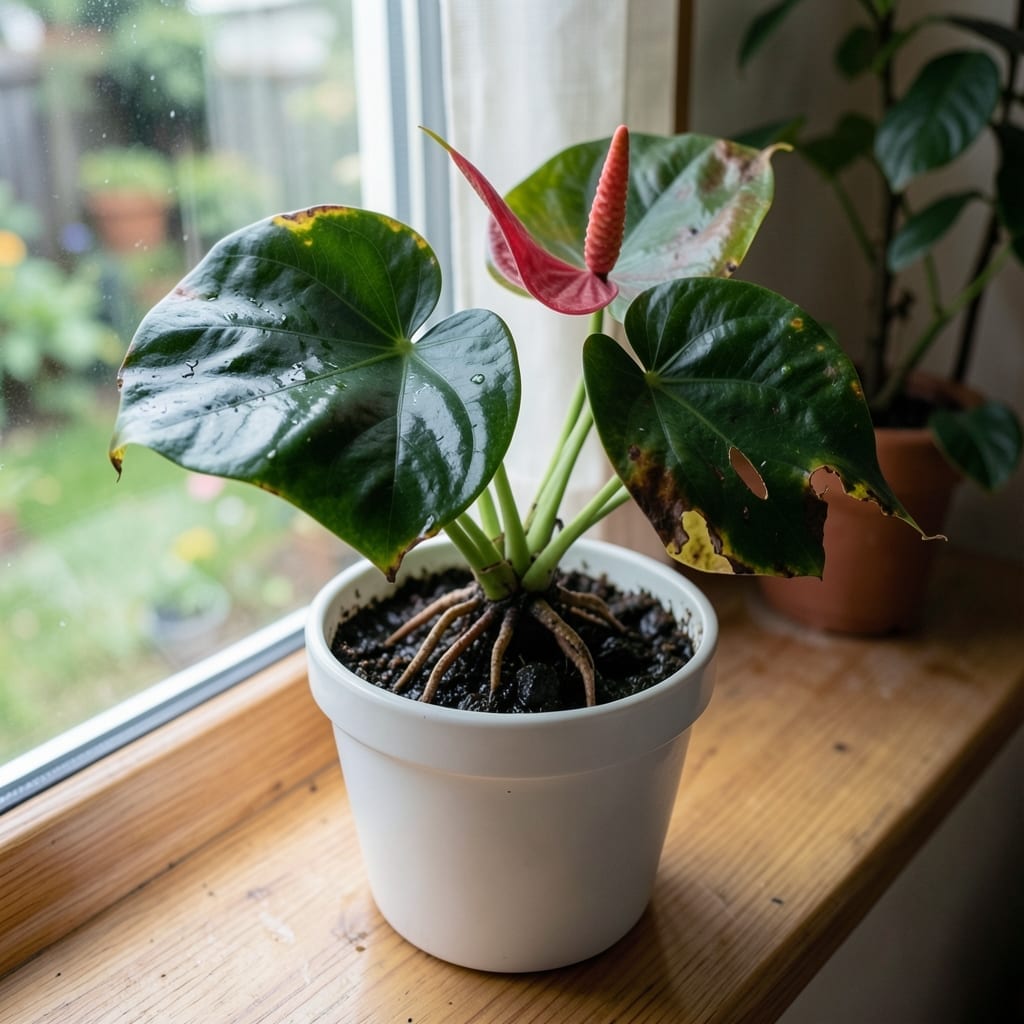
Yellow spots and drooping leaves on your anthurium usually mean one thing: too much love in the watering department. I’ve rescued dozens from this exact fate, and the fix is simpler than you’d think.
The roots are drowning, unable to breathe in soggy soil. Most people water on a schedule instead of checking the soil first. Your plant needs dry top inch between waterings, and a pot with drainage holes that actually work.
Once you adjust your approach, new growth appears within 2-3 weeks. The existing leaves may not recover, but fresh ones will emerge healthy and vibrant. It’s all about consistency from here.
Works for all anthurium varieties, from the classic flamingo flower to rare collectible types. The solution starts with putting the watering can down.
Anthuriums thrive in moist but well-draining conditions, and overwatering disrupts this balance. Here’s why it happens:
Many plant owners assume frequent watering equals better care. However, Anthuriums are tropical plants that prefer their soil to dry slightly between waterings. Overwatering saturates the soil, suffocating the roots and preventing oxygen uptake. This leads to root rot, a fungal or bacterial infection that destroys root tissue, causing wilting and yellowing leaves.
Pots without drainage holes or soil that retains too much moisture trap water around the roots. Even if you water appropriately, compacted or clay-heavy soil can hold excess water, creating a waterlogged environment. Over time, this stifles root respiration and encourages pathogen growth, weakening the plant.
Anthuriums in low-light or high-humidity environments need less water because evaporation is slower. Misjudging these conditions—such as watering on a fixed schedule rather than checking soil moisture—can lead to overwatering. Always test the top inch of soil; if it’s damp, hold off on watering.
Planting an Anthurium in a pot that’s too large can also cause overwatering issues. Excess soil retains more moisture than the plant can use, increasing the risk of root rot. Choose a pot just 1–2 inches larger than the root ball to ensure proper moisture balance.
Don’t toss that sad, soggy anthurium just yet! With a few simple fixes, you can nurse it back to health. Below are targeted solutions for the most common overwatering issues, plus prevention tips to keep your plant thriving long-term.
If the leaves are turning yellow, your anthurium is drowning. Stop watering immediately and let the top 1-2 inches of soil dry out completely. Check moisture with your finger—if it feels damp, wait another day. Resume watering only when the soil is dry, and always empty the saucer after 15 minutes to avoid root rot.
Prevention tip: 💡 Switch to a pot with drainage holes and use a well-draining potting mix (add perlite or orchid bark for airflow).
Wilting despite wet soil? The roots are suffocating. Repot your anthurium in fresh, dry soil, trimming any black or mushy roots with sterilized scissors. Choose a slightly smaller pot to prevent excess moisture retention. After repotting, do not water for 5-7 days to let roots recover.
Prevention tip: ✨ Elevate the pot on a stand or use a terracotta pot, which wicks away moisture faster than plastic.
For severe cases (foul smell, squishy stems), act fast. Remove the plant from its pot, rinse the roots gently under lukewarm water, and trim all affected roots. Soak the remaining healthy roots in a 1:10 hydrogen peroxide-to-water solution for 10 minutes to disinfect. Repot in fresh soil and avoid watering for a week.
Prevention tip: 🎯 Water only when the soil is bone dry halfway down the pot—use a moisture meter if unsure.
With these steps, your anthurium should bounce back in a few weeks. Patience is key—overwatering recovery isn’t instant, but it’s almost always possible!
Water when the top 1-2 inches of soil are dry. This usually means every 7-10 days, but check soil moisture first. Stick your finger in—if it feels damp, wait another day.
Unfortunately no. Once leaves yellow from overwatering, they won’t recover. Focus on new growth, which appears within 2-3 weeks of proper care. Remove damaged leaves to redirect energy.
Use a well-draining mix with perlite or orchid bark. Avoid dense, water-retentive soils. Terracotta pots help too—they pull moisture away from roots faster than plastic.
Check for black, mushy roots or a foul smell. Gently remove the plant and inspect. If roots are soft and dark, trim them and repot in fresh soil. Act fast—this spreads quickly!