
Beautiful Plants For Your Interior
Beautiful Plants For Your Interior
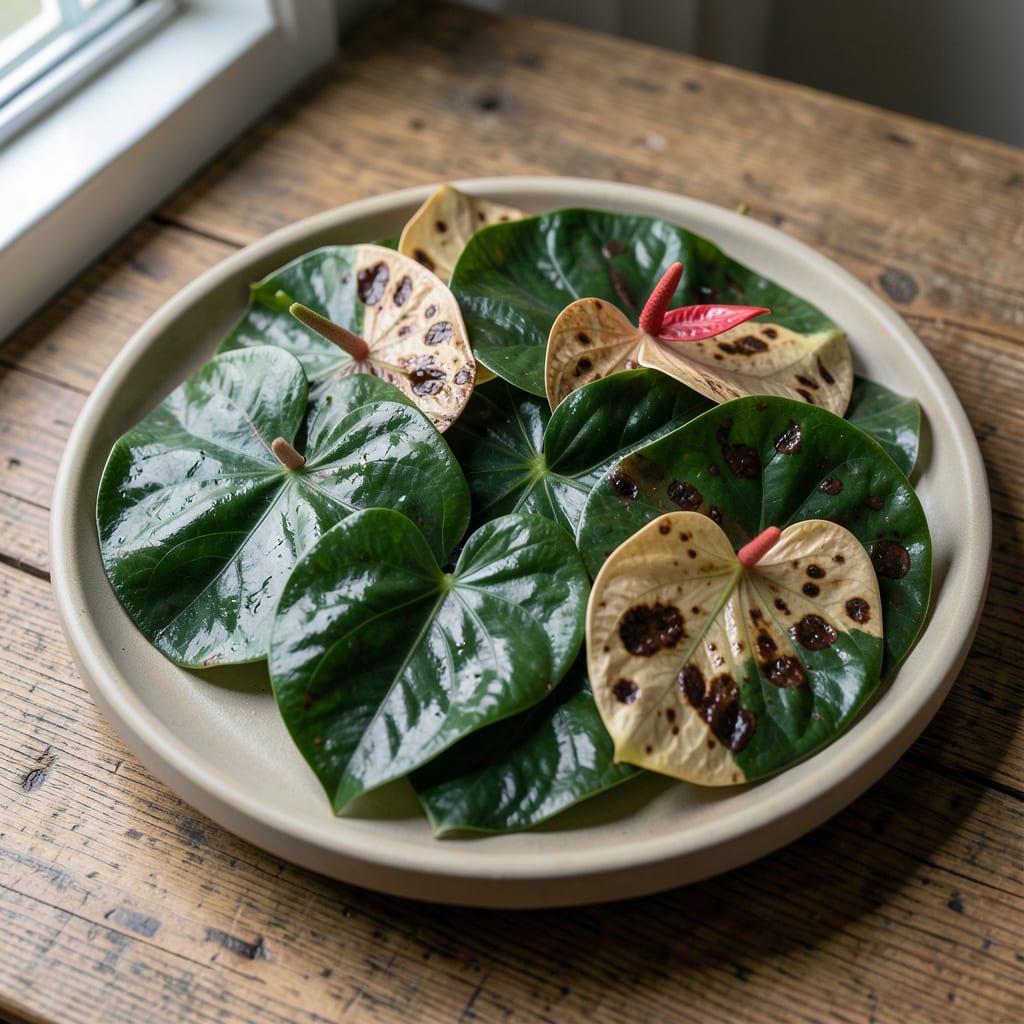
Those brown spots on your anthurium aren’t just ugly—they’re a cry for help. I’ve rescued dozens of these tropical beauties by catching the warning signs early.
Overwatering, fungal invaders, or thirsty roots usually cause the damage. Each leaves a different pattern, from mushy yellow halos to crispy edges, and fixing it starts with proper diagnosis.
Once you adjust the care routine—better drainage, less water, or a fungicide—new growth emerges spot-free within weeks. The plant bounces back faster than you’d expect.
Prevention is simpler than cure: consistent moisture, good airflow, and regular leaf inspections keep your anthurium thriving long-term.
Brown spots on anthurium leaves often signal underlying issues that disrupt the plant’s health. Below are the most frequent causes, explained with actionable insights.
Excess moisture suffocates the roots, leading to root rot and fungal infections like Phytophthora. When roots can’t breathe, they fail to absorb nutrients, causing leaf necrosis (brown, dead patches). Anthuriums thrive in well-draining soil—soggy conditions invite pathogens.
Direct sunlight or high temperatures (above 90°F/32°C) scorch leaves, creating dry, crispy brown spots. Anthuriums prefer bright, indirect light. Heat stress also accelerates water evaporation, leaving salt deposits that burn leaf tissues.
Pathogens like Colletotrichum (anthracnose) or Xanthomonas bacteria thrive in humid, wet conditions. They manifest as spreading brown spots with yellow halos. Poor air circulation or contaminated tools can introduce these diseases.
Action: Isolate affected plants and treat with copper fungicides or bactericides.
Tap water high in chlorine, fluoride, or salts can cause tip burn—brown edges or spots. Anthuriums are sensitive to these chemicals, which accumulate in the soil over time, disrupting nutrient uptake.
Fix: Use filtered, distilled, or rainwater for irrigation.
Too much fertilizer (especially nitrogen or phosphorus) leads to salt burn, while deficiencies (e.g., potassium or magnesium) cause interveinal browning. Always follow a balanced feeding schedule and flush the soil periodically.
Tackling brown spots on your anthurium doesn’t have to be overwhelming. Below are targeted solutions for each common cause, along with prevention tips to keep your plant thriving. 🌿
Fix: Let the soil dry out slightly between waterings. Repot the plant in fresh, well-draining potting mix if the roots are soggy or rotting. Trim any black, mushy roots with sterilized scissors.
Prevent: Use a pot with drainage holes and a mix containing perlite or orchid bark. Water only when the top inch of soil feels dry. 💡
Fix: Move your anthurium to a spot with bright, indirect light, such as near an east-facing window. If the leaves are severely scorched, trim the damaged areas with clean shears.
Prevent: Avoid placing the plant in harsh midday sun. Use a sheer curtain to diffuse light if needed. ✨
Fix: Remove affected leaves immediately to prevent spreading. Treat the plant with a copper-based fungicide or a diluted neem oil solution (1 tsp per quart of water). Spray every 7–10 days until spots disappear.
Prevent: Improve air circulation around the plant and avoid wetting the leaves when watering. Water at the base to keep foliage dry. 🌡️
Fix: Flush the soil with water to remove excess salts if you suspect over-fertilizing. For deficiencies, use a balanced, water-soluble fertilizer (10-10-10) diluted to half strength every 4–6 weeks during growing season.
Prevent: Fertilize sparingly and always follow package instructions. Test soil pH (ideal: 5.5–6.5) and adjust if necessary. 🎯
Fix: Wipe leaves with a damp cloth to remove pests like spider mites or scale. Apply insecticidal soap or neem oil weekly until the infestation clears.
Prevent: Inspect new plants before bringing them indoors. Keep humidity levels moderate (50–60%) to deter pests. 🔥
Water when the top 1 inch of soil feels dry, typically every 7-10 days. Overwatering is the most common cause of brown spots, so always check soil moisture first.
Yes, if caused by fungal or bacterial infections. Isolate the plant and remove affected leaves immediately. Treat with copper fungicide to prevent further spread.
Bright, indirect light is ideal. Avoid direct sun, which causes scorch marks. An east-facing window or filtered light works perfectly.
Yes, trim damaged leaves with sterilized scissors to prevent disease spread. This also redirects energy to healthy growth.
