
Beautiful Plants For Your Interior
Beautiful Plants For Your Interior
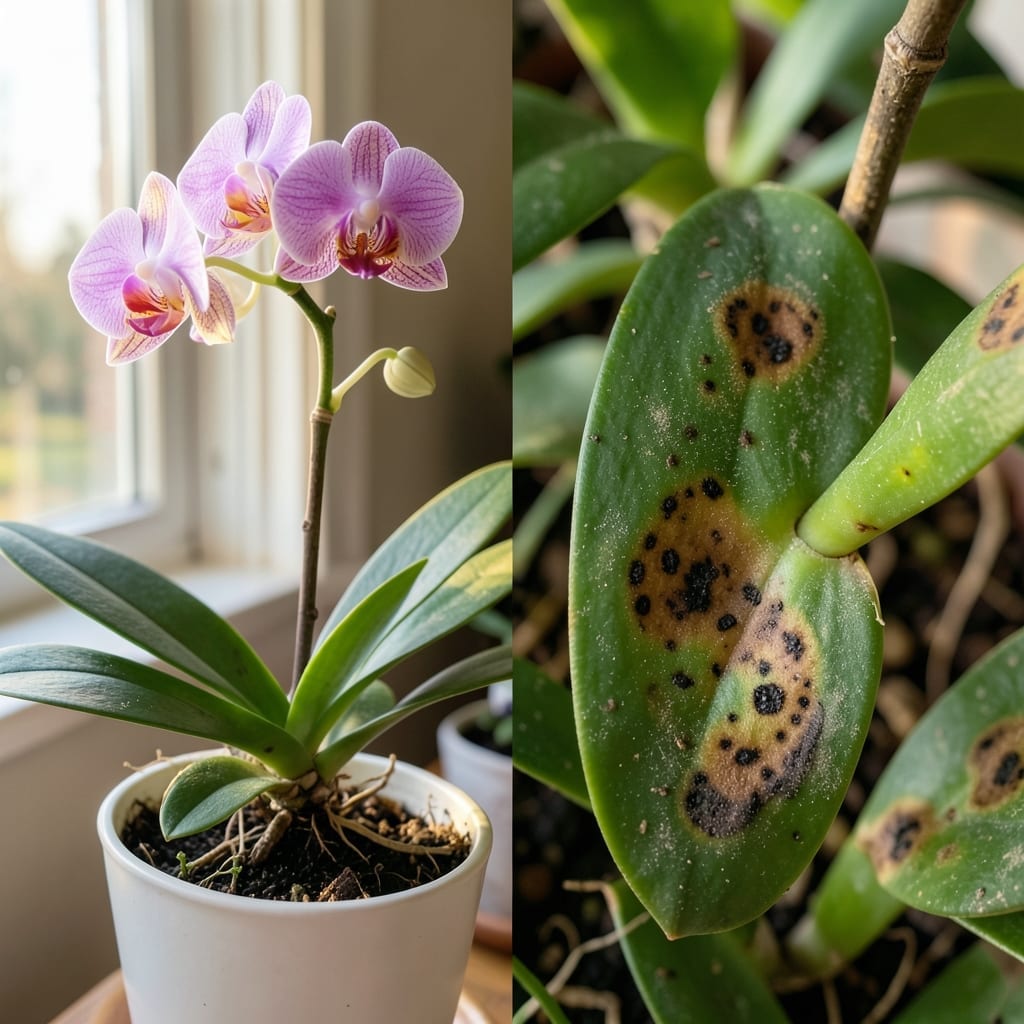
Spotted brown patches or fuzzy white growth on your orchid leaves? It’s likely a fungal infection, and catching it early makes all the difference in saving your plant.
I’ve lost a few orchids to fungal issues before learning the telltale signs—black rot, powdery mildew, or soft, mushy stems. The good news is most infections are treatable with the right approach and a little patience.
You’ll learn to identify the exact symptoms in these pictures, match them to the right treatment, and prevent future outbreaks. No fancy tools required—just a sharp eye and quick action.
Works for Phalaenopsis, Cattleya, or any orchid you’re growing. Here’s how to spot and stop it.
Orchid fungus thrives under specific conditions, often tied to environmental stressors or poor care practices. Understanding these triggers helps prevent infections before they start. Here are the primary causes:
Fungal spores love damp, stagnant environments. Overwatering orchids—especially those potted in non-breathable media like dense soil—creates a breeding ground for Phytophthora, Fusarium, and other pathogens. Without proper drainage, water pools around roots, suffocating tissue and inviting infection. Action: Use bark-based or sphagnum moss mixes with added perlite, and ensure pots have drainage holes.
Stagnant air traps humidity around leaves and stems, accelerating fungal spore germination. Crowded growing spaces or still indoor conditions (e.g., closed terrariums) are high-risk zones. Action: Space orchids 6–12 inches apart and use a gentle fan to promote airflow, reducing leaf wetness duration.
Orchids in tropical climates (or greenhouses) face higher fungal pressure when humidity exceeds 60% and temperatures fluctuate wildly. Cool nights (below 60°F) paired with warm days stress plants, weakening their defenses. Action: Maintain steady temps (65–80°F) and humidity (40–60%), and avoid misting in the evening.
Fungal spores hitch rides on unsterilized pruners, pots, or even fresh potting mix. Reusing old media without sterilization (e.g., baking at 200°F for 30 minutes) risks introducing Botrytis or Powdery Mildew. Action: Disinfect tools with 70% isopropyl alcohol and source mix from reputable suppliers.
Stressed orchids—due to nutrient deficiencies, over-fertilization, or pest damage—produce fewer defensive compounds, making them easy targets. For example, Anthracnose often attacks nitrogen-deficient plants. Action: Follow a balanced fertilizer regimen (e.g., 20-20-20 monthly) and inspect for pests weekly.
Dealing with fungus on your orchids can feel overwhelming, but these practical solutions will help you restore their health. Below are targeted fixes for common causes of orchid fungal infections, along with prevention tips to keep them thriving. 🌿
If soggy soil or standing water is the culprit, repot your orchid immediately. Use a well-draining mix like bark, sphagnum moss, or perlite. Ensure the pot has drainage holes, and water only when the top inch of the mix feels dry. Prevention tip: Stick to a watering schedule and avoid letting orchids sit in saucers of water. 💡
Fungus thrives in stagnant, humid air. Move your orchid to a spot with gentle airflow, such as near an open window or a ceiling fan on low. If growing indoors, consider a small oscillating fan to keep air moving. Prevention tip: Space plants apart to avoid crowding and reduce humidity buildup. 🌬️
Fungal spores can spread via unsterilized tools. Before pruning or repotting, disinfect scissors, knives, and pots with rubbing alcohol or a bleach solution (1 part bleach to 9 parts water). Prevention tip: Always clean tools between uses and avoid reusing potting mix from infected plants. ✨
For active infections, remove infected leaves or roots with sterilized tools, then apply a copper-based fungicide or neem oil. Follow label instructions carefully. Prevention tip: Treat nearby plants as well, even if they show no symptoms, to prevent spread. 🎯
Orchids love humidity, but too much can invite fungus. Aim for 40-70% humidity and use a hygrometer to monitor levels. If humidity is too high, improve airflow or use a dehumidifier. Prevention tip: Mist orchids in the morning so leaves dry by evening. 🌡️
Fungal spots often appear as brown, black, or yellow patches with defined edges. Some infections create fuzzy white or gray growth, while others cause soft, mushy areas on leaves or stems.
Yes, if you act quickly. Remove infected parts with sterilized tools, then treat with copper-based fungicide. Isolate the plant to prevent spreading.
Improve airflow, avoid overwatering, and maintain 40-70% humidity. Always sterilize tools and use fresh, high-quality potting mix.
Generally, no. But healthy, well-cared-for orchids of any variety have stronger natural defenses against fungal infections.