
Beautiful Plants For Your Interior
Beautiful Plants For Your Interior
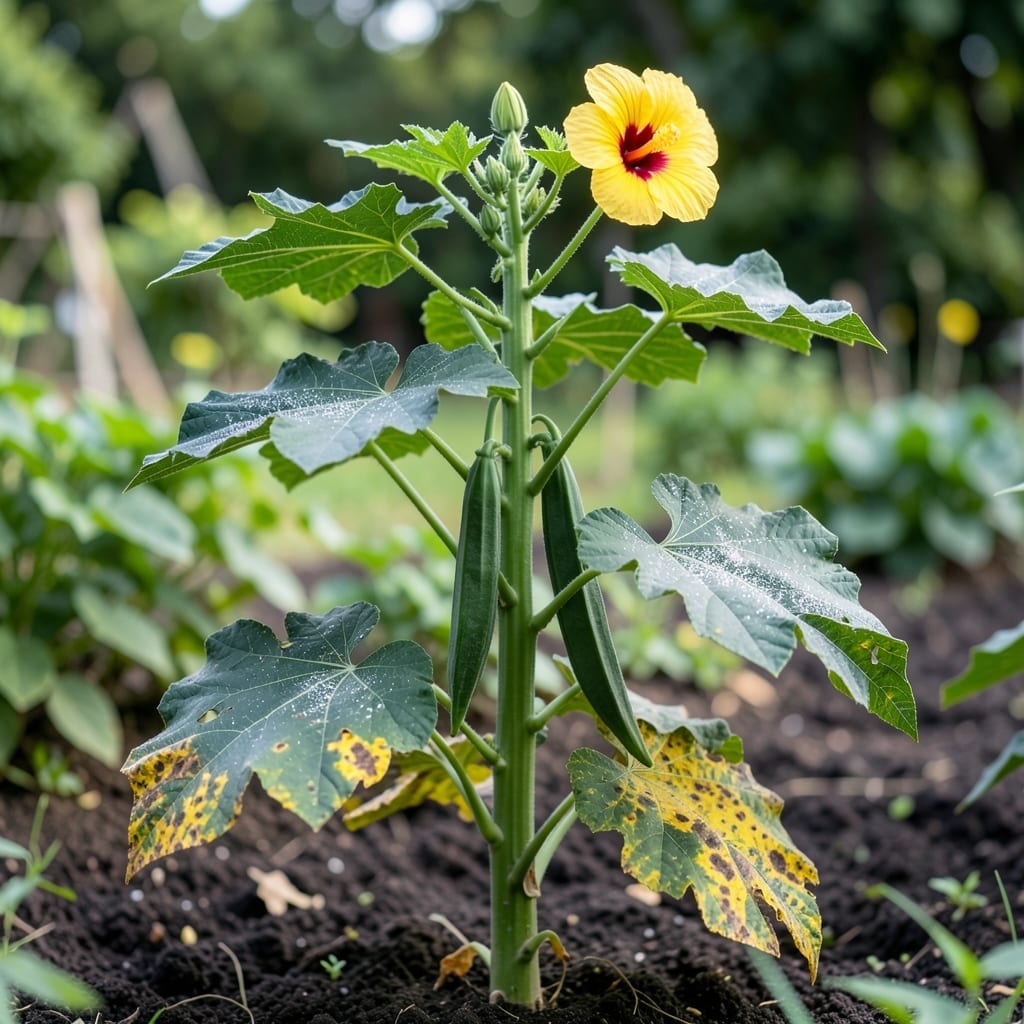
Yellowing leaves on your okra plants aren’t just ugly—they’re a warning sign. I’ve seen healthy crops turn to compost in 48 hours when disease strikes, but early action saves most plants.
The usual suspects appear as spotted leaves, stunted growth, or that telltale white powder. Most spread through water, tools, or insects, hitting hardest during wet, warm weather when okra thrives but so do pathogens.
What you’ll get here are the exact symptoms to watch for, the conditions that invite trouble, and the organic treatments that work before you reach for chemicals. Prevention starts with simple habit changes.
Works for backyard gardeners and market growers alike. Spot the red flags before they spread.
Okra plants are hardy, but they’re not invincible. Diseases often strike due to a mix of environmental, biological, and cultural factors. Understanding these root causes helps you prevent and manage issues before they spiral. Here’s why it happens:
Fungal diseases like Powdery Mildew and Fusarium Wilt thrive in high humidity and poor air circulation. When okra leaves stay damp for extended periods—especially in crowded plantings or after overhead watering—spores germinate and infect tissues. Warm temperatures (75–85°F) accelerate their spread, making this a common issue in Southern climates or rainy seasons.
Some diseases, such as Okra Yellow Vein Mosaic Virus, are spread by insect vectors like whiteflies and aphids. These pests pierce plant cells while feeding, injecting viruses directly into the vascular system. Once inside, the virus disrupts nutrient flow, causing stunted growth and yellowing leaves.
Waterlogged soil suffocates roots, creating ideal conditions for Phytophthora root rot. Okra needs well-draining soil to prevent fungal pathogens from taking hold. Additionally, nitrogen-heavy fertilizers can soften plant tissues, making them more susceptible to bacterial infections like Bacterial Leaf Spot.
Diseases often spread through contaminated gardening tools, seeds, or infected plant debris. Using unsterilized pruners or planting seeds from a diseased crop can introduce pathogens to healthy plants. Always disinfect tools with a 10% bleach solution and source seeds from reputable suppliers.
Dealing with okra plant diseases can feel overwhelming, but with the right approach, you can restore your crop’s health. Below are practical solutions tailored to common problems, along with prevention tips to keep your plants thriving.
Fix: For nutrient deficiencies, apply a balanced fertilizer rich in nitrogen or magnesium. If fungal infections (like Alternaria leaf spot) are the culprit, treat with a copper-based fungicide. Remove heavily infected leaves to prevent spread.
Prevention:
Fix: Spray infested plants with neem oil or insecticidal soap to control soft-bodied pests like aphids. For pod borers, use Bacillus thuringiensis (Bt) or handpick larvae. Introduce beneficial insects like ladybugs for natural control.
Prevention:
Fix: Stop watering immediately and let the soil dry out. Trim affected roots and repot or transplant in well-draining soil. Apply a fungicide like Trichoderma to combat fungal growth.
Prevention:
Fix: Remove infected leaves and apply sulfur-based fungicides or a baking soda solution (1 tbsp baking soda + 1 tsp dish soap + 1 gallon of water). Repeat weekly until the issue resolves.
Prevention:
💡 Pro Tip: Always sterilize gardening tools between uses to prevent spreading diseases. Healthy plants start with clean practices!
That’s typically powdery mildew, a fungal disease that thrives in humid conditions. It appears as white, powdery spots on leaves and can spread quickly if untreated.
Ensure well-draining soil and avoid overwatering. Water only when the top 1 inch of soil is dry, and use raised beds if drainage is poor.
Not always. Yellowing can result from nutrient deficiencies, overwatering, or pests. Check for spots or patterns to differentiate between disease and environmental stress.
Yes! A baking soda solution (1 tablespoon baking soda + 1 teaspoon dish soap + 1 gallon water) can help control mild fungal issues like powdery mildew.