
Beautiful Plants For Your Interior
Beautiful Plants For Your Interior
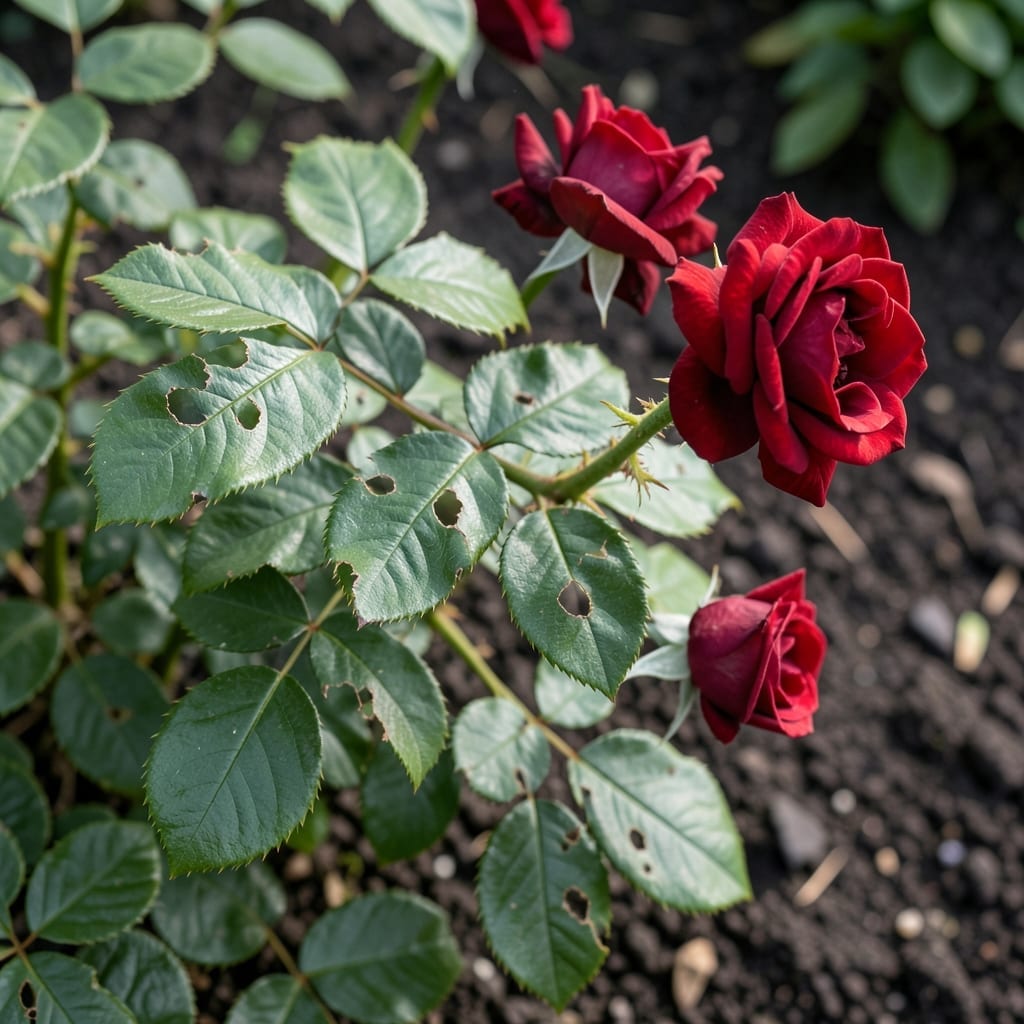
Those holes in your rose leaves aren’t just ugly—they’re a warning sign. 🌿 I’ve dealt with this exact issue in my garden, and the culprits are usually Japanese beetles or sawfly larvae munching away at night.
The good news? You can stop the damage fast with the right approach. Hand-picking pests works for small infestations, but for bigger problems, neem oil or insecticidal soap is your best defense.
Pruning affected leaves helps, but don’t overdo it—your roses need foliage to recover. Focus on removing the worst damage and disposal (not compost!) to break the pest cycle.
With quick action, your roses will bounce back stronger. The key is catching it early and staying consistent with treatments.
Holes in your rose bush leaves are often a sign of pest activity or environmental stress. Below are the most common causes, explained with clear, actionable insights.
Many pests target rose leaves, including Japanese beetles, rose slugs (sawfly larvae), and caterpillars. Japanese beetles chew irregular holes between leaf veins, while rose slugs skeletonize leaves by scraping tissue. Caterpillars often leave large, ragged holes. These pests thrive in warm, dry conditions and can rapidly defoliate plants if left unchecked.
Diseases like black spot (Diplocarpon rosae) or bacterial leaf spot (Xanthomonas spp.) can cause dark spots that eventually develop into holes as tissue dies. High humidity and poor air circulation create ideal conditions for these pathogens. Infected leaves may also exhibit yellow halos or black margins.
Physical damage from hail, strong winds, or herbicide drift can mimic pest or disease symptoms, leading to holes or tears in leaves. Herbicides, in particular, may cause irregular, burnt-looking edges. Overhead watering can also contribute to leaf damage by promoting fungal growth or physically injuring tender foliage.
Deer, rabbits, and even squirrels may nibble on rose leaves, leaving behind jagged holes or entirely stripped foliage. Deer typically leave torn edges, while rabbits create clean cuts. Squirrels may chew leaves or buds, often targeting new growth.
If your rose bush has holes in its leaves, act fast to restore its health. Below are targeted solutions for the most common causes, along with prevention tips to keep your roses thriving.
Fix: Handpick these pests at night when they’re most active, or use iron phosphate baits (pet-safe) around the base of the plant. For a quick barrier, sprinkle crushed eggshells or diatomaceous earth around the soil.
Prevent: Remove hiding spots like debris or mulch near the bush. Water in the morning so soil dries by evening, making it less appealing to slugs.
Fix: Shake beetles off into a bucket of soapy water in the early morning when they’re sluggish. Apply neem oil or kaolin clay to leaves as a deterrent. For severe infestations, use pheromone traps—but place them far from your roses to avoid attracting more.
Prevent: Encourage natural predators like birds by adding a birdbath or nesting boxes nearby. Plant trap crops like marigolds to lure beetles away.
Fix: Prune off heavily infested leaves and drop them into soapy water. Spray with Bacillus thuringiensis (Bt), a natural bacteria that targets caterpillars but is harmless to other insects.
Prevent: Inspect leaves regularly, especially the undersides, and remove eggs or larvae by hand. Keep the garden free of weed hosts where pests may lay eggs.
Fix: Remove and destroy infected leaves to prevent spread. Apply a copper-based fungicide or baking soda spray (1 tsp baking soda + 1 quart water + a drop of dish soap). Improve air circulation by pruning dense foliage.
Prevent: Avoid overhead watering—use a soaker hose instead. Space plants properly and clean up fallen leaves to reduce moisture buildup.
💡 Pro Tip: Strengthen your roses with regular balanced fertilizer (10-10-10) and compost to help them resist pests and diseases naturally.
Japanese beetles, sawfly larvae, or caterpillars are the most likely culprits. They chew irregular holes, often targeting new growth. Check undersides of leaves for pests.
Handpick pests into soapy water or spray with neem oil. For severe cases, use insecticidal soap. Act at dawn or dusk when pests are most active.
Yes, but only remove heavily damaged leaves. Avoid over-pruning—your roses need foliage to photosynthesize and regrow. Dispose of clippings in the trash.
Encourage natural predators like birds, use row covers, and keep your garden clean. Regular inspections help catch issues early.