
Beautiful Plants For Your Interior
Beautiful Plants For Your Interior
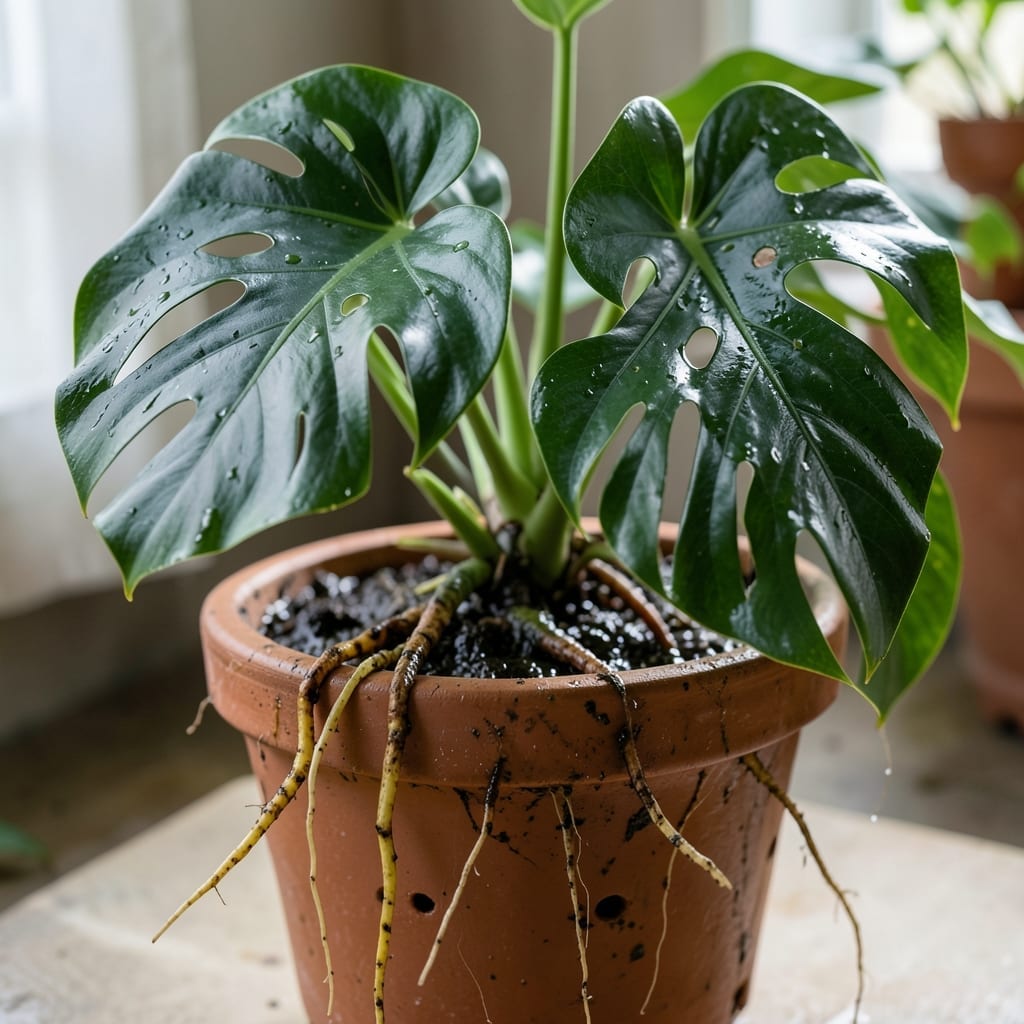
Yellow leaves and mushy stems sent me into panic mode last spring. I thought my monstera was done for, but a quick root inspection revealed the real culprit—root rot. It’s surprisingly common, especially with overwatering or poor drainage.
Here’s the thing—this problem moves fast. One week your plant looks sad, the next it’s wilting beyond repair. The good news? With the right steps, you can nurse it back to health. I’ve saved three monsteras this way already.
You’ll need to act quickly, though. Trim the rotten roots, repot in fresh soil, and adjust your watering habits. Most plants show improvement within 2-3 weeks if caught early enough.
Prevention is simpler than cure. Proper pots, well-draining soil, and a consistent watering schedule keep this issue from ever starting.
Understanding the root causes of this issue helps you prevent it before it starts. Here are the primary culprits behind Monstera deliciosa root rot:
The most common cause is excess moisture in the soil. Monstera plants thrive in well-draining conditions, but when water pools around the roots, it suffocates them by displacing oxygen. This creates an anaerobic environment where Pythium, Phytophthora, and other fungal pathogens thrive. Compacted soil or pots without drainage holes exacerbate the problem by trapping water.
Using dense, water-retentive soils (like pure peat or clay-based mixes) can hold too much moisture. Additionally, reused or sterilized soil may harbor fungal spores or bacteria that attack weakened roots. A sterile, chunky mix with perlite, orchid bark, or pumice encourages airflow and prevents rot.
Monstera roots are sensitive to cold drafts or sudden temperature drops below 50°F (10°C), which slows metabolic activity and increases rot susceptibility. Conversely, high humidity without airflow (common in terrariums or poorly ventilated spaces) creates a breeding ground for fungi. Aim for 65–85°F (18–29°C) with moderate humidity and good air circulation.
Planting a Monstera in a pot that’s too large leads to excess soil moisture retention, as the roots can’t absorb water fast enough. Similarly, old, degraded roots in a cramped pot are more prone to disease. Repot every 1–2 years or when roots outgrow their container to maintain health.
Here’s how to tackle each cause of root rot and bring your monstera back to life, plus tips to keep it thriving. Act fast—the sooner you intervene, the better the chances!
Stop watering immediately and check the soil. If it’s soggy, remove the plant from its pot and gently shake off excess soil. Trim all mushy, dark roots with sterilized scissors. Repot in fresh, well-draining soil and a pot with drainage holes. Wait until the top 1-2 inches of soil are dry before watering again.
Prevention tip: 💡 Stick your finger in the soil—if it feels damp, hold off on watering. Use a moisture meter for precision.
If your pot lacks drainage holes, switch to one that does—terracotta is a great choice as it wicks away excess moisture. Add a layer of perlite or orchid bark to the soil mix to improve aeration. Elevate the pot on a tray with pebbles to prevent water from pooling underneath.
Prevention tip: ✨ Always use pots with drainage holes, and empty saucers after watering.
Isolate the plant to prevent spreading. Remove all affected roots and leaves, then soak the remaining healthy roots in a 1:10 hydrogen peroxide-to-water solution for 10 minutes to kill pathogens. Repot in fresh, sterile soil. For severe cases, use a copper-based fungicide as directed.
Prevention tip: 🎯 Sterilize your tools between uses with rubbing alcohol, and avoid overcrowding plants.
Gently remove the plant and break up the compacted soil around the roots. Mix in coco coir, perlite, or sand to improve airflow. Repot loosely to encourage healthy root growth.
Prevention tip: 🌱 Repot your monstera every 1-2 years to refresh the soil and prevent compaction.
Look for yellowing leaves, mushy stems, or a foul smell from the soil. Gently remove the plant from its pot to check for dark, soft roots—healthy roots should be firm and white or light tan.
Yes, if there are still some healthy roots or nodes. Trim all rotten parts, disinfect with 1:10 hydrogen peroxide solution for 10 minutes, and repot in fresh soil. Recovery may take 2-3 weeks.
A chunky, well-draining mix works best. Use 1 part potting soil, 1 part perlite, and 1 part orchid bark for optimal airflow. Avoid dense, water-retentive soils like pure peat.