
Beautiful Plants For Your Interior
Beautiful Plants For Your Interior
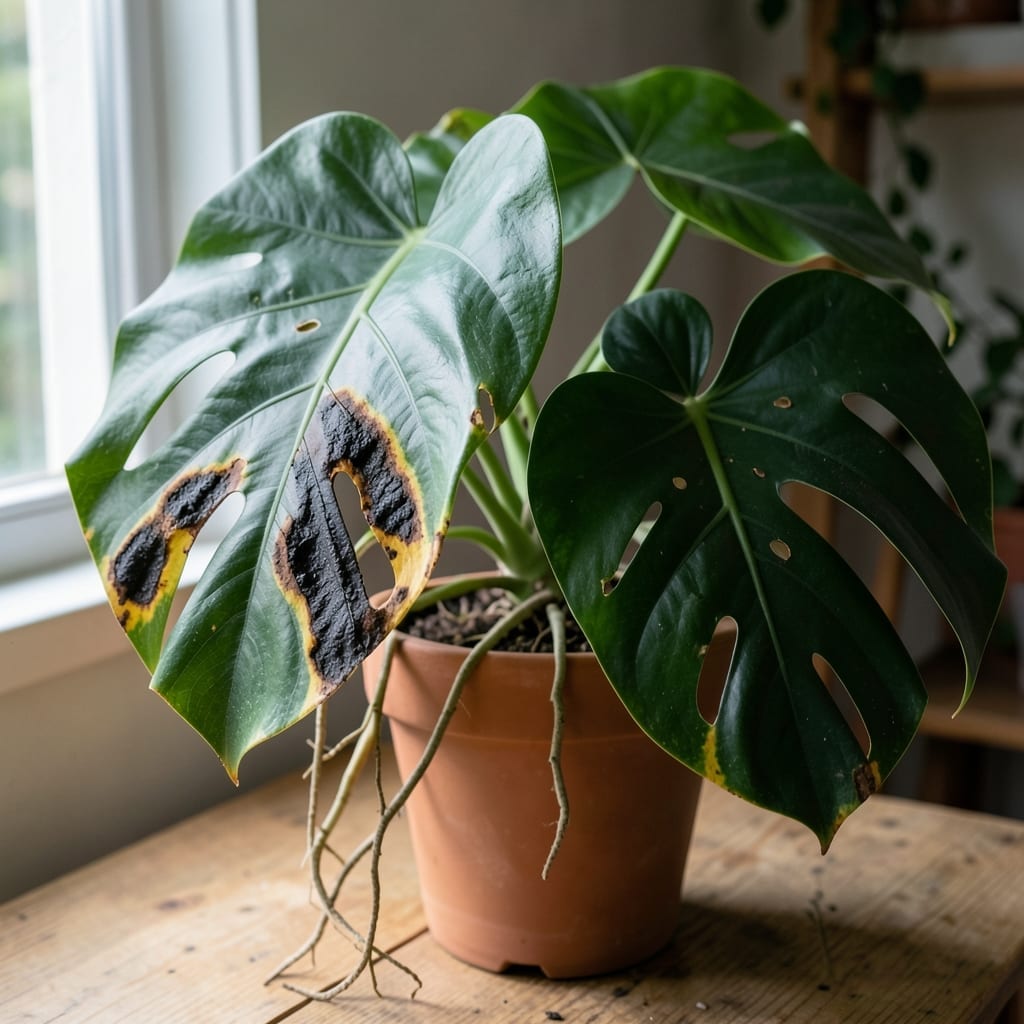
Black spots on your monstera aren’t a death sentence—I’ve brought plants back from worse. The darkness usually signals one of four issues, and each has a clear fix if you act fast.
Overwatering tops the list, but low humidity, fungal infections, or even too much direct light can turn those glossy leaves black overnight. I learned this the hard way after losing a favorite plant to root rot.
You’ll spot the difference: mushy stems mean water trouble, while crisp black edges scream dry air. The solution is often simpler than you think—adjust your care, and new growth comes back stronger.
Works for all monstera varieties, from deliciosa to adansonii. Here’s how to diagnose and treat it.
Your Monstera’s dark, unsightly black leaves are a cry for help. Here’s what’s likely going wrong under the soil (or in your care routine):
Excess water suffocates the roots, blocking oxygen uptake. This triggers root rot, where anaerobic bacteria thrive, causing decay. As roots die, they fail to deliver nutrients, leading to black, mushy foliage. Check: If soil stays soggy 2+ days after watering or smells foul, drainage is the issue.
Direct, harsh sunlight (especially midday) can scorch Monstera leaves, causing blackened, crispy patches. The plant’s chlorophyll breaks down under UV stress, and cells die. Look for: Black spots on leaves facing windows—this is not a nutrient problem.
Monstera leaves turn black when exposed to sudden cold drafts (below 50°F/10°C) or heat sources like vents. Cellular damage from temperature swings disrupts water transport, leading to necrotic (dead) tissue. Common culprits: AC vents, open windows in winter, or radiators.
Pathogens like Phytophthora or Pseudomonas thrive in wet, humid conditions. They invade through wounds or stressed tissue, causing black lesions with yellow halos. Red flag: Spots spread rapidly and ooze fluid.
Pro tip: Sterilize pruning tools to avoid spreading infections!
Here’s how to treat each cause and bring your Monstera deliciosa back to its vibrant self:
Let the soil dry out completely before watering again. Check moisture by sticking your finger 1-2 inches into the soil—if it’s damp, wait. Repot the plant in fresh, well-draining soil if root rot is present. Prevention tip: Use a pot with drainage holes and a moisture meter 💡 to avoid guesswork.
Move your Monstera to a spot with bright, indirect light. If the leaves are severely damaged, trim them with clean scissors to redirect energy to healthy growth. Prevention tip: Rotate the plant occasionally for even light exposure ✨.
Increase humidity by misting the leaves daily or placing a humidifier nearby. Grouping plants together can also create a microclimate. Prevention tip: Keep humidity levels between 40-60% for optimal health 🌡️.
Wipe leaves with a damp cloth to remove pests like spider mites or thrips. Apply neem oil or insecticidal soap weekly until the infestation clears. Prevention tip: Inspect new plants before bringing them home to avoid contamination 🎯.
Flush the soil with water to remove excess salts from over-fertilizing. Resume feeding with a balanced, diluted fertilizer every 4-6 weeks during growing season. Prevention tip: Always follow package instructions to avoid overfeeding.
Catch issues early, and your Monstera will bounce back with lush, green leaves! 🌿
No, once a leaf turns black, the damage is permanent. Focus on fixing the underlying issue, and new healthy leaves will grow in to replace the damaged ones.
Check the soil: if it’s soggy and smells foul, it’s overwatered. If it’s bone-dry and leaves feel crispy, it needs more water. Mushy stems always mean too much water.
Yes, trim black leaves with clean scissors to prevent the plant from wasting energy on them. This also helps stop potential spread of fungal issues to healthy foliage.
With proper care, new growth appears in 2-4 weeks. Severely damaged plants may take longer, but consistent care will bring it back to health.