
Beautiful Plants For Your Interior
Beautiful Plants For Your Interior
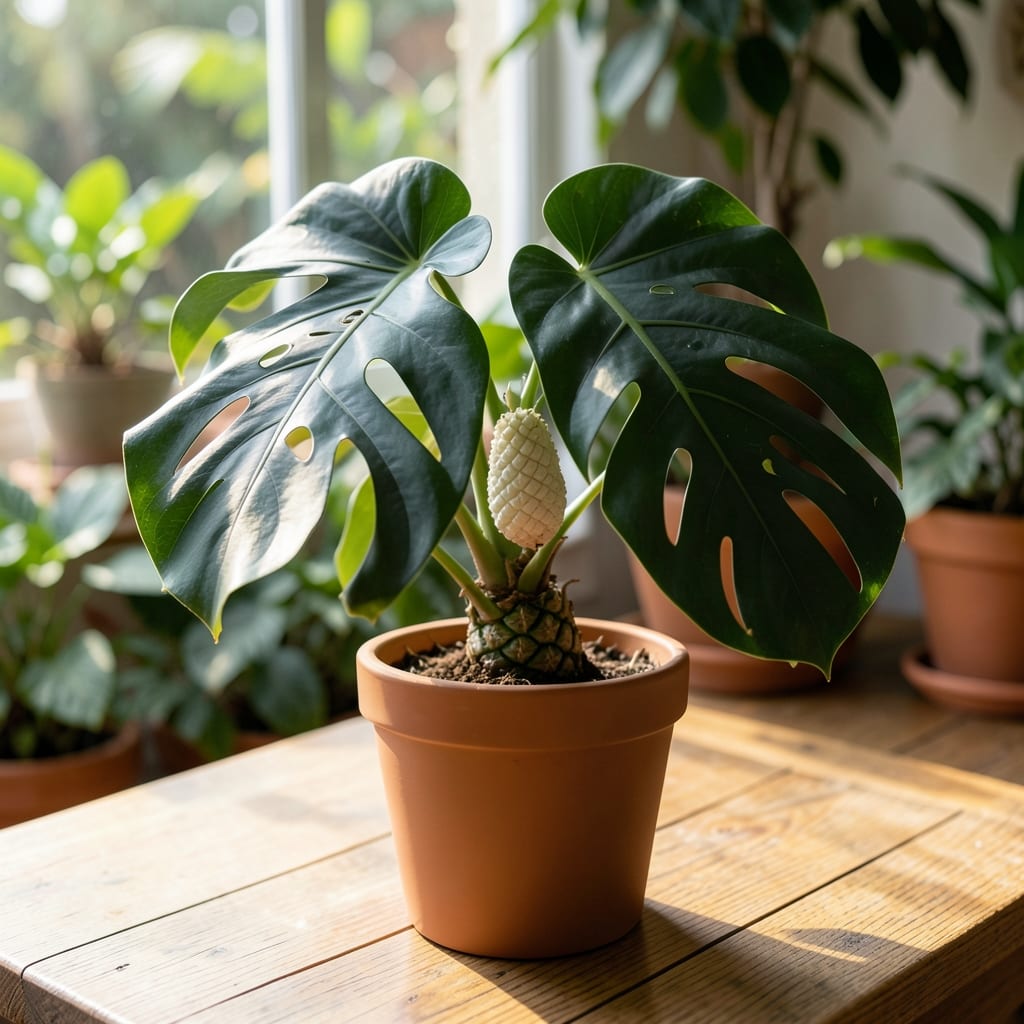
That first time I saw a Monstera deliciosa produce fruit, I was hooked. This tropical beauty can thrive indoors with the right care, and yes, it can even reward you with its unique, pineapple-like fruit.
It’s not just about keeping it alive—you’ll need bright, indirect light, consistent moisture, and a bit of patience. The payoff? A lush, fruit-bearing centerpiece that turns heads and tastes like the tropics.
📚 In This Guide
Here’s the method I trust to cultivate this tropical fruit efficiently in home conditions.
Begin with a fully ripe Monstera deliciosa fruit, identifiable by its strong, sweet aroma and the ease with which its scales detach. I always wear gloves during this process, as the unripe fruit contains calcium oxalate crystals that can irritate the skin. Gently remove the scales to expose the creamy white flesh and seeds embedded within.
Separate the seeds from the pulp by rinsing them under cool water in a fine mesh strainer. This step is critical—any remaining pulp can promote mold growth during germination. Once cleaned, pat the seeds dry with a paper towel. Viable seeds are plump and firm; discard any that appear shriveled or discolored.
Fill a seed tray or small pots with a well-draining seed-starting mix, ensuring it is sterile to prevent fungal issues. Sow the seeds ½ inch deep and 1 inch apart, covering them lightly with the mix. Monstera seeds have a short viability window, so plant them within a day or two of extraction for best results.
Place the tray in a warm location with temperatures between 70-80°F. Maintain consistent moisture by misting the surface daily, ensuring the mix stays damp but not waterlogged. Germination typically occurs within 2-4 weeks, marked by the emergence of small, heart-shaped cotyledons.
Once seedlings appear, move them to a spot with bright, indirect light. Direct sunlight can scorch the tender leaves, so I use a sheer curtain to diffuse light if necessary. Maintain high humidity by covering the tray with a clear plastic lid or using a humidity dome until the seedlings develop their first true leaves.
At this stage, avoid letting the soil dry out completely. Water when the top inch of soil feels slightly dry to the touch. Overwatering is a common mistake—seedlings are more susceptible to root rot than drought. You’ll see healthy growth in the form of upright, vibrant green stems.
When seedlings reach 3-4 inches tall and have at least two true leaves, transplant them into individual 4-inch pots filled with a rich, well-draining potting mix. I like to add a bit of perlite to improve aeration. Space them 6 inches apart if planting multiple seedlings in a larger container.
After transplanting, place the pots in a location with bright, indirect light and temperatures between 65-85°F. Begin fertilizing lightly with a balanced, water-soluble fertilizer diluted to half strength every 4-6 weeks. This encourages robust foliage growth, which is essential for the plant to mature and eventually produce fruit.
As the plant matures, provide a sturdy support structure like a moss pole or trellis. Monstera deliciosa is a climbing plant by nature, and supporting its growth leads to larger, healthier leaves and, eventually, fruit. I secure the vines gently with soft ties to avoid damaging the stems.
Fruit production typically begins when the plant is 2-3 years old, provided it receives consistent care. The fruit will take nearly a year to mature on the plant. You’ll know it’s ready to harvest when the scales at the base begin to lift and the fruit emits a strong, sweet scent. At this stage, it’s safe to pick and enjoy the tropical reward of your patience.
Took me a few tries to get this right, so here’s what I learned the hard way.
Safety First: I learned the importance of wearing gloves during Step 1 after experiencing skin irritation. The calcium oxalate crystals in unripe fruit are no joke, so always handle with protection, even if the fruit seems fully ripe.
Seed Viability: In Step 2, planting seeds within a day or two of extraction is non-negotiable. I once waited three days and lost nearly half my seeds to poor germination. The viability window is short—treat it as an urgent priority.
Moisture Balance: During germination, maintaining consistent moisture without waterlogging is tricky. I mist the surface daily and check the mix with my finger—it should feel like a wrung-out sponge. Overwatering once cost me an entire tray of seedlings to root rot.
Light Management: For Step 3, indirect light is critical. I use a sheer curtain to diffuse bright sunlight, as direct exposure scorched my first batch of seedlings. The tender leaves can’t handle harsh light, but they’ll thrive with gentle, consistent brightness.
Yes, but only when fully ripe. Unripe fruit contains calcium oxalate crystals, which are toxic. Wait until the green scales fall off naturally and the flesh is creamy white with a sweet, pineapple-like aroma.
In ideal conditions, it can take 2-3 years for a mature plant to produce fruit. Patience and proper care, like warm temperatures and high humidity, speed up the process.
The ripe fruit has a unique blend of flavors, often compared to pineapple, banana, and mango, with a custard-like texture. It’s a tropical treat!
Common reasons include insufficient light, lack of maturity, or improper pollination. Ensure it gets bright, indirect light and is grown in a warm, humid environment.
Yes, but it’s challenging. Provide a large pot, climbing support, and mimic its natural tropical habitat with high humidity and filtered light. Indoor pollination may require manual intervention.