
Beautiful Plants For Your Interior
Beautiful Plants For Your Interior
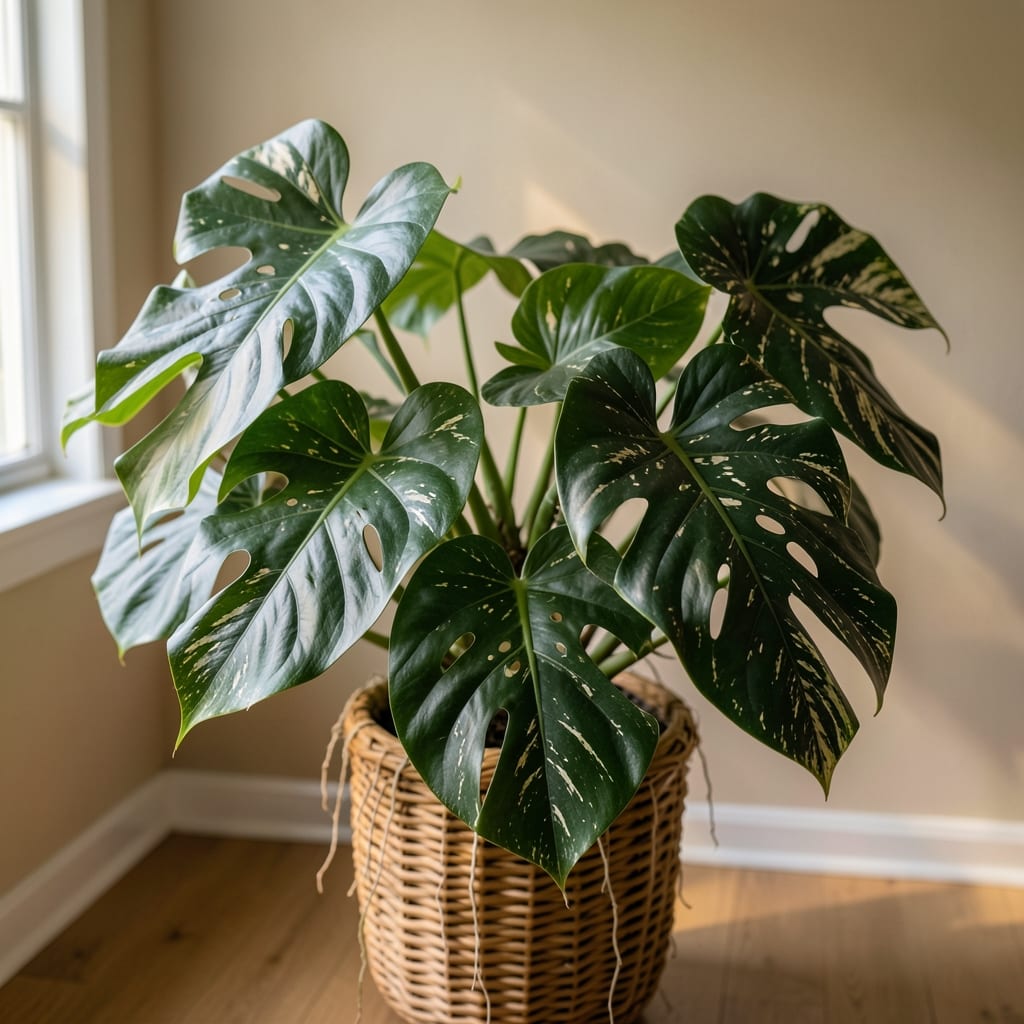
This plant stopped me in my tracks at a nursery last spring. The Monstera albo’s white variegation isn’t just beautiful—it’s a statement piece that transforms any room into a jungle oasis.
Between you and me, it’s not the easiest plant to keep alive, but once you nail the balance of bright indirect light and consistent moisture, you’ll be rewarded with those iconic split leaves that everyone asks about.
📚 In This Guide
Here’s the method I’ve refined over years to keep these beauties thriving and showing off their stunning white variegation.
Place your plant near an east or north-facing window where it receives bright, indirect light. Direct sunlight scorches the delicate white sections, while too little light causes the variegation to fade to green. I’ve found a sheer curtain works wonders if your only option is a south-facing window.
Rotate the pot a quarter turn weekly so all sides receive even light exposure. You’ll notice the leaves turning toward the light source—that’s your cue to adjust. Without rotation, growth becomes lopsided, and the stunning white patterns won’t develop uniformly.
Check the soil by inserting your finger 1-2 inches deep—water only when it feels completely dry. Overwatering is the most common mistake with these plants, as their variegated leaves contain less chlorophyll and need less moisture. I water mine every 7-10 days in summer, less in winter.
Use room-temperature water and avoid letting the pot sit in a saucer of water for more than 30 minutes. Yellow leaves are often the first sign of overwatering. If the soil smells sour, it’s a clear signal to cut back immediately and let the roots dry out.
Monstera Albo thrives in 60-70% humidity, which mimics its tropical origins. A pebble tray with water beneath the pot works well, or group it with other plants to create a microclimate. I’ve had success with a small humidifier placed a few feet away for consistent moisture in the air.
Mist the leaves lightly 2-3 times a week, but avoid soaking them—excess moisture can lead to fungal issues. Brown leaf tips often indicate low humidity, while drooping leaves can signal both over and under-watering, so check soil moisture first before assuming it’s a humidity problem.
Use a balanced liquid fertilizer diluted to half strength every 4-6 weeks during spring and summer. Variegated plants grow slower than their all-green counterparts, so they need less fertilizer to avoid burning the roots. I switch to a fertilizer higher in nitrogen during the growing season to support the white variegation.
Stop fertilizing entirely in fall and winter when growth naturally slows. Flush the soil with water every 2-3 months to remove any built-up salts from fertilizers. If you notice salt crust on the soil surface, it’s time to flush and repot if necessary.
Trim yellow or damaged leaves at the base using clean, sharp scissors to encourage new growth. Pruning also helps shape the plant and redirect energy to healthier foliage. I prune mine in early spring before the active growing season begins.
Provide a moss pole or trellis for the vines to climb—this plant is a natural climber in the wild. Secure the stems gently with soft ties as they grow. Without support, the vines will sprawl, and the leaves may grow smaller and less dramatic over time.
Small adjustments make a surprising difference in keeping this plant thriving with vibrant variegation.
Light Exposure: In Step 1, the quarter turn weekly isn’t just suggestion—it’s essential. Without rotation, the white variegation will only develop on one side, leaving the rest of the plant green. I learned this the hard way after watching my first plant grow lopsided for months before realizing why.
Watering Technique: When checking soil moisture in Step 2, use your finger all the way to the second knuckle—that’s about 1-2 inches deep. The top layer can dry out quickly while deeper soil stays moist. And remember, that 30-minute limit for saucer water isn’t arbitrary; roots can rot surprisingly fast in standing water.
Humidity Hack: For Step 3, if you notice brown leaf tips despite your best efforts, try this: place your plant on that pebble tray but add a small fan nearby on low. It sounds counterintuitive, but the air circulation prevents fungal issues while the tray maintains humidity. Between us, this saved my plant when winter air got too dry.
Fertilizing Wisdom: The 4-6 week schedule in Step 4 works perfectly, but here’s what nobody tells you—always fertilize on a day when you’ve just watered. This prevents root burn from concentrated fertilizer and helps distribute nutrients evenly through the soil.
Brown patches on white variegation often mean sunburn. Move your plant to indirect light and ensure consistent watering to prevent stress.
Water every 1-2 weeks, allowing the top 2-3 inches of soil to dry out. Overwatering can cause root rot, so check moisture with your finger first!
Yes! Take a stem cutting with at least one node and a leaf. Place it in water or moist soil, and keep it warm with bright, indirect light for best results.
Reversion happens if the plant isn’t getting enough light. Move it closer to a bright window (but avoid direct sun) to encourage variegation.
Use a well-draining mix of 50% potting soil, 30% perlite, and 20% orchid bark. This keeps roots aerated and prevents waterlogging, which is critical for variegated plants.