
Beautiful Plants For Your Interior
Beautiful Plants For Your Interior
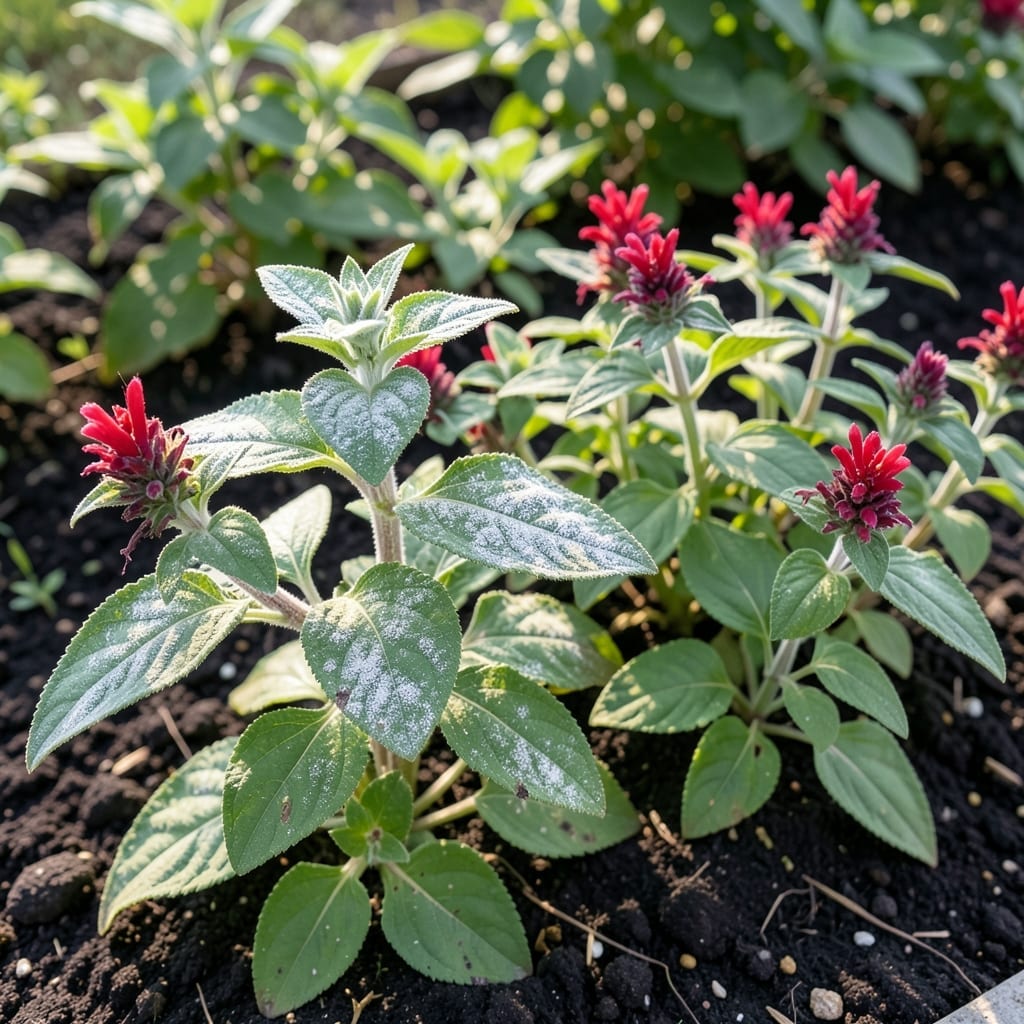
Powdery mildew on your monarda looks worse than it is. I’ve dealt with this white, dusty coating for years, and there’s always a way to bring your plants back to their vibrant, disease-free best.
This fungus thrives in humid conditions with poor air circulation, but it’s not a death sentence. With a few simple adjustments to spacing and watering habits, you can stop it in its tracks before it spreads.
Organic treatments like neem oil or baking soda sprays work surprisingly well, and I’ve found they’re often more effective than harsh chemicals for this particular issue.
Your monarda will bounce back with healthier foliage and those signature bright blooms once you tackle the root causes and apply the right remedies.
Powdery mildew on Monarda (bee balm) thrives under specific environmental and cultural conditions. Below are the primary causes, explained with actionable insights.
This fungal disease Oidium spp. prospers in humid environments (60–80% relative humidity) with stagnant air. Dense plantings or overhead watering create prolonged leaf wetness, accelerating spore germination. Monarda’s lush foliage can trap moisture, especially in crowded garden beds.
Powdery mildew favors temperature swings: warm days (70–80°F) paired with cool, dewy nights (50–60°F). These conditions promote spore production and dispersal. Shaded areas with limited sunlight exacerbate the issue by slowing leaf drying.
Watering from above leaves foliage damp for extended periods, giving fungal spores time to infect. Monarda is particularly susceptible when water sits on its fuzzy leaves, which retain moisture longer than smooth-leafed plants.
Some Monarda cultivars (e.g., M. didyma ‘Cambridge Scarlet’) lack genetic resistance. Older or stressed plants are more vulnerable due to weakened cell walls, making them easier targets for Oidium penetration.
Actionable Tip: Space plants 18–24 inches apart to improve airflow, and water at the base to keep leaves dry.
Powdery mildew on monarda can be frustrating, but these targeted solutions will help you restore plant health and prevent future outbreaks. Address each cause with the right fix, and add simple prevention habits to keep your bee balm thriving.
Crowded plants trap moisture and block airflow, creating ideal conditions for mildew. Thin out dense monarda clumps by removing every third stem at the base. Space new plantings 18–24 inches apart to allow breezes to dry foliage quickly. Trim nearby shrubs or weeds that block airflow around your garden bed.
Wet leaves invite fungal spores to settle and grow. Water at the soil level using a soaker hose or drip system to keep foliage dry. If you must use a sprinkler, water early in the morning so leaves dry before evening. Avoid late-day watering, which leaves plants damp overnight.
Monarda in shady, humid spots is especially vulnerable. Prune nearby trees or relocate potted plants to sunnier areas with at least 6 hours of sunlight daily. Use a small fan on low in greenhouses or enclosed spaces to keep air moving and reduce humidity buildup.
At the first sign of white powdery spots, prune affected leaves and stems with clean scissors, disposing of them in the trash (not compost). For mild cases, spray leaves with a mix of 1 tablespoon baking soda, 1 teaspoon dish soap, and 1 gallon of water. For stubborn infections, use neem oil or a copper fungicide, applying in the evening to avoid leaf burn.
💡 Prevention Tips: Choose mildew-resistant monarda varieties like ‘Marshall’s Delight’ or ‘Jacob Cline’. Clean up garden debris in fall to remove overwintering spores. Rotate plantings if mildew was severe the previous year.
That white, dusty coating is the classic sign of powdery mildew, a fungal disease. It starts on upper leaf surfaces and can spread quickly in humid conditions.
The fungus overwinters in plant debris and soil. If you don’t remove infected leaves in fall and improve airflow, spores reactivate when warm, humid weather returns.
No, avoid consuming mildewed leaves. The fungus isn’t toxic but can cause stomach upset. Always harvest from healthy, clean foliage only.
Yes, pruning infected stems improves airflow and removes spores. Cut back to healthy growth and dispose of trimmings in the trash, not compost.