
Beautiful Plants For Your Interior
Beautiful Plants For Your Interior
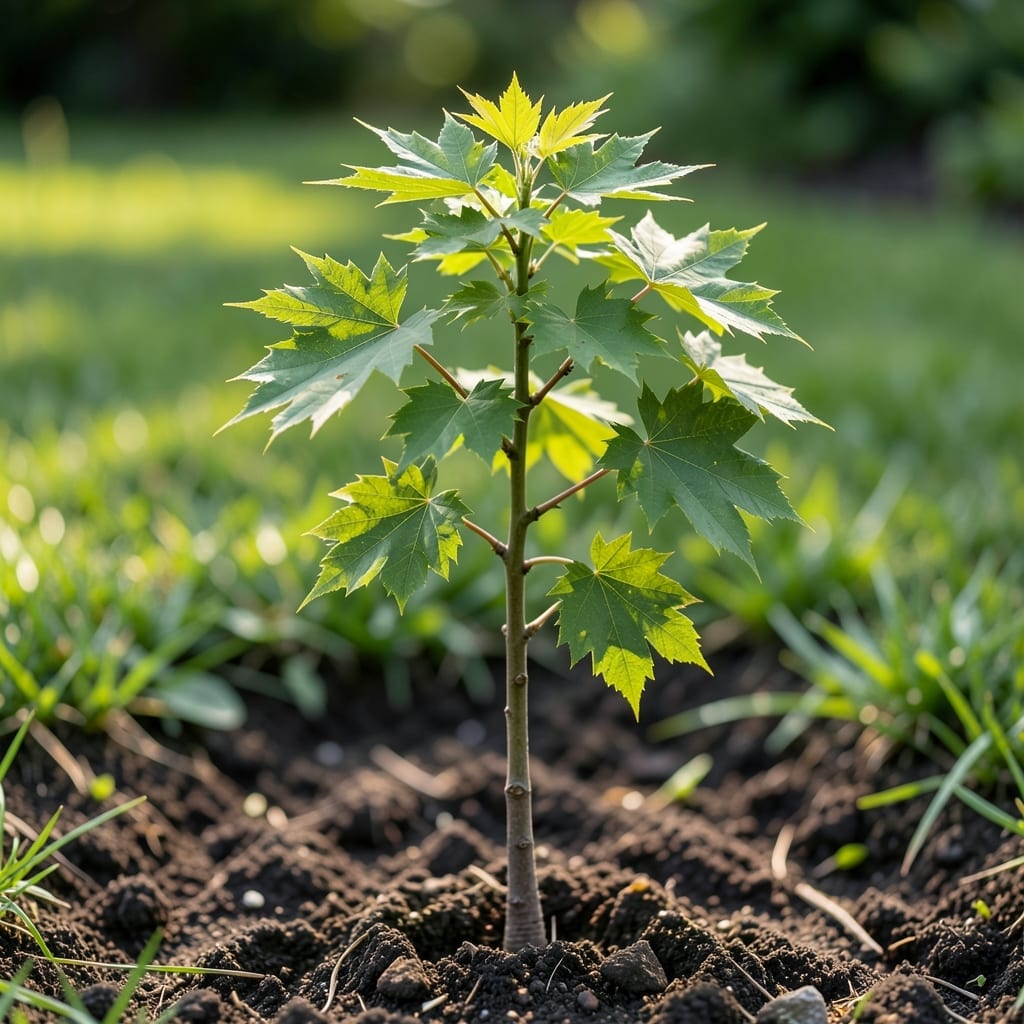
Watching those first maple leaves unfold feels like nature’s green fireworks. ✨ I’ve learned that the shape, color, and size of sapling leaves tell you everything about a tree’s health before it even hits its first birthday.
Healthy foliage starts with bright green edges and crisp veins, but the real magic happens when you spot the subtle changes that signal whether your sapling is thriving or just surviving.
📚 In This Guide
Small details make a big difference in tracking your sapling’s health.
The Heat Factor: Start checking for swollen buds daily once temperatures consistently hit 50-55°F. I learned this the hard way after missing the early signs one spring—by the time I noticed, the first leaves had already emerged. Early detection gives you the best chance to address any issues before they affect growth.
Timing Secret: If buds haven’t opened after 2-3 weeks of warm weather, don’t panic but do investigate. Check soil moisture and sunlight exposure. Confession: I once assumed dormancy when my sapling was actually water-stressed. A deep watering brought it back to life within days.
What to Watch For: During early leaf expansion (7-10 days after bud break), brown edges or spots often signal frost damage. Protect vulnerable new growth with frost cloth if nighttime temps dip below 32°F. Here’s what nobody tells you—those first leaves are your sapling’s most delicate.
Sunlight Strategy: For full leaf maturation after 3-4 weeks, ensure your sapling gets 4-6 hours of sunlight daily. Real talk: If leaves stay small or pale, it’s almost always a light issue. I moved one of mine just three feet to a sunnier spot, and the difference was dramatic within a week.
Brown leaves often signal underwatering, overwatering, or fungal diseases like anthracnose. Check soil moisture and inspect for spots or wilting. Adjust watering and treat with fungicide if needed.
Most maple saplings unfurl leaves in spring (March–May), with full size reached by early summer. Growth timing depends on climate and species—sugar maples may leaf out later than red maples.
Yellowing (chlorosis) often indicates nutrient deficiencies (iron, nitrogen) or poor drainage. Test soil pH and amend with compost or iron supplements. Early intervention can restore healthy green growth.
Use neem oil or insecticidal soap for aphids/mites. Encourage beneficial insects (ladybugs) and remove heavily infested leaves. Regularly inspect undersides for early pest detection.
Yes! Saplings mimic adult trees, shedding leaves in fall as daylight shortens. This is normal—just ensure they’re not dropping leaves prematurely due to stress or disease.