
Beautiful Plants For Your Interior
Beautiful Plants For Your Interior
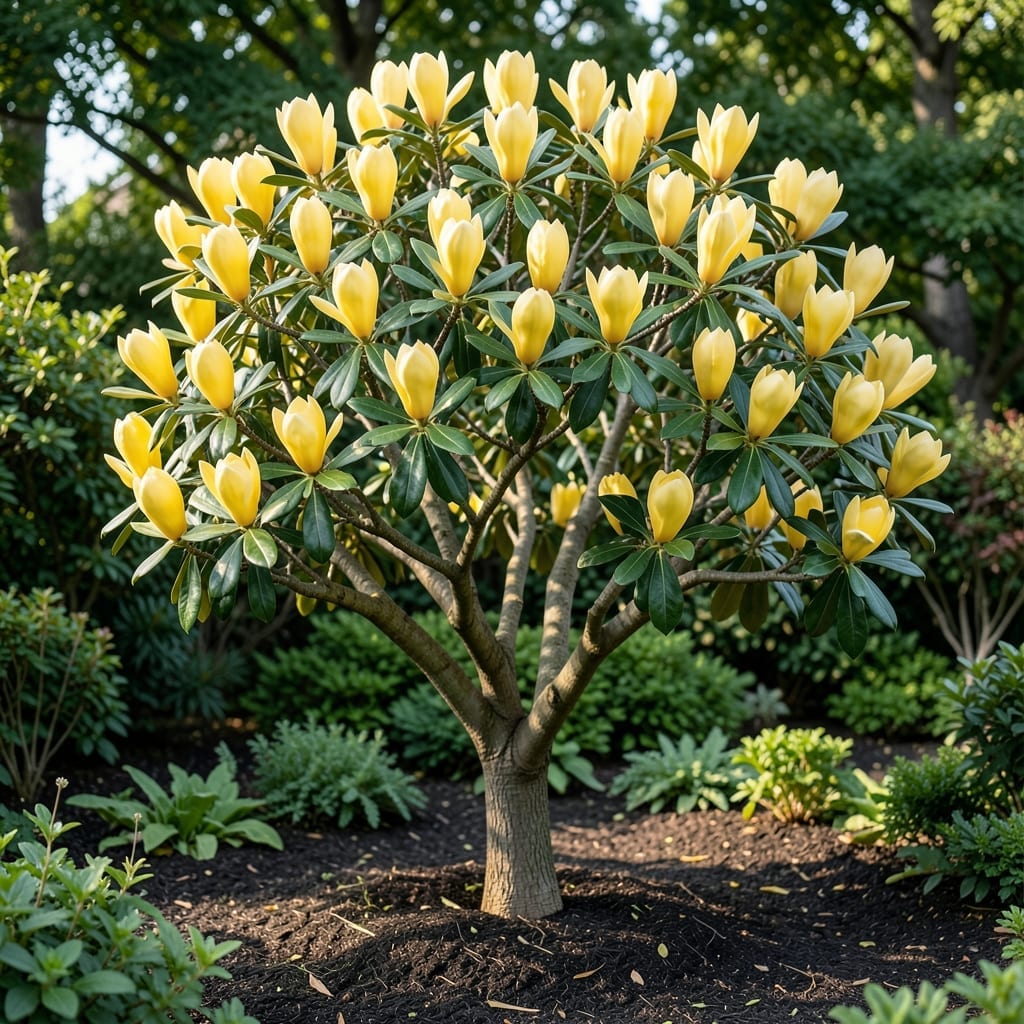
There’s something magical about Yellow Bird magnolias lighting up a spring garden. I planted my first one five years ago, and it’s been the centerpiece of my yard ever since.
These trees thrive with minimal fuss—just plant in well-draining soil, give them full sun to partial shade, and watch as those stunning yellow blooms transform your space.
📚 In This Guide
Here’s the method I rely on to coax vibrant, long-lasting blooms from this stunning variety every season.
Choose a spot with full sun to partial shade, though Yellow Bird magnolias thrive best with at least 6 hours of direct sunlight daily. The soil should be well-draining, slightly acidic (pH 5.5-6.5), and rich in organic matter. I always test the soil first—amending with compost if it’s too dense or sandy.
Avoid low-lying areas where water pools, as magnolias despise soggy roots. If your garden has heavy clay, consider planting on a slight mound or in a raised bed to improve drainage. This prevents root rot, which can kill even established specimens.
Dig a hole twice as wide as the root ball but no deeper. The top of the root ball should sit 1-2 inches above the surrounding soil level to allow for settling. Space multiple plants 15-20 feet apart—these magnolias grow into large shrubs or small trees.
Gently loosen the roots if pot-bound, then place the plant in the hole. Backfill with native soil mixed with compost, pressing lightly to eliminate air pockets. Water deeply after planting to settle the soil, ensuring the base of the trunk remains exposed to prevent moisture-related diseases.
Water newly planted magnolias 2-3 times per week for the first 6-8 weeks, keeping the soil consistently moist but not waterlogged. Use a slow, deep watering method to encourage strong root development. I check soil moisture by sticking my finger 2 inches deep—if it feels dry, it’s time to water.
Once established, reduce watering to once weekly unless there’s a drought. Magnolias are moderately drought-tolerant, but consistent moisture during the first growing season is critical. Mulch with 2-3 inches of organic material to retain moisture and regulate soil temperature.
Apply a balanced, slow-release fertilizer (10-10-10 or 12-4-8) in early spring, just as new growth begins. I use 1 pound per inch of trunk diameter, scattering it evenly around the drip line and watering it in thoroughly. Avoid fertilizing late in the season, as it can stimulate tender growth that won’t harden off before winter.
Prune minimally—only to remove dead, diseased, or crossing branches. Do this immediately after flowering, as magnolias set next year’s buds in late summer. Use clean, sharp pruners and make cuts at a 45-degree angle just above a leaf node or branch collar to promote quick healing.
Watch for signs of magnolia scale, which appears as white, cottony spots on branches. Treat infestations with horticultural oil in early spring or late fall when the plant is dormant. I inspect my Yellow Bird weekly during the growing season, paying special attention to the undersides of leaves.
Yellowing leaves often indicate nutrient deficiencies or improper soil pH. If this occurs, test the soil and adjust with appropriate amendments. In cold climates, apply a 2-3 inch layer of mulch around the base in late fall to protect roots from freeze-thaw cycles, but keep it 6 inches away from the trunk to prevent rot.
Small details make the difference between a struggling magnolia and one that bursts with color every spring.
The Sunlight Factor: While Yellow Birds tolerate partial shade, they truly flourish with that full 6 hours of direct sunlight daily. I’ve noticed plants in sunnier spots produce significantly more blooms with richer color. If your garden has limited sun, prioritize morning exposure over harsh afternoon rays.
Drainage is Non-Negotiable: Magnolias will never forgive soggy roots. In Step 1, when selecting your planting location, test drainage by digging a 1-foot deep hole and filling it with water. If it doesn’t drain within an hour, build that raised bed or mound—this has saved more plants than any other precaution I’ve taken.
Planting Depth Precision: That 1-2 inches above soil level in Step 2 isn’t arbitrary. I learned this the hard way after losing a plant to trunk rot. The slight elevation prevents water from pooling at the base while allowing roots to establish properly as the soil settles.
Watering Wisdom: During those critical first 6-8 weeks mentioned in Step 3, resist the urge to water daily unless it’s extremely hot. Overwatering is just as dangerous as underwatering. Instead, use the 2-inch finger test—if the soil feels dry at that depth, it’s time to water deeply.
Yellow leaves often signal overwatering, poor drainage, or nutrient deficiencies. Check soil moisture and ensure proper drainage. A balanced fertilizer can help restore vibrant foliage.
Plant in early spring or fall to allow roots to establish before extreme temperatures. Avoid summer planting, as heat stress can hinder growth.
Yes! Consider Saucer Magnolia or Jane Magnolia for comparable yellow blooms. Both thrive in similar conditions and offer stunning spring displays.
Ensure full sun to partial shade, well-draining soil, and consistent watering. Prune only after flowering to avoid cutting off buds.