
Beautiful Plants For Your Interior
Beautiful Plants For Your Interior
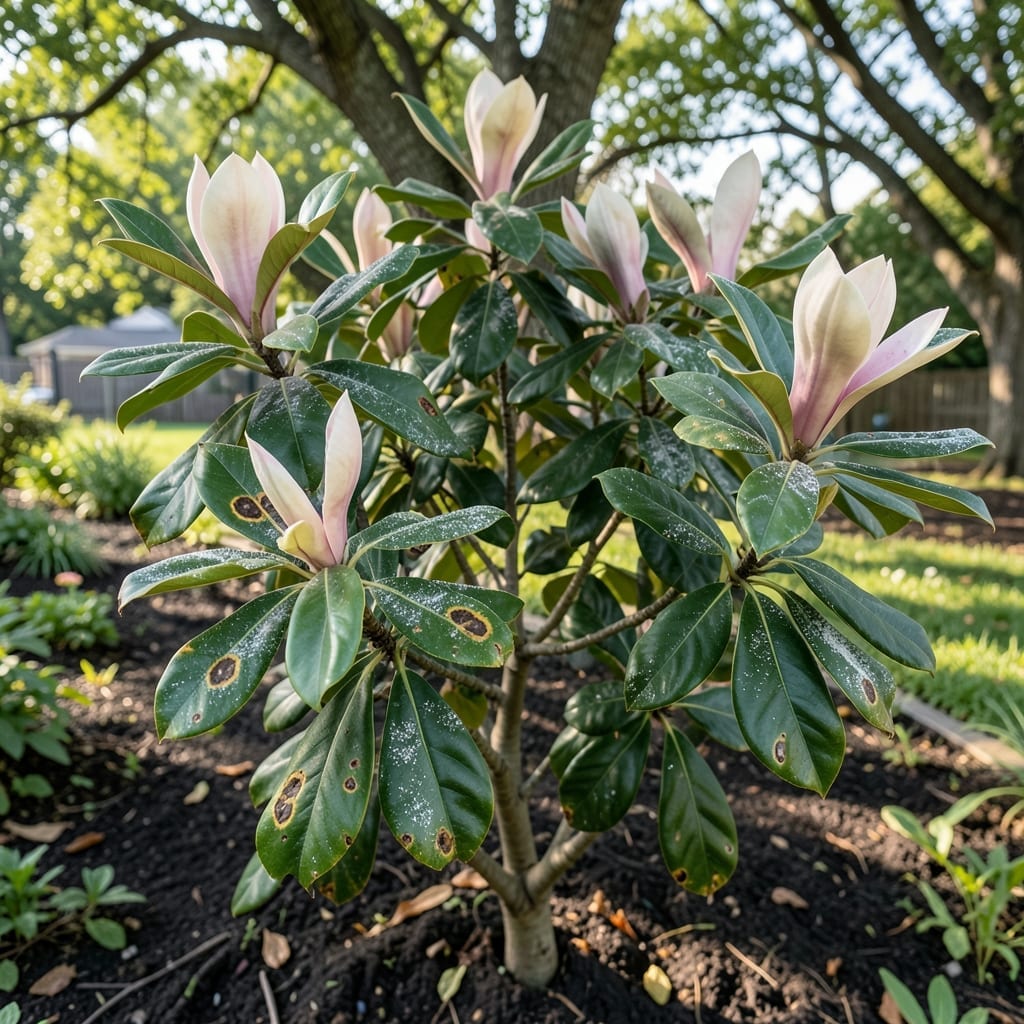
Spotted leaves or blackened buds on your magnolia aren’t just eyesores—they’re distress signals. I’ve seen healthy shrubs decline fast when disease goes unchecked, but early action can save them.
Most magnolia problems start with too much moisture or poor air flow. The good news? Organic fixes often work better than harsh chemicals, and prevention is simpler than you think.
You’ll learn to spot the difference between fungal spots and bacterial blight before they spread. Catching it early means less work and better recovery odds.
Works for all magnolia varieties, from star to saucer types. Let’s identify what’s wrong and fix it naturally.
Understanding the root causes of magnolia shrub diseases helps prevent and manage them effectively. Below are the primary factors that contribute to these issues, explained with scientific clarity.
Magnolias thrive in well-drained, slightly acidic soil and partial shade. Excessive moisture (e.g., waterlogged roots) creates anaerobic conditions, promoting root rot pathogens like Phytophthora. Conversely, drought stress weakens the shrub, making it susceptible to pests and fungal infections such as powdery mildew. Poor air circulation in humid climates also encourages foliar diseases like leaf spot (Septoria spp.).
Fungi and bacteria exploit vulnerable magnolias through wounds or stressed tissues. Fungal spores (e.g., Botrytis or Verticillium) spread via wind, rain, or contaminated tools, causing blight or wilt. Bacteria like Pseudomonas syringae enter through pruning cuts, leading to leaf spots or cankers. Overhead watering and crowded plantings accelerate pathogen spread.
Pests such as scale insects, aphids, and magnolia borers pierce plant tissues, creating entry points for diseases. Scale, for example, excretes honeydew, fostering sooty mold growth, which blocks photosynthesis. Borers tunnel into stems, compromising structural integrity and inviting secondary infections.
Improper care directly triggers disease. Over-fertilization (especially with high-nitrogen formulas) promotes lush, weak growth prone to fungal attacks. Incorrect pruning (e.g., using dull tools or pruning during wet seasons) leaves jagged wounds that heal slowly. Planting in compacted or alkaline soil restricts nutrient uptake, stressing the shrub and reducing its disease resistance.
Dealing with magnolia shrub diseases doesn’t have to be overwhelming. With the right approach, you can restore your plant’s health and prevent future problems. Below are targeted solutions for common issues, paired with prevention tips to keep your magnolia thriving. 🌿
If you notice dark or yellowing spots on leaves, act fast. Prune affected foliage with sterilized shears and dispose of it far from your garden to avoid spreading spores. Apply a copper-based fungicide or neem oil spray every 7–10 days until symptoms subside. Prevention tip: 💡 Improve airflow by spacing plants properly and watering at the base to keep leaves dry.
These pests weaken magnolias by sucking sap, leading to stunted growth or sticky residue (honeydew). Blast them off with a strong stream of water, then treat with insecticidal soap or horticultural oil. For severe cases, introduce beneficial insects like ladybugs. Prevention tip: 🎯 Inspect leaves regularly, especially the undersides, and encourage natural predators by planting companion flowers.
Yellowing leaves, wilting, or a foul odor from the soil signal root rot, often caused by overwatering or poor drainage. Stop watering immediately and let the soil dry out. If the plant is potted, repot it in fresh, well-draining soil. For in-ground magnolias, amend the soil with compost or sand. Prevention tip: ✨ Use a moisture meter to avoid overwatering and ensure pots have drainage holes.
After a frost, brown or blackened leaves and split bark may appear. Prune damaged branches in early spring to encourage new growth. Apply a layer of mulch around the base to insulate roots. Prevention tip: 🌡️ Plant magnolias in a sheltered spot and cover young shrubs with burlap during extreme cold snaps.
Consistency is key—address issues early and maintain good cultural practices to keep your magnolia disease-free and vibrant!
Look for yellowing leaves, dark spots, or powdery residue. Wilting or blackened buds can also signal disease. Catching these early gives you the best chance to treat and save your shrub.
Yes! Neem oil or baking soda sprays work well for fungal issues. For pests, insecticidal soap is effective. Always test on a small area first and apply during dry, calm weather.
Check leaves and stems weekly during growing season. Focus on undersides of leaves and new growth, where problems often start. Early detection prevents spread to the entire plant.
Root rot thrives in soggy soil. Let the top 2-3 inches dry between waterings. Ensure good drainage to keep roots healthy and disease-free.