
Beautiful Plants For Your Interior
Beautiful Plants For Your Interior
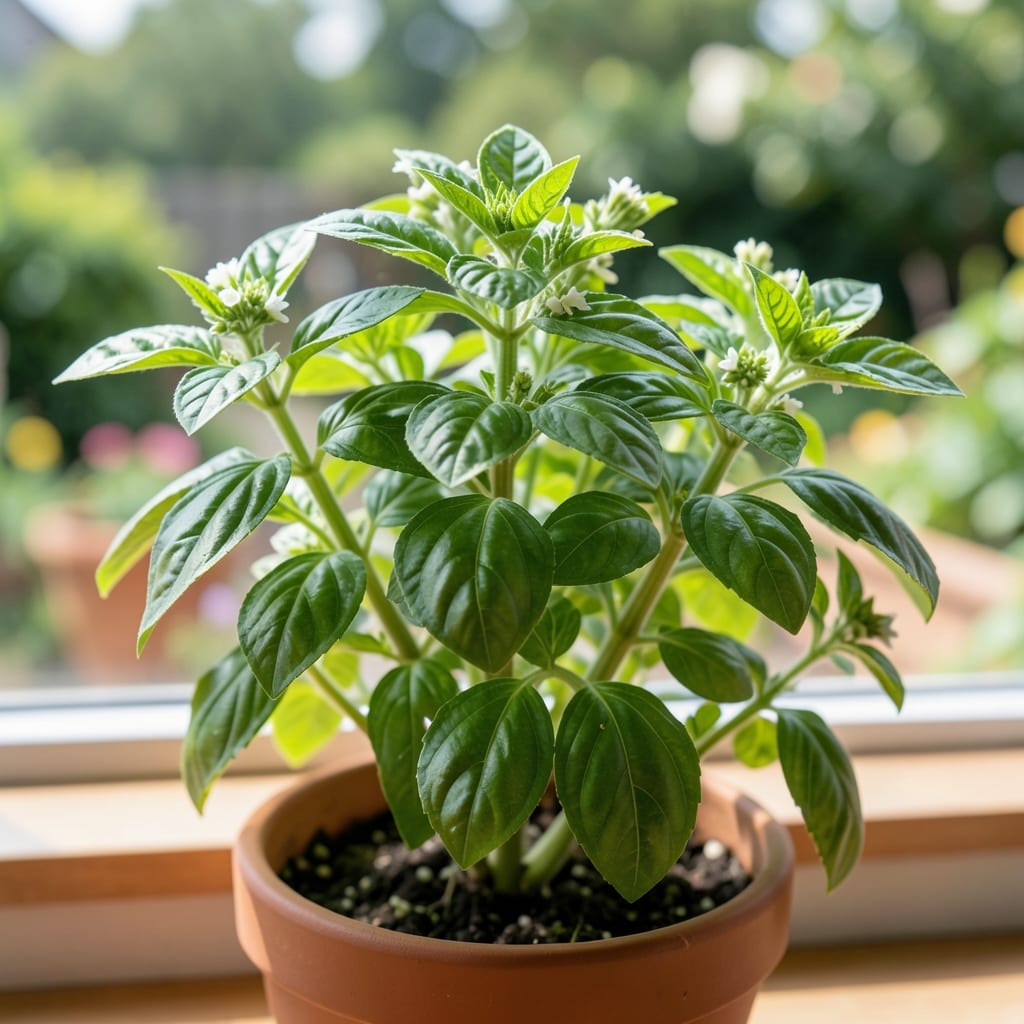
That first whiff of lemon basil always stops me in my tracks. This herb delivers a bright citrus scent that’s impossible to ignore in any garden space.
It thrives in full sun with well-draining soil, growing into bushy plants that produce fragrant leaves perfect for fresh use. The flavor stays mild and sweet until you crush the leaves.
📚 In This Guide
Here’s the simple method I use to grow this fragrant herb with consistent success.
Lemon basil thrives in full sun with at least 6-8 hours of direct sunlight daily. I always select a spot that gets morning sun, which helps dry dew from the leaves quickly and prevents fungal issues. The soil should be well-draining with a slightly acidic to neutral pH.
If you’re planting in containers, ensure they’re at least 8-10 inches deep to accommodate the root system. I’ve found that darker colored pots can help retain soil warmth, which this heat-loving herb appreciates. Avoid low spots where water might pool after rain.
Work the soil to a depth of about 12 inches, removing any rocks or debris. Lemon basil prefers rich, fertile soil, so I amend with 2-3 inches of compost or well-rotted manure. This provides the nutrients needed for robust growth and intense fragrance.
After amending, water the area thoroughly and let it settle for a day before planting. The soil should feel moist but not waterlogged when you’re ready to plant. I always check by squeezing a handful—if it holds together but doesn’t drip, it’s perfect.
If starting from seeds, plant them ¼ inch deep and 12-18 inches apart. For seedlings, dig holes just deep enough to accommodate the root ball. I gently remove the seedling from its container and loosen the roots slightly before planting to encourage outward growth.
Space seedlings 12-18 inches apart to allow for good air circulation, which helps prevent disease. After planting, water gently but thoroughly to settle the soil around the roots. You’ll see new growth within 7-10 days if conditions are right.
Lemon basil needs consistent moisture but dislikes soggy soil. I water when the top 1 inch of soil feels dry, usually every 3-4 days in hot weather. A good soak in the morning allows foliage to dry before evening, reducing disease risk.
Feed with a balanced liquid fertilizer every 4-6 weeks during the growing season. I’ve found that organic options work particularly well. Pinch off the first set of flowers to encourage bushier growth and more abundant leaves.
Begin harvesting when plants are 6-8 inches tall by pinching off individual leaves or cutting stems just above a leaf pair. This encourages branching and more leaf production. I always harvest in the morning when the essential oils are most concentrated.
For a larger harvest, you can cut the plant back by one-third when it reaches 12 inches tall. Regular harvesting keeps the plant productive and prevents it from going to seed too quickly. The leaves are most flavorful just before the plant flowers.
Here’s what I’ve learned from years of growing this fragrant herb at home.
Starting Strong: Begin seeds indoors 6-8 weeks before your last frost to give them the best start. Keep the soil at 70-75°F for optimal germination—sprouts should appear in 7-14 days if conditions are right. Don’t rush this step; cold soil will delay growth.
Light Requirements: Lemon basil thrives with 6-8 hours of full sun daily. If your space lacks sunlight, a grow light can bridge the gap. Watch for pale, leggy stems—that’s a sign your plants are stretching for more light.
Watering Wisdom: Water at the base in the morning to keep foliage dry and prevent disease. Stick your finger in the soil—if the top inch feels dry, it’s time to water. Overwatering causes yellow leaves, while drought stress leads to bitterness.
Pruning for Growth: Once plants hit 6 inches tall, pinch the top leaves to encourage branching. Prune every 2-3 weeks and always cut just above a leaf pair. This keeps the plant bushy and delays flowering, so you get more leaves for longer.
Yes! Lemon basil thrives indoors with bright, indirect light (6+ hours daily) and well-draining soil. Use a south-facing window or grow lights for best results. Keep the soil moist but not soggy.
Water when the top inch of soil feels dry—typically every 2-3 days in warm weather. Overwatering can cause root rot, so ensure pots have drainage holes. Adjust frequency based on humidity and sunlight.
Aphids, whiteflies, and spider mites are frequent culprits. Inspect leaves regularly and treat with neem oil or insecticidal soap. Prune affected areas to prevent spread.
Absolutely! Lemon basil has a citrusy twist but works well in pesto, salads, or teas. Use a 1:1 ratio, though its stronger flavor may require slight adjustments in recipes.
Yellowing leaves often signal overwatering, nutrient deficiency, or poor drainage. Check soil moisture, fertilize lightly, and ensure the pot has drainage holes. Trim damaged leaves to encourage new growth.