
Beautiful Plants For Your Interior
Beautiful Plants For Your Interior
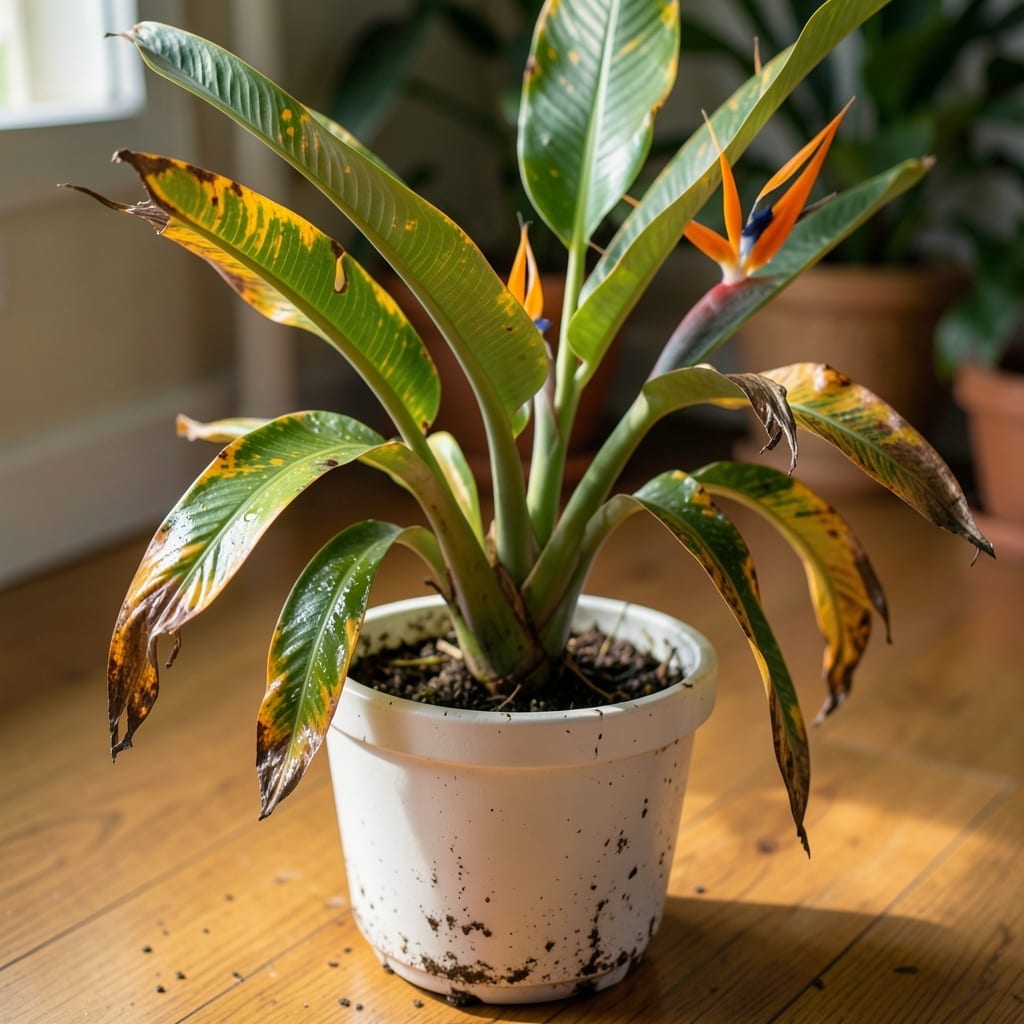
My bird of paradise went from showstopper to sad and droopy in a week. The leaves curled inward like they were trying to hide from the world—classic overwatering behavior.
Here’s the thing—these tropical beauties hate soggy feet. Too much water suffocates the roots, cutting off their oxygen supply and making it impossible for them to feed the leaves properly.
I learned the hard way that the fix isn’t complicated. Stop watering, check the soil, and let the roots breathe. Within 2-3 weeks, you’ll see those leaves start to unfurl again.
Prevention is easier than recovery. Once you nail the watering routine, your bird of paradise will reward you with lush, healthy foliage that turns heads.
Overwatering disrupts the delicate balance of your Strelitzia nicolai (Bird of Paradise) in several key ways, leading to those telltale curling leaves. Here’s the science behind the symptoms:
Excess water fills the air pockets in the soil, suffocating the roots. Without oxygen, root cells can’t perform aerobic respiration, starving the plant of energy. The roots weaken, rot, and fail to absorb water or nutrients—ironically causing dehydration-like symptoms (e.g., curling) as the plant conserves moisture.
Soggy soil creates a breeding ground for pathogens like Phytophthora and Pythium. These microbes attack the roots, impeding their ability to transport water and minerals. The plant’s response? Leaf edges curl inward to reduce surface area and slow water loss through transpiration.
Overwatering leaches essential nutrients (nitrogen, potassium, magnesium) from the soil or makes them chemically unavailable. Without these, the plant can’t maintain turgor pressure (cell rigidity), leading to limp, curled foliage. Yellowing often accompanies this as chlorophyll production halts.
When roots absorb more water than the plant can transpire, the excess builds up in leaf cells, causing them to swell and burst (edema). The damaged tissue dies, turns brown, and curls as it dries out. This is common in high-humidity environments paired with overwatering.
If your bird of paradise leaves are curling from overwatering, here’s how to revive your plant and prevent future stress.
Stop watering immediately and let the soil dry out. Tip the pot to drain any pooled water in the saucer, and move the plant to a spot with good airflow to speed up drying. For severe cases, gently remove the plant from its pot and inspect the roots for rot—trim any mushy, dark roots with clean scissors.
Bird of paradise thrives on a soak-and-dry cycle. Water only when the top 2–3 inches of soil are dry. Stick your finger in the soil to test moisture—if it feels damp, wait. Use a well-draining potting mix (add perlite or orchid bark) to prevent waterlogging.
Pro tip 💡: Water less in cooler months when growth slows.
If the soil stays soggy or roots are circling, repot into a slightly larger container with fresh, airy mix. Ensure the new pot has drainage holes. Avoid heavy garden soil—it compacts and traps moisture.
Trim severely curled or yellowed leaves with clean shears to redirect energy to healthy foliage. Place the plant in bright, indirect light (avoid harsh sun while it recovers) and hold off on fertilizing until you see new growth.
Prevention tip ✨: Elevate pots to improve drainage, and always empty saucers after watering.
Water only when the top 2-3 inches of soil are dry. In warm months, this might be every 7-10 days, but less in cooler weather. Always check soil moisture first.
Mildly curled leaves will often unfurl as the plant recovers. Severely damaged or yellowed leaves should be trimmed to help the plant focus its energy on new growth.
Use a well-draining mix with perlite, orchid bark, or coarse sand. Avoid heavy garden soil, which retains too much moisture and compacts over time.
Overwatered leaves curl inward and may turn yellow, while underwatered leaves feel crispy and dry. Check the soil—if it’s soggy, it’s overwatered.